Indian Seafarers in the Line of Fire: What Hormuz's Tanker Attacks Mean for India's 300,000 Sailors
In the ten days from 6 to 16 October, three merchant ships with Indian crews were hit. Two were struck in the Strait of Hormuz and one at anchor in Romania. Nobody on the last two died, and Shipping Minister Sarbananda Sonowal said all 24 Indians aboard were "completely safe". The first, MT On Peace, was worse. The question this raises for Delhi is older than this month: why are Indian crews still on these ships?
What happened in October
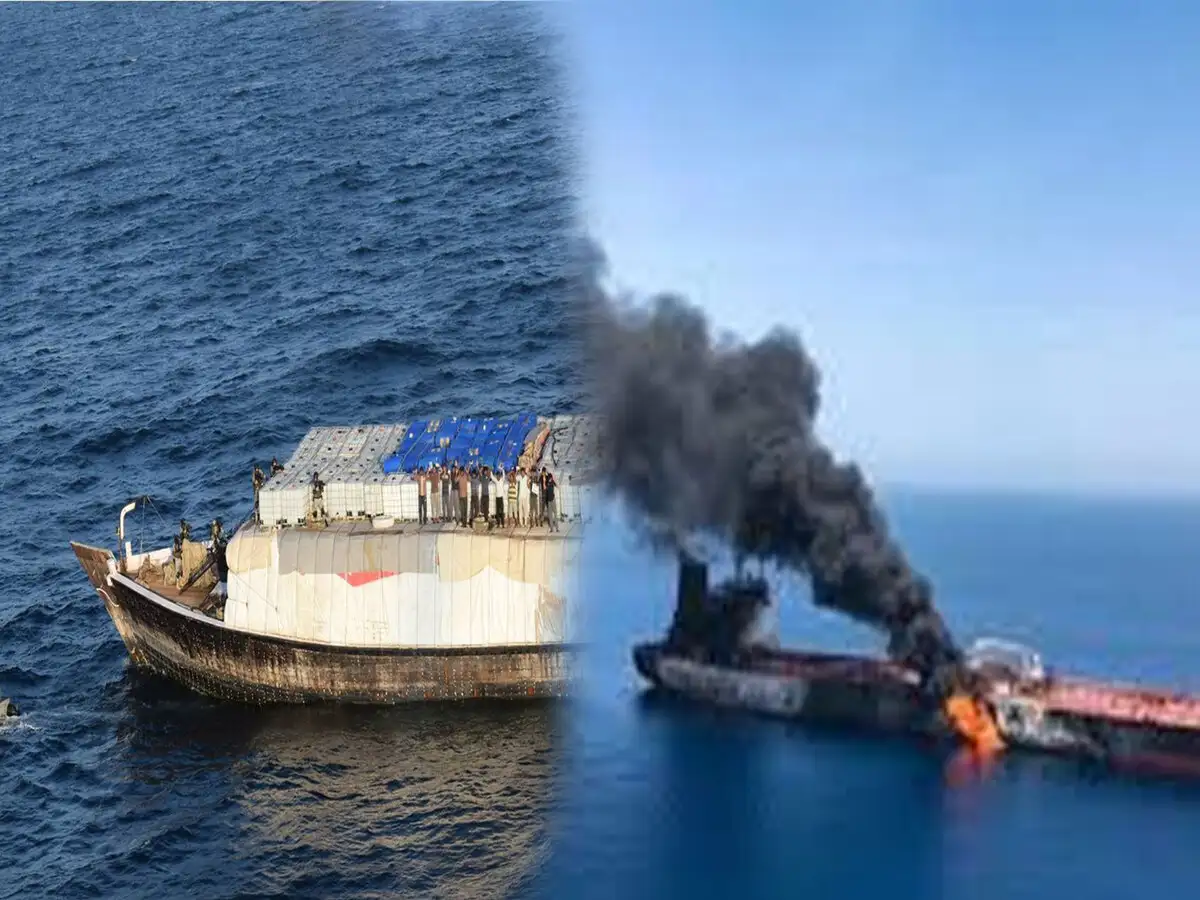
On 6 October the Panama-flagged MT On Peace was hit by a projectile in the Strait of Hormuz, off Oman. According to the Ministry of External Affairs, 17 of its 19 crew were Indian, and 12 people were injured, 11 of them Indian. Oman helped evacuate the injured, who were treated at Khasab. The ministry condemned the attack and called it a cause of deep concern for India.
On 14 October the chemical tanker YARA J, with nine Indian crew, was hit by a drone at the Sulina anchorage in Romania. That is a different theatre from Hormuz, and the reports do not say who launched the drone. Two days later the crude tanker MT ST 3, carrying 15 Indian crew, was hit by a projectile in Hormuz. Reports of the 16 October attack did not establish who carried it out.
The wider picture is no calmer. Reuters, citing Kpler, reported that at least 18 vessels had been attacked in two weeks, and Brent crude was near $110, its highest since May. US Central Command has said the vast majority of Iranian attacks fail and that the strait remains open. Both statements can be true at once. A ship does not have to sink for its crew to be in danger.
The official count, and its limits
On 30 July the Minister of State for External Affairs, Kirti Vardhan Singh, told the Rajya Sabha that 16 Indians had been killed since the conflict began, 10 of them seafarers, and that 75 Indians had been injured. Seafarers' families are eligible for Rs 10 lakh ex-gratia under the DG Shipping welfare scheme. ANI reported that payment had been made in only five of the 16 cases at that point.
These figures are dated, and the date matters. They are the latest official numbers I could find, and nothing since 30 July has updated them. The 16 includes people who were not seafarers, and ANI's report gives no cut-off date for the count. Any figure for seafarer deaths after July would be a guess.
Earlier incidents fill in the pattern. Al Jazeera's June reporting lists one Indian killed on MKD Vyom on 1 March, and two killed with one missing on Skylight. In June, the Palau-flagged Marivex had 24 Indian crew rescued, and the Palau-flagged Settebello lost three Indian crew, with 21 rescued. According to CENTCOM, as reported by Al Jazeera, both of those were US strikes. India summoned Iran's ambassador in April and the deputy chief of mission at the US embassy in June.
Two protests, one position
That pair of summons matters for reading India's position. Delhi has not tied the safety of its sailors to one side in the conflict. At a UN Security Council open debate on the Middle East this month, India's ambassador, Harish Parvathaneni, said attacks on commercial shipping and merchant mariners are legally and morally indefensible. He added that several of the ships involved carry Indian seafarers and that their safety is India's direct responsibility. He also referred to a Seafarers Emergency Support Network proposed by Prime Minister Modi. I could not verify when or where that proposal was made, or what it would contain.
The position is consistent: the attacker's identity is secondary to the fact that the people on board are Indian. It is also cheap to hold. A statement at the UN does nothing for the crew of a ship that is already in the strait.
The advisories
India has acted on the supply side. On 15 June the DG Shipping asked recruitment and placement agencies and shipping companies not to deploy Indian seafarers in conflict areas, and said emergency crew changes should happen only with the crew's consent. In mid-July, DGMA Circular No. 36 of 2026 went further and asked companies to avoid placing Indian seafarers on ships transiting Hormuz until further orders.
The two notices have different scope. The June one covers "conflict areas" in general, and the July one names Hormuz transits. The reports on both describe them as advisories, and none mentions a penalty for ignoring them.
Indian crews are still on ships in Hormuz after these notices, and that is a fact worth a question rather than a conclusion. It does not show that anyone broke the advisories. I cannot tell whether the crews of On Peace and ST 3 signed on before or after the notices, or whether those voyages counted as Hormuz transits. A seafarer already aboard has the right to consent to a crew change, but the notice does not give a ship under contract any obvious way to leave. Forward Seamen's Union of India's Manoj Yadav described crews in June as "waiting there like sitting ducks". More than 300,000 Indian sailors work on global fleets, according to the DG Shipping, so a restriction that works on paper can still leave thousands on a route the government has said to avoid.
Global Chanakya Assessment
The evidence supports a narrow claim. India's regulatory response has been to discourage deployment, not to forbid it, and attacks on ships with Indian crews have continued since the advisories were issued. That is a gap between policy and exposure. The evidence does not show who is responsible for it, whether employers, agencies, or the crews' own financial pressure.
The official casualty figures also deserve caution. They are three months old, they mix seafarers with other Indians killed across several Gulf countries, and they show slow compensation. A reader who sees "10 seafarers dead" should read it as "10 as of 30 July".
The assessment would change if the government made the advisory binding, or if the Seafarers Emergency Support Network turned out to be a funded, operating mechanism instead of a proposal.
Indicators to Monitor
- A new or updated MEA or Parliament figure for Indian seafarers killed or injured since 30 July
- Any DG Shipping or DGMA order that replaces the July circular, or adds penalties for placing crews on Hormuz transits
- Any announcement that sets up the Seafarers Emergency Support Network, with funding and a start date
- Further strikes on ships with Indian crews, and who the owners or governments name as responsible
- Kpler and Reuters counts of attacked vessels, and Brent holding above or falling back from $110
- Ex-gratia payments reported against the 16 deaths counted in July