Unvarnished geopolitical analysis, defence strategy, and global power shifts. Built for leaders, analysts, and decision-makers.
Real-time risk assessments & India impact
Priority Intelligence
Real-Time Briefs
Built for analysts, policy enthusiasts, and decision-makers who need clarity on a complex world.
Read every intelligence report in real-time as it's published.
Explore our dedicated intelligence centres
‘Queen of Country’ has died at 80 in Nashville, her family and representatives announced.
The passing of Dolly Parton, a globally recognized country music icon, marks the loss of a significant cultural figure, affecting fans, the music industry, and the heritage of American country music.
Health Ministry warns of 'complete collapse of the basic necessities of life' in Gaza as Israel's attacks continue.
The Israeli strike that killed seven people and destroyed an aid supply warehouse in Gaza threatens civilian lives and hampers delivery of essential humanitarian assistance, heightening the risk of a broader humanitarian crisis and regional instability.
Kylian Mbappe and Jude Bellingham headline against Sociedad as Real seek consecutive wins to open La Liga season.
The match features star players Kylian Mbappe and Jude Bellingham, influencing La Liga opening standings, fan engagement and broadcast revenues.
Get a structured geopolitical assessment, scenario timeline, and multi-dimensional India impact analysis.
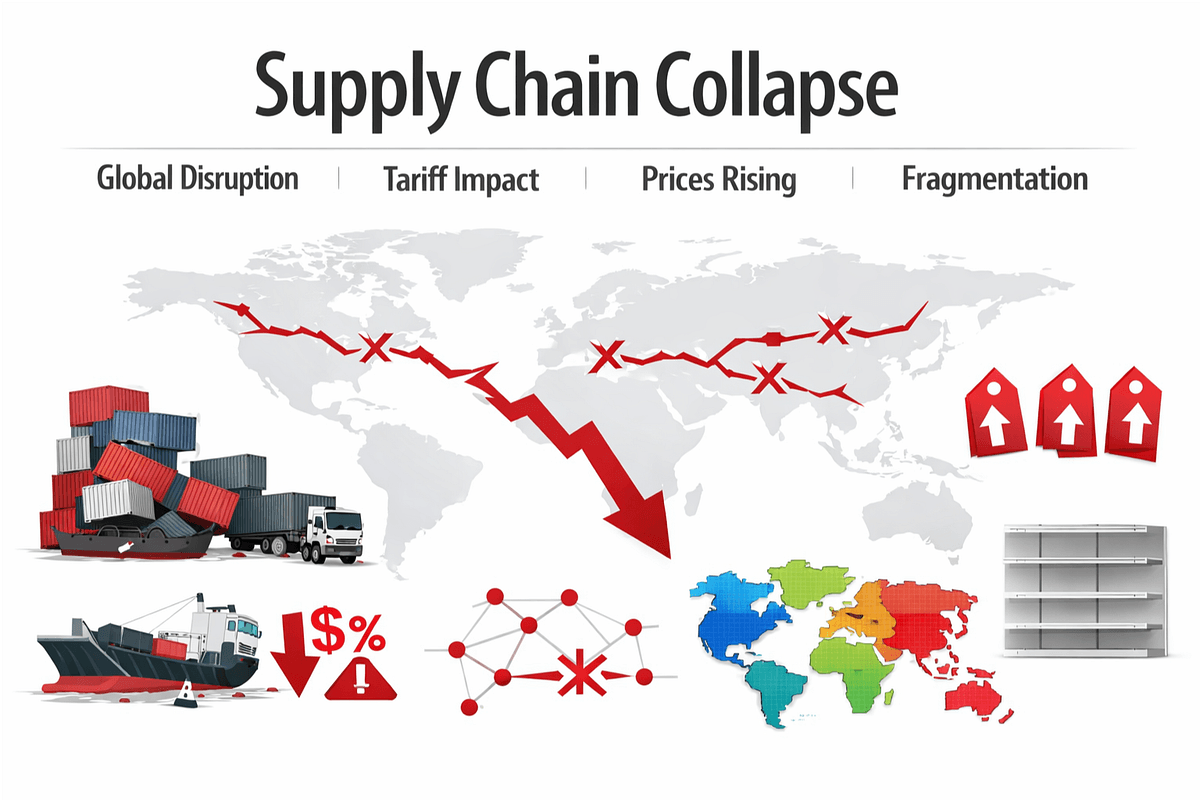
The global supply chain is no longer merely a logistics challenge - it is the central battlefield of 21st-century geopolitical competition. In 2026, a convergence of armed conflicts, technological decoupling, climate shocks, financial fragility, and great power rivalry has pushed the world's economic nervous system to its most stressed condition since the Second World War. This intelligence report delivers a comprehensive strategic assessment of every major risk vector threatening global supply chains and the geopolitical order they sustain.
Trump says the US owns the Strait of Hormuz and might just keep it. Iran's military calls that a lie and says the waterway remains under complete Iranian control. Between these two irreconcilable claims sits a genuine Oman-brokered negotiation, a global oil market burning through its buffers, and a war with no clear endpoint.
Up to 50 assembled warheads, solid-fuel ICBMs that could reach New York in under 30 minutes, an automatic nuclear strike law passed in March 2026, and Russian engineers helping miniaturize warheads in exchange for artillery shells - Kim Jong Un's nuclear strategy in 2026 is not a deterrent. It is a compellent.
Hui Ka Yan went from Asia's second-richest man to a life sentence in a Shenzhen courtroom, five years after Evergrande's collapse first shook China's economy. The verdict closes one legal chapter, but the deeper structural crisis in Chinese real estate that Evergrande symbolized is far from resolved.
A premium 2026 intelligence report on Europe's deep-strike capability crisis - the Trump administration's shelving of the Typhon-Tomahawk deployment to Germany, the $50 billion Ankara pledge that cannot plug a five-year capability vacuum, the ELSA programme's system integration failures, and the strategic consequences of a continent that has outsourced its most consequential military capability for three decades and cannot rebuild it before Russia tests whether that gap is real.
In May 2026, Trump simultaneously brokered a Russia-Ukraine ceasefire, prepared a historic Beijing summit with Xi Jinping, and held the line on Iran - three overlapping crises, one president, seventy-two hours that could define the next decade of global order.
A comprehensive 2026 intelligence assessment of global energy power - the Strait of Hormuz crisis that shook oil markets to their core, the UAE's historic OPEC exit, the fracturing of the world's most powerful cartel, and the intensifying contest between American energy dominance, Saudi sovereign ambition, Russian leverage, and China's quiet resource accumulation.
Washington and Ottawa walked to the very edge of a 50 percent tariff wall before pulling back with two hours to spare. The near-miss exposes something more durable than a single trade dispute: a structural rewriting of how Washington treats even its closest allies when trade imbalances become politically useful.
He fired his defense minister, then his commander-in-chief, then flew to Washington to bury an ally and meet Trump. Global Chanakya decodes what Zelensky's July visit reveals about Kyiv's fractured wartime command and its uncertain American relationship.
Two of the planet's most consequential maritime corridors are under simultaneous, deliberate attack. In the Strait of Hormuz, Iran is squeezing the world's oil artery. In the Black Sea, Ukraine and Russia are each targeting the other's grain trade. Together they mark a new phase in which chokepoint warfare has become the preferred instrument of state coercion.
While the world watched Ukraine and Iran, India quietly rewrote its naval doctrine, expanded SAGAR into MAHASAGAR, commissioned new island bases, and watched a US submarine sink an Iranian frigate forty nautical miles off Sri Lanka. None of it has been discussed as the coherent maritime strategy it actually is.
Trump says the US owns the Strait of Hormuz and might just keep it. Iran's military calls that a lie and says the waterway remains under complete Iranian control. Between these two irreconcilable claims sits a genuine Oman-brokered negotiation, a global oil market burning through its buffers, and a war with no clear endpoint.
An explosives-laden drone parked beside a Ukrainian cargo plane at Germany's busiest NATO logistics hub, and did not detonate. What happened next, a rushed counterterrorism probe, a doubled anti-drone unit, and a government publicly split over invoking NATO Article 4, reveals how unprepared Europe still is for a war being fought below the threshold of war.
Comparing India's development and global standing across the pre-2014 and post-2014 periods is one of the most politically charged exercises in Indian public life. This report sets partisan framing aside and examines what the data and independent analysis actually show across economy, defence, infrastructure, and geopolitics, including where the picture is genuinely contested.
Eighteen months after leaving office, Biden's signature achievements - NATO unity, the Indo-Pacific alliance lattice, the China tech cordon - are being tested or unwound by the very successor he warned would inherit a stronger America. Here's the verdict so far.
Indo-Pacific, Middle East, Europe, Americas — every theatre.
Unvarnished, non-partisan intelligence briefs by specialists.
Enterprise-grade security architecture for our readership.