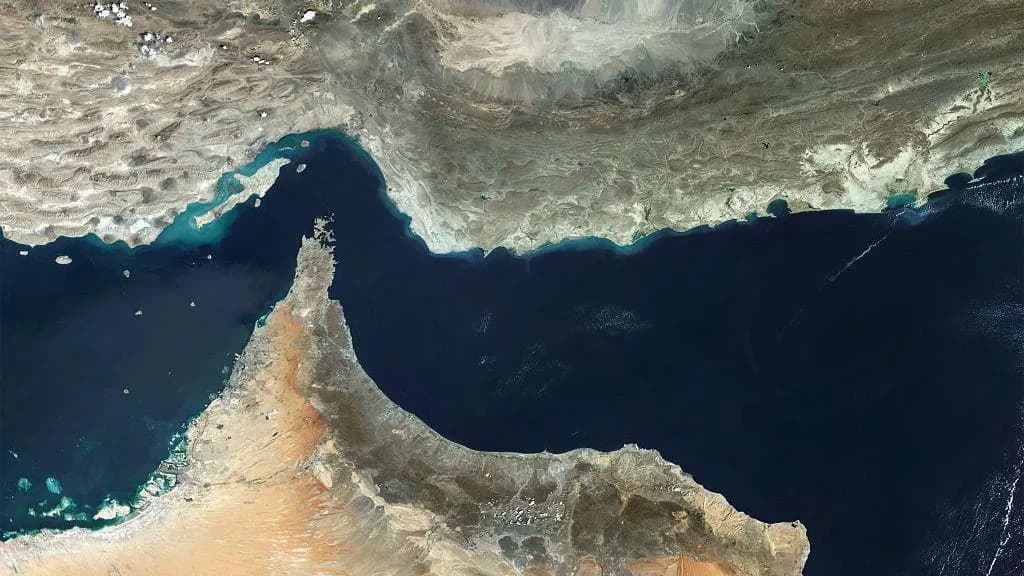
Imagine a narrow strip of water - just 34 kilometres wide at its tightest point - and through it flows nearly 20% of the entire world's oil supply. Every day. Every hour. Now imagine that strip is on fire, mined, blockaded, and caught between two military superpowers pointing guns at each other.
That's the Strait of Hormuz in May 2026. And the International Energy Agency has already declared this the "largest supply disruption in the history of the global oil market."
Part 1: The Strait of Hormuz - A Geography Lesson the World Ignored
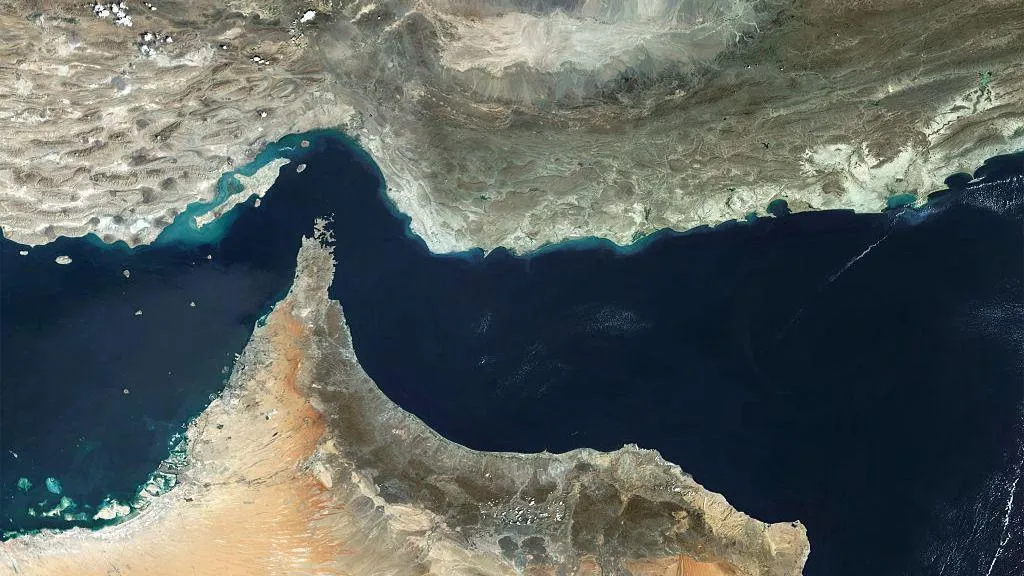
The Strait of Hormuz as seen from NASA satellite imagery - the world's most critical oil chokepoint.
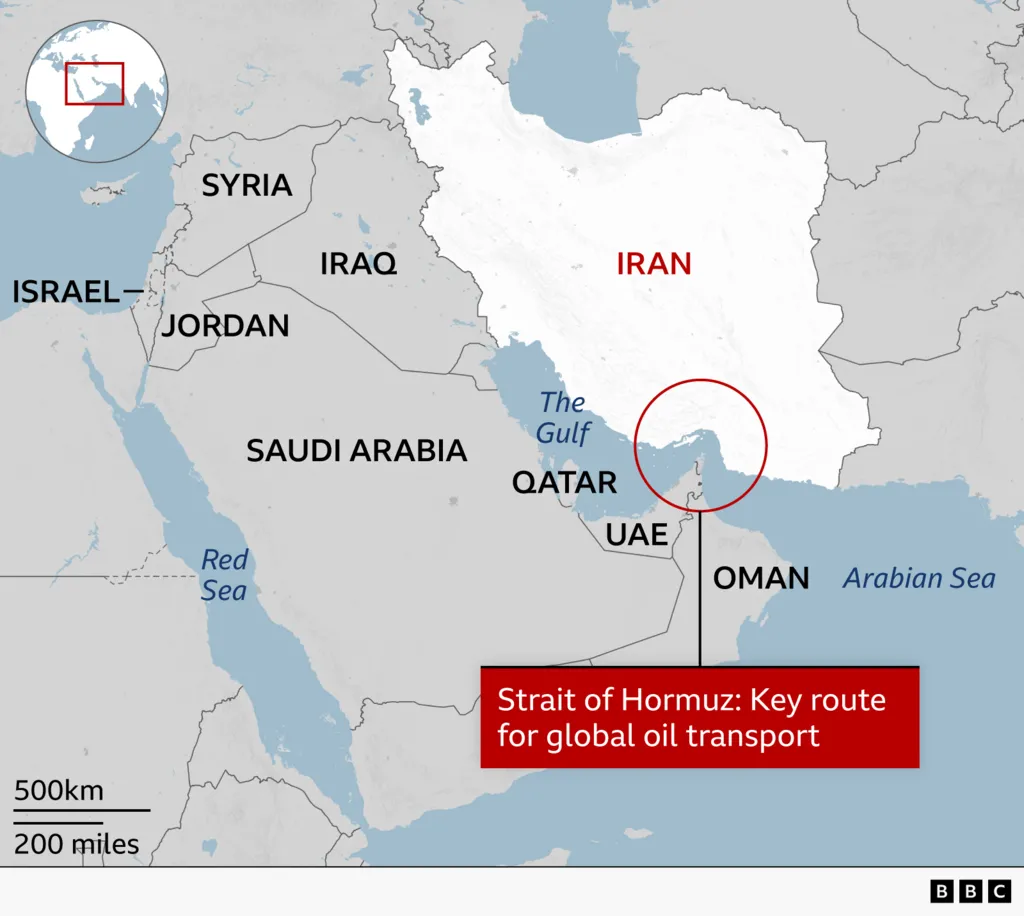
The Strait of Hormuz is a narrow waterway connecting the Persian Gulf with the Gulf of Oman and the Arabian Sea. Iran lies to its north; Oman's Musandam Peninsula forms its southern boundary. At its narrowest point, it is approximately 34 kilometres wide - yet through this sliver of water passes the lifeblood of the modern global economy.
In 2024, oil flow through the strait averaged 20 million barrels per day - equivalent to roughly 20% of global petroleum consumption and about one-quarter of all seaborne oil trade worldwide. Additionally, 20% of the world's liquefied natural gas (LNG) passed through here, primarily from Qatar, which alone supplied over 112 billion cubic metres of LNG in 2025. Countries like Saudi Arabia, Iraq, Kuwait, UAE, Bahrain, and Qatar have no meaningful alternative to this single passage - their entire petroleum export infrastructure feeds into it.
About 84% of the crude oil and 83% of the LNG passing through the strait in 2024 was bound for Asia - primarily China, India, Japan, and South Korea. When analysts speak of Asia's "energy vulnerability," this is exactly what they mean: the entire continent's industrial supply chain, from steel mills in South Korea to petrochemical plants in India, runs through 34 kilometres of water governed by international maritime law - and partially by Iranian territorial waters.
A Chokepoint 35 Million Years in the Making
Geologically, the Strait of Hormuz was created roughly 35 million years ago through the collision of the Arabian and Eurasian tectonic plates. As Oxford professor of Earth Sciences Mike Searle explains, the same continental collision that formed this narrow waterway also tilted the Musandam Peninsula northward - creating the pinch point - while simultaneously trapping the vast oil and gas reserves beneath the Arabian plate that now lie under Iran, Iraq, and the Persian Gulf states. The geology that created the world's largest oil reserves also created the world's most dangerous bottleneck to export them.
The History of Control - From Marco Polo to the CIA
The Strait of Hormuz has been a centre of global power for centuries. By the 15th century, the island of Hormuz had become one of the great emporium-states of the medieval world - a hub where merchants from Egypt, China, Java, Bengal, Zanzibar, and Yemen converged. Marco Polo visited twice during his journeys. Chinese Admiral Zheng He made it the final destination of his famous treasure fleet during the Ming Dynasty.
In 1507, Portuguese Admiral Afonso de Albuquerque - understanding that whoever controls the strait controls everything between India and the Mediterranean - seized the port with just seven ships and 500 men. In 1622, Shah Abbas I recaptured it with English naval support. The British dominated it for centuries. In 1951, the British Navy imposed a blockade on the strait to pressure Iranian PM Mohammad Mosaddegh after he nationalised Iran's oil industry. That blockade lasted more than two years and contributed to the CIA-backed coup against Mosaddegh in 1953.
During the Iran-Iraq War of 1980-1988, the strait became a "Tanker War" battleground. The United States intervened in 1988 in Operation Praying Mantis - attacking Iranian naval targets after Iran mined international waters. The pattern is clear: every major power that rises must eventually reckon with the Strait of Hormuz.
Part 2: The War That Changed Everything - February 28, 2026
On February 28, 2026, the United States and Israel launched coordinated surprise airstrikes on Iran - targeting military installations, nuclear sites, and government infrastructure. In the strikes, Supreme Leader Ali Khamenei was assassinated, along with multiple senior Iranian officials. Iran immediately appointed Khamenei's son as his successor.
Iran's retaliation was swift, multi-directional, and devastating. Missile and drone attacks struck Israel, U.S. military bases across the region, and military and civilian locations in Gulf Arab states. The UAE was hit repeatedly. Saudi infrastructure came under threat. And then came the move that changed global economics in 72 hours: on March 4, 2026, the IRGC formally declared the Strait of Hormuz closed to all foreign shipping.
Within 48 hours of the war starting, the world's largest marine insurance mutuals issued cancellation notices for war risk extensions covering the Gulf. Shipping giants suspended operations entirely. QatarEnergy declared force majeure on all LNG exports. Brent crude surged 10-13% to around $80-82 per barrel in the first two days alone - and it was just getting started.
Part 3: The Full Timeline - What Happened, When
Part 4: The Economics of Catastrophe
The International Energy Agency has used language it has never used before. The head of the IEA described the situation as the "greatest global energy security crisis" ever recorded - worse than the 1973 Arab oil embargo, worse than the 1979 Iranian Revolution, worse than the 1991 Gulf War. Global oil supply plummeted by 10.1 million barrels per day in March alone - the largest single-month supply disruption in recorded history. The IEA now projects global oil demand will actually contract by 80,000 barrels per day in 2026, compared to growth of 730,000 b/d projected before the war.
Brent crude - the global benchmark - surged from $80 to $120 per barrel between March 2 and March 9 alone. Analysts who had previously predicted Brent could hit $150 in a worst-case scenario now consider that a realistic mid-case projection if the conflict extends through summer.
The Jet Fuel Catastrophe of Summer 2026
Before the war, Persian Gulf exports represented the largest single source of jet fuel supply to the global market. Iran's blockade cut off those exports entirely. Global jet fuel exports plunged 30% in April - from 1.9 million barrels per day in April 2025 to just 1.3 million barrels per day in April 2026. Exxon Mobil CEO Darren Woods warned in a CNBC interview that commercial crude oil and refined product inventories "will eventually draw down to working minimums" - meaning the buffer that prevents a full shortage is depleting.
European airlines including Lufthansa and Ryanair have oil hedging contracts that provide some protection - but those run out. The EU is scrambling to secure alternative jet fuel from the United States, where refiners like Valero and Marathon Petroleum have maximised jet fuel production. US jet fuel exports to Europe surged over 400% in April compared to February. The concern is not just price - it's the possibility of actual flight cancellations for summer 2026 if alternative supplies cannot be secured in time.
Asian refineries are struggling even more acutely, having lost access to the crude feedstocks they depend on. As Kpler's director of commodity research Matt Smith told CNBC: "It's a slow motion car crash. We're just kind of sleepwalking through it."
Part 5: How the Crisis Hits Every Country Differently
India
90% of India's LPG imports pass through Hormuz. Brent rising from $80 to $120 spiked household cooking fuel costs by 7%. LPG shortages triggered protests across India. Wheat prices also rising. India also lost diplomatic leverage as Pakistan emerged as the key mediator - a major strategic embarrassment for New Delhi.
China
China has large strategic oil reserves providing short-term cushion - but continues secretly buying Iranian oil, paying in yuan through IRGC channels. However, China's 2026 growth outlook is under pressure: higher energy costs feed into steel, chemicals, and electronics production, squeezing export competitiveness during peak trade tensions with the US.
South Korea
Gets over 60% of its crude through Hormuz. Activated a 100 trillion won ($68 billion) market-stabilisation programme. Began capping domestic petrol prices. One tanker that passed in mid-April with 1 million barrels arrived at South Korea's coast on May 8 - treated as major news.
Japan
Nearly all of Japan's Middle Eastern oil imports come through Hormuz. Japan has activated emergency oil reserve protocols. LNG prices in Asia have surged significantly. Japan's energy security strategy - built on the assumption of a stable Gulf - is being fundamentally re-examined.
Europe
Europe was the biggest importer of Middle Eastern jet fuel before the war. Now scrambling for alternatives. The EU is working to secure fuel from US refiners. Goldman Sachs economists project eurozone GDP growth could slow to just 0.5% year-on-year in the second half of 2026 if the crisis persists.
Pakistan
The surprise winner diplomatically. Despite being a financially strained state, Pakistan emerged as the world's indispensable mediator - hosting the Islamabad Talks, brokering the ceasefire, and maintaining back-channel communications between Washington and Tehran "day and night." Its PM even nominated Trump for the Nobel Peace Prize - and Pakistan got a major trade deal in return.
Part 6: The Islamabad Talks - The 21-Hour Failure That Changed Everything
The most dramatic diplomatic event of the crisis occurred on April 11-12, 2026, at the Serena Hotel in Islamabad - a venue placed under complete city-wide lockdown to secure the delegations. The talks were attended by a 300-member US negotiating team led by Vice President JD Vance, alongside special envoys Steve Witkoff and Jared Kushner. Iran sent a 70-member team led by Parliamentary Speaker Mohammad Bagher Ghalibaf and Foreign Minister Abbas Araghchi. Pakistan's PM Shehbaz Sharif, Field Marshal Asim Munir, and Deputy PM Ishaq Dar moderated.
In a moment of raw emotion, the Iranian delegation brought photographs and blood-soaked belongings of child victims killed in a US strike on a school in the town of Minab - a deliberate and powerful act of political testimony in the middle of diplomatic negotiations.
Three rounds of talks were held over 21 hours - the first indirect, the second and third direct. The talks collapsed without an agreement. The main unresolved issues: Iran's nuclear programme, the status of the Strait of Hormuz, sanctions relief, and Iran's frozen assets of $6 billion. Iran demanded comprehensive sanctions lifting as a precondition; the US insisted on phased relief tied to compliance. Iran's FM Araghchi said they were "inches away from an MoU" but accused the US of "moving the goalposts." JD Vance publicly stated that Iran had refused to rule out nuclear weapons development. Trump declared Iran had "knowingly failed."
"Iran will end the war when it decides to do so and when its own conditions are met." - Anonymous Iranian official, quoted by Press TV
Part 7: Iran's Audacious Power Grab - The Persian Gulf Strait Authority
While the war continued and negotiations stalled, Iran made a move that alarmed the entire world: it quietly created the Persian Gulf Strait Authority - a new government body specifically designed to vet, tax, and control ships seeking passage through the strait. Any vessel wishing to transit now faces Iranian bureaucratic approval and payment of fees - in Chinese yuan - to an IRGC-affiliated agency.
This is not a wartime improvisation. It is an attempt to permanently institutionalise Iranian control over an international waterway governed by UNCLOS - the United Nations Convention on the Law of the Sea - and used by the entire global community for centuries. Secretary of State Marco Rubio called it "unacceptable" and asked the question that now hangs over every diplomatic meeting: "Is the world going to accept that Iran now controls an international waterway? What is the world prepared to do about it?"
France's President Macron responded by calling for an immediate, unconditional reopening of the strait and proposing a joint France-UK multinational mission to secure the waterway - stating that "all parties must lift the blockade without delay and without conditions."
Part 8: India's Strategic Embarrassment
Perhaps the most significant geopolitical side-story of this crisis is India's diplomatic failure. India has long positioned itself as South Asia's dominant power and a critical US partner. Yet as the Iran war escalated, India found itself sidelined.
India maintained official neutrality - condemning strikes on American bases without mentioning Iran, while PM Modi spoke with Gulf leaders about sovereignty without specifically condemning the US-Israel strikes on Iran. The Indian National Congress called this position a "joke." Opposition leader Rahul Gandhi described Pakistan's growing global influence as a direct failure of BJP foreign policy.
The Straits Times noted that "India is experiencing some heartburn over Pakistan's visible role in negotiating the ceasefire - a challenge to its own ambitions as the South Asian regional hegemon." India-US relations are also at a low point due to Trump's tariffs on India, new H1-B visa barriers, and anger over India's purchases of Russian oil. India's once-dominant diplomatic position in the region has been quietly, systematically undercut.
Part 9: The Environmental Catastrophe in Plain Sight
Beneath the headlines about blockades and tankers, a quiet environmental catastrophe is unfolding in the Persian Gulf. Satellite images taken on May 8, 2026 show an oil slick covering approximately 71 square kilometres - roughly the size of a small city - emanating from the western side of Kharg Island, Iran's main crude export terminal. According to maritime intelligence firm Windward AI, the equivalent of roughly 80,000 barrels of oil has spilled from Kharg Island since the slick was first detected by satellite on Tuesday, and images show it is still actively leaking.
The Persian Gulf's marine ecosystem - already one of the most stressed in the world due to high salinity, heat, and heavy shipping - faces consequences that will outlast any ceasefire by decades. Coral reefs, fish populations, and desalination infrastructure that Gulf states depend on for drinking water are all at risk. In the middle of the most consequential geopolitical standoff of the decade, the environment is losing quietly.
Part 10: What Happens Next?
As of May 9, 2026, the situation remains acutely unstable. The US blockade of Iranian ports remains in place. Iran's Persian Gulf Strait Authority continues to operate. Hundreds of commercial vessels remain bottled up inside the Gulf. Pakistan is intensifying efforts to bring both sides back to a negotiating table, referring to the broader engagement as the "Islamabad process" - suggesting a multi-round diplomatic framework rather than a one-off event.
Iran's ambassador to China has suggested that any long-term security guarantees could involve powers like China, Pakistan, Turkey, and Russia - a direct challenge to the US-led international order. Israel's PM Netanyahu has said that despite the ceasefire, "we still have goals to complete" - goals that include Iran's nuclear and ballistic missile programmes.
The IMO continues to urge ships to "exercise maximum caution," noting bluntly that "naval escorts are not a sustainable long-term solution." The ExxonMobil CEO warns that inventory buffers will run out. Jet fuel supplies for Asia and Europe are depleting. Some countries face critical shortages by June or July 2026 if alternative supplies cannot be secured.
Trump has threatened to resume full-scale bombing if Iran does not agree to a deal that includes reopening the strait and rolling back its nuclear programme. Iran's IRGC has responded that the strait "will not be opened to the enemies of this nation through the ridiculous spectacle by the president of the US."
The Bottom Line
The Strait of Hormuz was always described in policy papers as the world's most critical energy chokepoint - a theoretical vulnerability that experts warned about for decades. In 2026, that theory became brutal reality. The 34-kilometre pinch point between Iran and Oman has become the epicentre of the largest oil supply disruption in history, a diplomatic crisis involving every major global power, and an environmental catastrophe unfolding in slow motion.
A deal is theoretically close. Iran's FM said they were "inches away." Pakistan's diplomats are working around the clock. But "inches away" in diplomatic terms can mean weeks or months of continued disruption - and the global economy cannot afford months.
The world built its energy infrastructure around the assumption that the Strait of Hormuz would always be open. That assumption has been shattered. Whatever happens next, the lesson is permanent: when your civilisation's lifeline runs through 34 kilometres of contested water, geography is destiny.
One narrow strait. Two nuclear-threshold powers. Zero easy answers. And the entire world paying the price.