
Why the South China Sea Matters in Global Strategy: The Sea That Decides the Century
Executive Summary
No body of water on earth carries more accumulated strategic weight relative to its size than the South China Sea. Stretching from the Strait of Malacca to the Taiwan Strait, this roughly 3.5 million square kilometer expanse of contested ocean carries approximately one-third of all global maritime trade, an estimated $3 trillion in annual commerce, substantial undersea oil and natural gas reserves, deep-sea mineral deposits of nickel, cobalt, and lithium increasingly relevant to the global energy transition, and some of the world's richest fishing grounds sustaining the food security of hundreds of millions of people across China, Taiwan, the Philippines, Vietnam, Malaysia, Brunei, Indonesia, and Singapore.
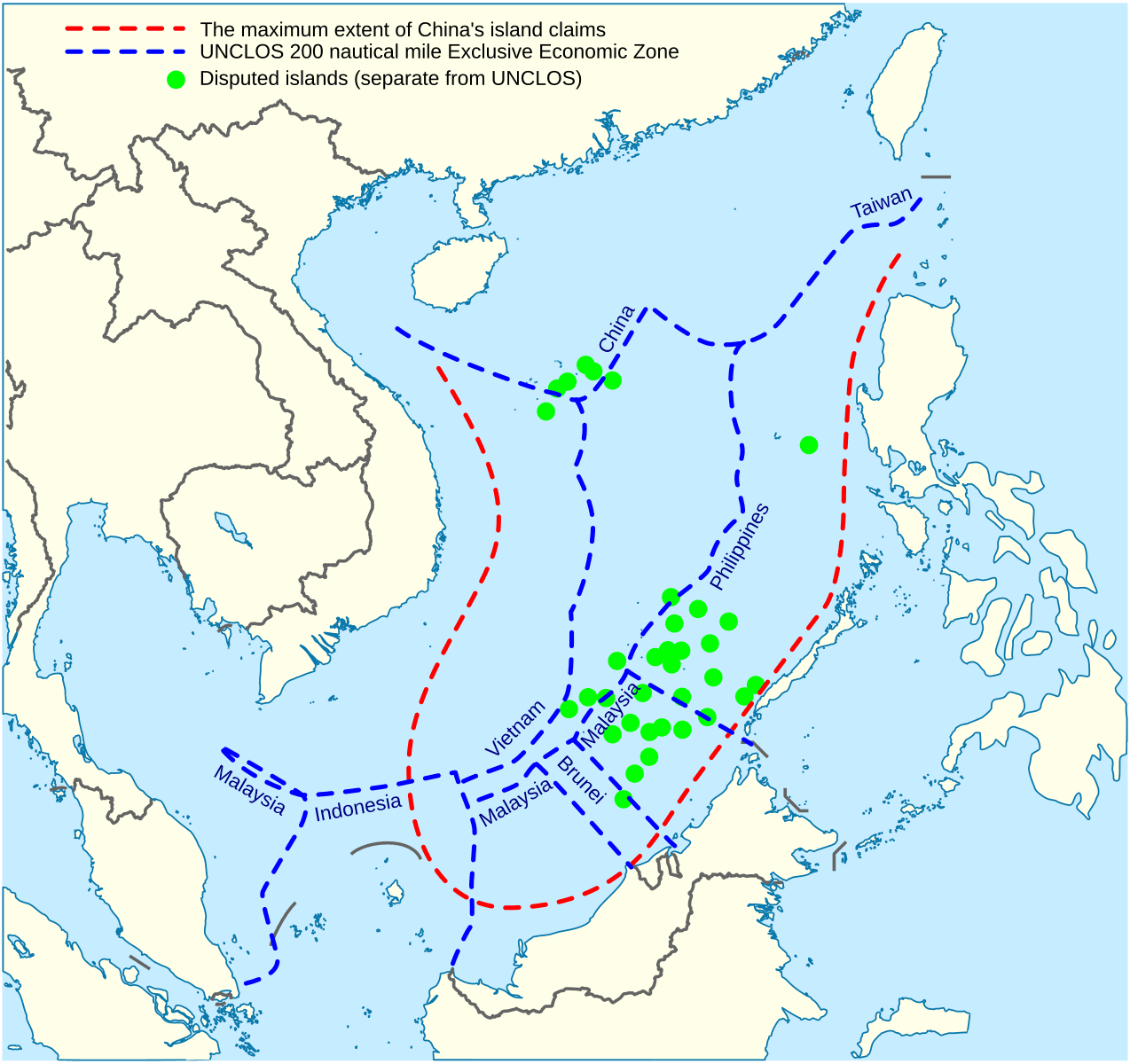
What makes the South China Sea genuinely decisive for global strategy in 2026, rather than merely a significant regional dispute among Southeast Asian neighbors, is the way it functions simultaneously as an economic chokepoint, a legal test case for the entire international maritime order, and the clearest available signal of whether a rising China intends to operate within existing international rules or methodically replace them with rules of its own making. Beijing's expansive territorial claims, encoded in the so-called "nine-dash line" and recently extended further through an even more aggressive "ten-dash line" published in 2023, were declared to have no legal basis whatsoever by the Permanent Court of Arbitration in its landmark 2016 ruling. China rejected that ruling outright and has spent the subsequent decade systematically constructing the military, administrative, and physical infrastructure needed to enforce control regardless of what international law actually says.
As 2026 approaches the ten-year anniversary of that arbitration award, the South China Sea has become the clearest live test anywhere in the world of whether the rules-based maritime order that has governed global trade since the 1982 UN Convention on the Law of the Sea retains genuine enforceability against a great power determined to disregard it - or whether raw naval power and persistent grey-zone coercion can simply override international legal judgment when the contesting party calculates the costs of defiance are tolerable. The answer to that question, still being written through daily confrontations between Chinese coast guard vessels and Philippine fishing boats, will shape far more than Southeast Asian regional order. It will determine whether the broader rules-based international system survives its most direct contemporary challenge.
Background: Geography, History, and the Making of a Flashpoint
The South China Sea's geography alone would guarantee its strategic significance even absent any territorial dispute. Bounded by China and Taiwan to the north, Vietnam to the west, the Philippines to the east, and Malaysia, Brunei, and Indonesia to the south, the sea functions as the primary maritime artery connecting the Indian Ocean, through the Strait of Malacca, to the Pacific Ocean and the major economies of Northeast Asia. Virtually every container ship, oil tanker, and bulk carrier moving between the Middle East, Europe, or South Asia and the manufacturing centers of China, Japan, and South Korea must transit these waters, making the South China Sea functionally irreplaceable to global supply chains in a manner few other maritime spaces can match.
China's territorial claims over the sea rest on historical narratives asserting that Chinese sailors and traders utilized the region's islands more than two thousand years ago, providing the basis for Beijing's assertion of sovereignty over the overwhelming majority of the sea's surface area, encoded cartographically in the nine-dash line that first appeared on Chinese government maps in 1947, predating the People's Republic itself. This historical claim sits in direct tension with the modern international legal framework established by the UN Convention on the Law of the Sea, ratified in 1982, which establishes Exclusive Economic Zones extending 200 nautical miles from a coastal state's shoreline, granting that state exclusive rights to the resources within that zone regardless of historical claims asserted by other parties.
The Philippines formally challenged China's nine-dash line claims before the Permanent Court of Arbitration at The Hague in 2013, seeking legal clarity on the relationship between historical claims and the UNCLOS framework. The Court's July 2016 ruling was unambiguous and comprehensive: China's historical claims to the waters within the nine-dash line had no legal basis under international law, and several of the larger Chinese-occupied features in the Spratly Islands did not qualify as islands capable of generating their own Exclusive Economic Zones under UNCLOS criteria. Beijing's response was equally unambiguous in the opposite direction - outright rejection of the ruling's legitimacy, dismissing the tribunal's jurisdiction entirely and continuing, indeed accelerating, the island construction and militarization program that the ruling had specifically addressed.
Current Situation: A Decade of Defiance Reaching Its Anniversary
The Philippines-China Confrontation: The Sea's Sharpest Edge
The most acute and consistently dangerous dimension of South China Sea tensions in 2026 remains the sustained confrontation between China and the Philippines, a relationship that has transformed dramatically since President Ferdinand Marcos Jr.'s 2022 election reversed his predecessor Rodrigo Duterte's six-year tilt toward accommodation with Beijing. Marcos has pursued a deliberate strategy of transparency and alliance reinforcement, documenting and publicizing Chinese coercive actions for international audiences while deepening Manila's Mutual Defense Treaty relationship with Washington and expanding security partnerships with Japan, Australia, and other regional democracies.
East Asia Forum's February 2026 assessment characterizes the persistent dynamic with clinical precision: China has settled into a consistent action-reaction pattern, responding to any Philippine activity challenging its territorial claims with calibrated coercive measures, while the underlying strategic competition between Beijing and Washington ensures that any individual incident carries escalatory potential extending well beyond the immediate bilateral Philippines-China relationship. The specific risk East Asia Forum identifies deserves serious attention from every regional security planner: China's confrontationist operational style genuinely risks producing an accident or miscalculation resulting in loss of life, a scenario that would likely prompt Manila to invoke Article Four of its Mutual Defense Treaty with the United States, triggering exactly the kind of great-power crisis that grey-zone coercion tactics are theoretically designed to avoid.
The Philippines has not confined its response to bilateral defense cooperation alone. Manila's June 2024 filing with the United Nations claiming an extended continental shelf in the South China Sea represented a calculated legal escalation, asserting Philippine exclusive rights to explore and exploit natural resources within this expanded entitlement zone - a deliberate, methodical legal strategy designed to reinforce the 2016 arbitration victory through additional, formally documented claims that further complicate China's position under international law, even as Beijing continues simply disregarding the existing legal framework altogether.
ASEAN's Code of Conduct Race: Diplomacy Against the Clock
The most significant diplomatic development shaping South China Sea dynamics in 2026 involves the accelerated push toward concluding the long-stalled ASEAN-China Code of Conduct, with Philippine President Marcos explicitly pledging, during Manila's hosting of the May 2026 ASEAN summit in Cebu City, to conclude the framework by the end of the year. The summit's announcement of a new ASEAN Maritime Centre headquartered in the Philippines represents a concrete institutional commitment to sustained, coordinated regional maritime monitoring and coordination - though Marcos's explicit linkage of deeper ASEAN-China economic cooperation to actual Code of Conduct conclusion signals Manila's recognition that diplomatic pressure, not merely patient negotiation, will be required to move Beijing toward genuine agreement.
The fundamental obstacle blocking meaningful Code of Conduct progress, as documented extensively across multiple 2026 analyses, remains structurally unchanged despite the renewed diplomatic urgency: Beijing wants a framework that constrains external power military activity, particularly American and allied operations, within the South China Sea without correspondingly constraining China's own continued island construction, militarization, and coast guard operations. ASEAN claimant states, by contrast, seek meaningful legal protections against exactly the kind of coercive behavior China has consistently demonstrated, creating a negotiating position gap that a decade of intermittent Code of Conduct discussions has never successfully bridged, and that the accelerated 2026 timeline faces genuine risk of replicating rather than resolving.
The Joint Development Trap: Energy Security Meets Sovereignty Risk
A particularly consequential dimension of 2026's South China Sea dynamics involves the intersection of regional energy security anxiety, driven substantially by the broader Middle East instability documented in parallel Global Chanakya conflict analysis, with renewed Chinese proposals for "joint development" arrangements covering disputed oil and gas resources. East Asia Forum's sharp May 2026 analysis identifies the genuine strategic trap embedded within these seemingly attractive proposals: while joint development with China might appear economically pragmatic for energy-stressed Southeast Asian economies facing elevated costs from broader Middle East energy market disruption, accepting such arrangements risks implicitly validating China's underlying maritime claims, effectively converting undisputed Philippine and Vietnamese Exclusive Economic Zones into "contested areas" by default - surrendering through economic pragmatism exactly the legal ground that a decade of arbitration victory and diplomatic resistance has sought to protect.
This tension between near-term energy security necessity and long-term legal and sovereignty preservation represents one of the more sophisticated coercive instruments available to Chinese South China Sea strategy: rather than relying exclusively on military and coast guard pressure, Beijing can exploit genuine regional economic vulnerability - intensified specifically by the broader global energy shock connected to Middle East turmoil - to extract strategic concessions that direct confrontation might fail to achieve. The approaching tenth anniversary of the 2016 Arbitration Award in 2026 has prompted renewed regional emphasis on treating that ruling as what East Asia Forum terms a non-negotiable compass guiding coastal state decision-making, specifically intended to help Southeast Asian governments resist exactly this kind of strategically costly accommodation.
Vietnam's Quiet Infrastructure Buildup
While Philippine confrontations with China generate the most consistent international media attention, Vietnam's parallel strategy of methodical infrastructure development across its own Spratly Islands holdings represents an equally significant, if less publicly dramatic, dimension of the broader South China Sea competition. Vietnam's continued expansion of military and civilian infrastructure across its claimed features reflects Hanoi's distinctive strategic posture - deeply suspicious of both Chinese regional hegemony and the reliability of American security commitments, Vietnam has consistently prioritized building independent physical presence and defensive capability over primary reliance on any external security guarantee, a posture rooted in Vietnam's own complicated, historically fraught relationship with both China and the United States.
Strategic Analysis: Why This Sea Determines Broader Global Order
The Resource Dimension: Beyond Oil to Critical Minerals
Contemporary South China Sea strategic analysis increasingly extends beyond the traditional focus on oil, natural gas, and fisheries to encompass deep-sea mineral deposits of nickel, cobalt, and lithium - materials directly relevant to the broader critical minerals competition documented extensively in parallel Global Chanakya analysis of China's rare earth strategy and global mineral supply chains. CFR's analysis specifically notes that many of these strategically valuable deposits fall within the Philippines' legally recognized Exclusive Economic Zone, adding direct economic stakes to Manila's territorial defense beyond the traditional fishing and energy concerns that have historically dominated Philippine South China Sea policy discussion.
This resource dimension connects the South China Sea dispute directly to the broader global competition over critical mineral supply chains that increasingly shapes great-power strategic calculation across multiple theaters simultaneously. A South China Sea order that effectively validates Chinese control over disputed maritime resources would not merely represent a regional sovereignty concession - it would meaningfully reinforce Chinese leverage within exactly the critical mineral supply chains that Western diversification efforts, documented extensively in parallel Global Chanakya analysis, are working urgently to reduce dependence upon.
The Precedent Question: What South China Sea Outcomes Signal Globally
The single most important strategic reality underlying South China Sea significance extends beyond the region's substantial direct economic and resource value into its function as the clearest available real-world test of whether international maritime law retains genuine enforceability against a determined, capable great power. China's outright rejection of the 2016 Arbitration Award, combined with its sustained, successful decade-long program of island construction, militarization, and grey-zone coercion against weaker claimant states, represents the most direct contemporary challenge to the post-1982 UNCLOS framework that governs maritime order globally.
This precedent-setting function carries consequences extending far beyond Southeast Asia. Every revisionist power globally - Russia regarding its own territorial ambitions, any future state contemplating maritime boundary disputes anywhere on earth - is watching how the international system responds to China's sustained, successful defiance of binding international legal judgment. A South China Sea outcome that effectively validates Chinese coercive success, whether through exhausted regional accommodation, inadequate American and allied countervailing pressure, or simple attrition of claimant state resolve, would send an unmistakable signal that international maritime law functions only when convenient for sufficiently powerful states to respect it voluntarily - a precedent with genuinely global, not merely regional, implications for international order.
The American Calculation: Non-Claimant With Decisive Stakes
The United States occupies a distinctive strategic position within South China Sea dynamics: Washington asserts no territorial claims of its own within the disputed waters, yet maintains what amounts to decisive strategic stakes in the outcome, rooted in both treaty alliance commitments to the Philippines and broader American interest in preserving freedom of navigation principles essential to global trade and to American naval power projection capability worldwide. American freedom of navigation operations, conducted regularly through contested South China Sea waters specifically to challenge excessive Chinese maritime claims, represent the most visible expression of this broader American strategic interest in preventing China from converting de facto control into accepted international legal precedent.
This American non-claimant status creates genuine strategic complexity, however: Washington's South China Sea engagement depends substantially on sustained Philippine alliance commitment and broader regional partner cooperation rather than direct American territorial interest, meaning American strategic consistency in the region remains, as documented extensively in parallel Global Chanakya analysis of declining American unipolarity, subject to the same broader alliance reliability questions complicating American strategic posture across the Indo-Pacific and globally.
Global Impact: Ripple Effects Across the International System
Trade and Supply Chain Vulnerability
The South China Sea's function as conduit for roughly one-third of global maritime trade means that any significant escalation, whether through direct military confrontation or sustained Chinese coercive control sufficient to constrain freedom of navigation, would generate economic shockwaves extending to virtually every economy on earth. The interconnection with broader Indo-Pacific supply chain dynamics, documented extensively in parallel Global Chanakya analysis, means South China Sea instability compounds rather than operates independently from the broader Taiwan Strait semiconductor supply chain vulnerability and the Strait of Malacca chokepoint risk that together constitute the most consequential maritime vulnerability points in the entire global trading system.
ASEAN's Institutional Credibility Test
The accelerated 2026 Code of Conduct timeline represents a genuine credibility test for ASEAN's broader institutional relevance as a regional governance body. International Crisis Group's documentation of historical ASEAN chair behavior - specifically noting instances where the rotating chairmanship has been used to actively remove South China Sea discussion from summit agendas rather than confront the issue directly - illustrates the persistent internal ASEAN tension between member states facing direct Chinese coercion (the Philippines and Vietnam most acutely) and those prioritizing broader economic relationships with Beijing that complicate unified regional response (particularly Cambodia and, to varying degrees, other mainland Southeast Asian states with deeper Chinese economic integration).
Risk Assessment
The Accidental Escalation Risk
The persistent action-reaction confrontation cycle between Chinese coast guard and maritime militia assets and Philippine vessels carries genuine, sustained risk of an incident producing casualties severe enough to trigger formal Mutual Defense Treaty invocation, converting a contained bilateral confrontation into a direct US-China crisis with implications extending far beyond the immediate South China Sea theater. The frequency of documented skirmishes and collisions between coast guard vessels, as extensively chronicled through 2025 and into 2026, means this risk is not hypothetical but an active, ongoing feature of the current strategic environment.
The Code of Conduct Failure Risk
Should the accelerated 2026 Code of Conduct timeline fail to produce genuine agreement, as the structural negotiating gap between Chinese and ASEAN claimant state positions suggests remains likely, the resulting diplomatic setback would further erode confidence in negotiated resolution prospects, potentially accelerating individual claimant states' reliance on unilateral military buildup and external alliance reinforcement rather than continued investment in the multilateral diplomatic process.
Future Scenarios
Scenario Analysis: South China Sea Trajectories Through 2030
Scenario One: Partial Code of Conduct Success (Probability: 30%)
ASEAN and China conclude a meaningful, if imperfect, Code of Conduct framework by the 2026 target, establishing genuine incident-management protocols and confidence-building measures that reduce, without eliminating, the frequency and severity of direct confrontations, while underlying sovereignty disputes remain unresolved but better managed through institutionalized crisis-prevention mechanisms.
Scenario Two: Continued Managed Confrontation (Probability: 50%)
The most probable trajectory involves continued action-reaction confrontation cycles without either decisive escalation or genuine resolution, with Code of Conduct negotiations continuing indefinitely without conclusive agreement, while individual claimant states, particularly the Philippines and Vietnam, continue strengthening both unilateral military capability and external alliance relationships as the primary mechanism for managing ongoing Chinese pressure.
Scenario Three: Triggering Incident and Crisis Escalation (Probability: 20%)
A specific confrontation incident produces casualties severe enough to trigger Philippine Mutual Defense Treaty invocation, converting the sustained low-intensity confrontation into a genuine US-China crisis with significant implications for broader regional stability, global trade, and the credibility of both American alliance commitments and Chinese willingness to accept meaningful constraint on its regional ambitions.
Intelligence Forecast
- The 2026 ASEAN-China Code of Conduct deadline will likely produce partial progress without full resolution, given the persistent structural gap between Chinese preferences for constraining external power activity and ASEAN claimant state demands for genuine sovereignty protection.
- China will continue its action-reaction coercive pattern against Philippine and Vietnamese activity, calibrated to avoid triggering formal alliance treaty invocation while incrementally normalizing expanded Chinese presence and operational control.
- The Philippines will continue deepening its alliance diversification strategy, expanding security cooperation with Japan, Australia, and other regional partners beyond its core American alliance relationship, reducing exclusive dependence on any single external security guarantor.
- Joint development proposals will remain contentious, with continued regional debate between near-term energy security pragmatism and longer-term sovereignty preservation concerns, particularly as broader Middle East-driven energy market volatility persists.
- The risk of a significant confrontation incident will remain persistently elevated through 2026 given the sustained operational tempo of coast guard and maritime militia confrontations, without representing the most probable single-year outcome.
Final Strategic Takeaway
The South China Sea matters in global strategy not because of any single dramatic confrontation but because it functions as the most consistent, sustained real-world test of whether the international legal and economic order that has governed global trade for four decades retains genuine force against a great power determined to disregard it when convenient. The 2016 Permanent Court of Arbitration ruling delivered an unambiguous legal verdict; China's decade-long rejection of that verdict, backed by sustained military and grey-zone coercive capability, represents the clearest contemporary case study available anywhere in the world of what happens when international law collides directly with great-power material capability and political will.
What the approaching tenth anniversary of that ruling makes clear is that legal victory alone, however clean and comprehensive, does not automatically translate into practical enforcement absent sustained, costly, and politically difficult countervailing pressure from claimant states and their external partners. The Philippines under Marcos has demonstrated genuine strategic sophistication in combining legal reinforcement, alliance diversification, and international transparency to resist Chinese coercion more effectively than its predecessor's accommodation strategy achieved - but Manila's continued vulnerability to both direct military pressure and economic coercion through energy security exploitation illustrates that even the most committed claimant state cannot fully offset the structural power asymmetry it faces without sustained, reliable external support.
The broader stakes extend well beyond who controls specific reefs, shoals, and fishing grounds. The South China Sea is, in the most literal sense available anywhere in contemporary international relations, the place where the world is discovering in real time whether the rules-based order survives contact with a great power that has concluded the costs of defying it are tolerable. Every other revisionist actor on earth is watching the answer unfold, and that answer - still being written through daily confrontations in waters most of the world's population will never see - will shape the contours of international order for decades regardless of how the formal Code of Conduct negotiations ultimately resolve.
Global Chanakya Intelligence Assessment: The South China Sea is not a regional dispute that happens to involve great powers - it is the clearest global test case for whether international law constrains great-power behavior when material power says otherwise. How this contest resolves will echo far beyond Southeast Asia, shaping every other contested maritime and territorial dispute on earth.