
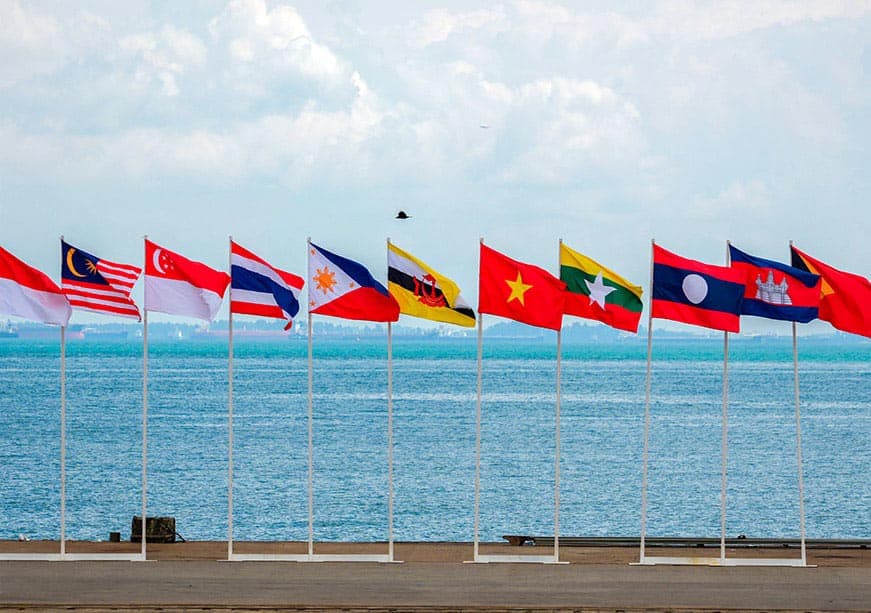
ASEAN's Role in Global Stability: Centrality Under Maximum Strain
Executive Summary
Few regional organizations anywhere in the world carry as much aspirational weight relative to their actual coercive power as the Association of Southeast Asian Nations. For nearly six decades, ASEAN has functioned as the diplomatic glue holding together a region of extraordinary diversity - ten member states spanning Buddhist, Muslim, Christian, and Confucian civilizational traditions, governance systems ranging from robust democracy to military rule to communist single-party administration, and economic development levels stretching from Singapore's first-world prosperity to Myanmar's ongoing civil conflict. ASEAN's foundational principle of "centrality" holds that Southeast Asia's collective voice, rather than any single great power's unilateral preference, should shape the region's strategic order. In 2026, that principle faces its most consequential test in a generation.
The test arrives in an almost poetically difficult form: the Philippines, the single ASEAN member state most directly and aggressively confronted by Chinese coercion in the South China Sea, assumed the bloc's rotating chairmanship on January 1, 2026, tasked simultaneously with defending its own sovereign maritime rights and steering consensus-based regional diplomacy among ten states with sharply divergent threat perceptions and economic dependencies on Beijing. President Ferdinand Marcos Jr. has staked his chairmanship's central legacy on finally concluding a legally binding South China Sea Code of Conduct - a framework that has been under negotiation, in one form or another, for over two decades and through eight years of the current formal process, with the symbolic weight of 2026 marking precisely ten years since the Permanent Court of Arbitration's landmark ruling against China's expansive maritime claims.
What makes ASEAN's 2026 stability role genuinely consequential, rather than merely diplomatically interesting, is the broader pattern it represents: a regional organization built on consensus and non-interference attempting to manage the most acute great-power flashpoint on earth, at precisely the moment when, as CSIS's analysis bluntly assesses, the region's most consequential security dynamics increasingly run through bilateral alliances and minilateral arrangements rather than through ASEAN's own consensus forums. Whether ASEAN can adapt its foundational diplomatic model to this new reality, or whether it becomes an increasingly hollow vessel for great-power competition that actually unfolds elsewhere, will shape not just Southeast Asian stability but the broader architecture of Indo-Pacific order.
Background: Six Decades of Consensus Diplomacy in a Contested Region
ASEAN was formally established in August 1967 by five founding members - Indonesia, Malaysia, the Philippines, Singapore, and Thailand - explicitly conceived as a Cold War-era mechanism for promoting regional stability and economic cooperation among non-communist Southeast Asian states wary of both superpower entanglement and the spillover effects of conflict in neighboring Indochina. The organization's foundational principles, encoded across subsequent decades into what became known as the "ASEAN Way," emphasized mutual respect for sovereignty and territorial integrity, strict non-interference in member states' internal affairs, peaceful dispute resolution, and decision-making exclusively through consensus rather than majority vote - a deliberately cautious institutional architecture reflecting the genuine fragility of trust among newly independent states still navigating the legacy of colonial-era boundaries and, in several cases, direct historical conflict with one another.
The bloc's membership expanded progressively through subsequent decades - Brunei in 1984, followed by Vietnam, Laos, Myanmar, and Cambodia through the 1990s - bringing the organization's full ten-member configuration into being and, with it, even greater internal diversity of political system, economic development level, and strategic alignment than the founding members alone had represented. East Timor's pending accession as an eleventh member, expected to formalize during 2026, will extend this diversity further while testing whether ASEAN's consensus-based decision architecture can continue functioning effectively as its membership and corresponding range of national interests continue expanding.
The concept of "ASEAN centrality" - the principle that Southeast Asia's collective diplomatic architecture should remain the primary forum through which regional order is negotiated, rather than ceding that role to any single external power's preferred bilateral or unilateral framework - became increasingly central to ASEAN's self-conception precisely as great-power competition between the United States and China intensified through the 2010s and 2020s. The South China Sea territorial disputes, involving China's expansive claims overlapping with the exclusive economic zones of the Philippines, Vietnam, Malaysia, Brunei, and Indonesia, have been the single most persistent test of whether this centrality principle can translate into genuine collective leverage or whether it remains, as critics increasingly argue, largely aspirational rhetoric obscuring the reality that actual security outcomes are determined through bilateral great-power alignment rather than ASEAN consensus itself.
Current Situation: The Philippines Chairmanship as Stress Test
An Unprecedented Dual Mandate
The Philippines assumed the ASEAN chairmanship on January 1, 2026, under the theme "Navigating Our Future, Together," organizing its agenda around three pillars: Peace and Security Anchors, Prosperity Corridors, and People Empowerment, with the chairmanship encompassing the hosting of more than 650 ASEAN meetings including two full summits and twenty-four ministerial gatherings throughout the year. CSIS's analysis correctly identifies the chairmanship's defining characteristic as "both symbolic and strategic" - symbolically significant given its coincidence with the tenth anniversary of Manila's own landmark legal victory at The Hague, and strategically consequential given the genuine tension between upholding ASEAN's consensus principles while simultaneously advancing the Philippines' own urgent national security interests against sustained Chinese coercion.
This dual mandate creates what Foreign Policy's January 2026 analysis frames starkly: the Philippines must somehow function as both ASEAN's neutral consensus-builder and the bloc's most aggrieved claimant state, advancing its own sovereignty claims through expanding bilateral defense partnerships even while formally chairing an organization whose foundational principles emphasize collective, non-confrontational dispute resolution. China Radio International's analysis, despite its predictable state-media framing, identifies this tension with genuine analytical precision: Manila's core 2026 challenge is "unavoidable" - continuing to assert maritime rights through presence, patrols, and public exposure of Chinese confrontations as a claimant state, while simultaneously preserving the unity, neutrality, and centrality required of an effective ASEAN chair, particularly given that several member states prioritize economic stability with Beijing over confrontational solidarity with Manila.
The Code of Conduct Push: Momentum Without Resolution
The centerpiece of the Philippines' security agenda involves finally concluding the long-stalled South China Sea Code of Conduct, a framework under formal negotiation for eight years within a broader ASEAN-China process spanning two full decades. Foreign Affairs Secretary Ma. Theresa Lazaro's hosting of the ASEAN Foreign Ministers' Retreat in Cebu City on January 29, 2026 - the first major ministerial gathering under the Philippine chairship, drawing approximately 200 delegates - placed the Code of Conduct prominently on the agenda, with Department of Foreign Affairs officials confirming shared commitment among ASEAN member states and China to conclude negotiations within the agreed 2026 timeline.
Yet the substantive analytical consensus across multiple independent assessments converges on genuine skepticism that this timeline will produce a meaningful, enforceable outcome. UPI's January 2026 reporting cites regional security analyst Colin Koh's assessment that meaningful Code of Conduct progress "isn't necessarily hinged heavily on who holds the ASEAN chairmanship," while Foreign Policy's analysis identifies the more fundamental structural problem: leaked draft text suggests the framework, even if formally concluded, would lack genuine enforcement mechanisms and is unlikely to achieve true legally binding status, since Beijing has consistently and successfully resisted any compliance provisions that would meaningfully constrain its own operational behavior in contested waters.
The 9DASHLINE analysis offers perhaps the most analytically sophisticated framing of what the Code of Conduct process actually represents: not a sovereignty settlement or a mechanism capable of reconciling fundamentally incompatible territorial claims, but rather "a stress test of ASEAN's cohesion and its capacity to convert institutional habits into meaningful restraint" within a maritime environment defined by persistent power asymmetries and calibrated coercion. This framing correctly identifies the Code of Conduct negotiation as simultaneously three distinct negotiations occurring at once: ASEAN negotiating externally with China, ASEAN negotiating internally among its own divergent member interests, and the broader question of how much legal principle can realistically influence behavior within an environment defined by genuine strategic rivalry rather than good-faith rule-following.
Where Real Security Progress Is Actually Occurring: Bilateral and Minilateral Channels
CSIS's sharply titled analysis - "Rhetoric vs. Reality" - identifies the central paradox defining Philippine security strategy under its ASEAN chairmanship: meaningful progress in addressing genuine South China Sea security challenges depends considerably less on ASEAN consensus mechanisms and considerably more on Manila's expanding network of bilateral and minilateral defense partnerships, particularly with the United States. The concrete evidence for this pattern emerged just days after the formal ASEAN Summit concluded, when the ASEAN Defence Ministers' Meeting Plus produced the genuinely substantive security announcement of the period: US Secretary of Defense Pete Hegseth and Philippine Secretary of National Defense Gilberto Teodoro's joint announcement establishing Task Force Philippines alongside completion of an Alliance Readiness Action Plan.
This new task force, modeled after the previously revealed Task Force Ayungin focused specifically on allied response to South China Sea contingencies, represents a meaningfully expanded American operational commitment - approximately sixty permanent personnel under US Indo-Pacific Command jurisdiction, led by a one-star general or flag officer, with a broader mandate extending beyond pure South China Sea focus into disaster relief and other missions across the Philippine archipelago. Secretary Teodoro's explicit framing that Manila and Washington must not only strengthen their bilateral alliance but actively "add more allies" reflects precisely the kind of expanding minilateral security architecture - incorporating Japan, Australia, and other partners documented extensively in parallel Global Chanakya Indo-Pacific analysis - that increasingly substitutes for, rather than flows through, formal ASEAN consensus mechanisms.
China's Calibrated Pressure Campaign
Beijing's response to the Philippine chairmanship has combined formal diplomatic engagement with sustained operational coercion, illustrating the broader pattern of grey-zone pressure documented extensively in parallel Global Chanakya South China Sea analysis. Foreign Policy's reporting documents continued Chinese pressure against Marcos administration vessels through ramming incidents, military-grade laser targeting, and water cannon attacks against Philippine naval patrols - coercive tactics explicitly designed, in the analysis's framing, to reinforce China's expansive "ten-dash line" claims covering not merely the South China Sea but extending into the Taiwan Strait and overlapping substantially with the Philippines' own exclusive economic zone in direct contravention of the UN Convention on the Law of the Sea.
Significantly, China's official diplomatic posture has remained one of continued formal engagement with the Code of Conduct process even while sustaining this operational pressure campaign - Beijing continues attending ASEAN meetings and formally endorsing the goal of concluding negotiations, reflecting a calculated strategy of maintaining diplomatic legitimacy and avoiding the reputational costs of openly abandoning the process, while ensuring through sustained resistance to genuine compliance mechanisms that any eventual agreement constrains Chinese operational flexibility as minimally as possible.
The Persistent Flashpoint Geography
China Radio International's analysis, despite its institutional bias, offers a useful, specific accounting of where operational friction is most likely to persist throughout 2026 regardless of broader diplomatic developments: Scarborough Shoal, Sabina Shoal, and areas surrounding Thitu Island and Sandy Cay have become what the analysis terms "normalized confrontation zones," where both Philippine and Chinese forces maintain persistent incentives to demonstrate operational resolve through continued presence and patrol activity, regardless of the parallel Code of Conduct diplomatic track's progress or lack thereof.
Strategic Analysis: Can Centrality Survive Minilateralism?
The Structural Tension Between Consensus and Crisis Response
The single most important analytical insight emerging from ASEAN's 2026 experience concerns the structural mismatch between consensus-based decision-making, requiring unanimous agreement among ten states with genuinely divergent threat perceptions and economic dependencies, and the operational tempo of contemporary South China Sea confrontation, characterized by UPI's analysis as defined less by stability than by "tempo" - a surge in patrols, surveillance flights, and military exercises that raises genuine miscalculation risk and demands rapid, decisive crisis response mechanisms that consensus diplomacy structurally cannot provide.
This tension is not new to 2026, but the Philippine chairmanship has thrown it into unusually sharp relief precisely because the chairing state itself is simultaneously the most acutely threatened claimant. ASEAN's internal divisions, reflecting what 9DASHLINE's analysis identifies as fundamentally "uneven stakes in the South China Sea," mean that Cambodia, Laos, and to varying degrees Thailand and other mainland Southeast Asian states with deeper Chinese economic integration have structural incentives to favor accommodation and process over the kind of firm collective response that maritime claimant states like the Philippines and Vietnam increasingly favor - a division China has historically exploited with considerable skill, including through the chairmanship itself when Cambodia held the role in years past.
The Minilateral Substitution Effect
What CSIS's analysis identifies as the genuine emerging pattern - meaningful security progress occurring through bilateral and minilateral channels rather than ASEAN consensus mechanisms - represents a structurally significant evolution in regional security architecture extending well beyond the specific Philippine case. The proliferation of arrangements like Task Force Philippines, the deepening Japan-Philippines Reciprocal Access Agreement documented extensively in parallel Global Chanakya Indo-Pacific analysis, and the broader QUAD and AUKUS frameworks collectively suggest that ASEAN's practical security relevance is increasingly concentrated in its convening and agenda-setting functions rather than in its capacity to generate binding collective security outcomes.
This does not necessarily render ASEAN centrality meaningless - the organization retains genuine, irreplaceable value as a diplomatic convener, a forum for sustained dialogue with China that prevents complete diplomatic rupture, and a legitimizing framework that gives smaller claimant states collective voice they would lack operating purely bilaterally. But it does suggest a genuine evolution in what centrality actually means in practice: less a claim to exclusive or primary security decision-making authority, and more a claim to indispensable convening and legitimizing function operating alongside, rather than instead of, the harder security architecture that bilateral alliances and minilateral arrangements increasingly provide.
The Economic Dimension: ASEAN's Genuine Institutional Strength
Beyond the South China Sea security dimension that dominates international attention, the Philippine chairmanship's "Prosperity Corridors" pillar reflects an area where ASEAN's collective institutional architecture retains genuinely substantial, underappreciated relevance. The ASEAN Digital Economy Framework Agreement, positioned as what ASEM InfoBoard's analysis terms a "game changer," anchors an ambitious $2 trillion unified digital market vision, supported by coordinated efforts to strengthen regional semiconductor and critical minerals supply chains alongside expanded support for small and medium enterprises and creative industries across the bloc's diverse economies.
This economic dimension illustrates an important counterpoint to the security-focused narrative dominating most ASEAN coverage: even as the bloc's collective security relevance faces genuine structural challenges, its economic integration architecture continues representing a model of genuinely successful, substantive multilateral cooperation among states with otherwise significant political and developmental divergence - a track record that should inform more nuanced assessment of ASEAN's overall institutional value rather than allowing the South China Sea's particular difficulties to define the organization's broader contribution to regional stability.
Global Impact: Why ASEAN's Trajectory Matters Beyond Southeast Asia
The Template Question for Multilateral Crisis Management
ASEAN's 2026 experience carries significance extending well beyond Southeast Asia as a closely watched test case for whether consensus-based multilateral institutions, generally, retain genuine capacity to manage acute great-power security competition, or whether such institutions are structurally destined toward the kind of bilateral and minilateral substitution pattern emerging within the Indo-Pacific security architecture. This question carries direct relevance for parallel multilateral frameworks documented extensively in parallel Global Chanakya analysis, including BRICS' own struggle to maintain coherent collective positioning amid internal member divergence, and the broader Global South's distributed, non-bloc approach to strategic agency.
The China Behavioral Signal
How China ultimately engages with the Code of Conduct process - whether genuine, if limited, compromise emerges, or whether Beijing's pattern of formal engagement combined with substantive resistance to meaningful compliance mechanisms continues indefinitely - provides a significant signal regarding Chinese willingness to accept genuine multilateral constraint on its regional behavior more broadly, with direct relevance for how other multilateral frameworks, from the broader UN system to regional arrangements elsewhere, might expect Chinese engagement to function as Beijing's relative power continues growing.
Risk Assessment
The Miscalculation Risk Amid Surging Operational Tempo
UPI's identification of 2026's defining maritime characteristic as "tempo" rather than stability represents the single most significant near-term risk factor: surging patrol activity, surveillance flights, and military exercises across an increasingly contested maritime space, conducted by multiple Philippine, Chinese, and allied forces simultaneously, creates genuine, persistent risk of dangerous incident or miscalculation independent of the broader diplomatic Code of Conduct trajectory.
The ASEAN Fragmentation Risk
Continued Chinese exploitation of internal ASEAN divisions, combined with the genuine structural tension the Philippine chairmanship's dual claimant-and-chair role creates, carries meaningful risk of further eroding ASEAN's collective coherence and credibility as a genuine regional security forum, potentially accelerating the broader minilateral substitution pattern in ways that could ultimately diminish ASEAN's relevance even in the diplomatic convening and economic integration functions where it has historically demonstrated genuine institutional value.
Future Scenarios
Scenario Analysis: ASEAN's Trajectory Through 2030
Scenario One: Adapted Centrality (Probability: 35%)
ASEAN successfully redefines centrality around genuine convening, agenda-setting, and economic integration functions while accepting that hard security outcomes increasingly flow through complementary bilateral and minilateral channels, achieving a sustainable institutional equilibrium that preserves the bloc's diplomatic relevance without claiming exclusive security decision-making authority it cannot realistically deliver.
Scenario Two: Incremental Process Without Resolution (Probability: 45%)
The most probable trajectory involves continued incremental Code of Conduct progress - narrower confidence-building measures, incident-avoidance protocols, and standardized maritime communications - without achieving genuine, enforceable resolution of underlying sovereignty disputes, while operational friction persists at established flashpoints and minilateral security architecture continues deepening as the primary vehicle for substantive deterrence.
Scenario Three: Accelerated Fragmentation (Probability: 20%)
Continued Chinese exploitation of internal ASEAN divisions, combined with a significant escalatory incident during the heightened 2026 operational tempo, produces genuine collective coherence breakdown, with claimant states increasingly bypassing ASEAN consensus mechanisms entirely in favor of bilateral and minilateral security arrangements, fundamentally diminishing the bloc's practical relevance to regional security architecture.
Intelligence Forecast
- The South China Sea Code of Conduct will likely achieve incremental, narrower progress in 2026 rather than comprehensive, enforceable resolution, consistent with the consensus across CSIS, Foreign Policy, and regional analyst assessment that genuine compliance mechanisms remain politically unattainable given persistent Chinese resistance.
- Bilateral and minilateral security architecture will continue deepening as the primary vehicle for substantive deterrence, with Task Force Philippines and similar arrangements representing the genuine operational core of regional security response rather than ASEAN consensus mechanisms themselves.
- Operational friction will persist at established flashpoints including Scarborough Shoal, Sabina Shoal, and areas near Thitu Island and Sandy Cay, regardless of parallel diplomatic Code of Conduct progress.
- ASEAN's economic integration agenda, particularly the Digital Economy Framework Agreement, will likely show more substantive progress than the security track, reflecting the bloc's continued genuine institutional strength in economic rather than hard security domains.
- China will likely maintain its pattern of formal diplomatic engagement combined with sustained operational coercion, preserving diplomatic legitimacy while resisting meaningful constraint on its South China Sea behavior.
Final Strategic Takeaway
ASEAN's role in global stability in 2026 cannot be assessed through a simple binary of success or failure - the bloc's genuine institutional value and its genuine structural limitations coexist, often within the very same initiatives, in ways that demand more nuanced analytical treatment than either uncritical celebration of ASEAN centrality or dismissive characterization of the organization as merely symbolic theater. The Philippine chairmanship illustrates this duality with unusual clarity: Manila's pursuit of a binding Code of Conduct, even if it produces only incremental, non-binding outcomes, sustains a diplomatic process that prevents complete rupture with China and maintains a framework within which future, more substantive progress remains at least theoretically possible. Simultaneously, the genuine security progress actually protecting Philippine and broader regional interests flows substantially through the bilateral and minilateral channels - Task Force Philippines, expanding Japan and Australia defense cooperation, the broader QUAD and AUKUS architecture - that increasingly operate alongside, rather than through, ASEAN's formal consensus mechanisms.
What this suggests for ASEAN's longer-term trajectory is not institutional irrelevance but institutional evolution: a regional organization whose value increasingly lies in functions - sustained diplomatic engagement with China that individual states acting alone could not as credibly maintain, economic integration architecture that has demonstrated genuine substantive success, and a legitimizing framework that gives smaller Southeast Asian states collective voice they would otherwise lack - that differ meaningfully from the hard security guarantor role its founding "centrality" concept once aspirationally implied. Whether this evolution represents healthy institutional adaptation to changed strategic circumstances, or a slow hollowing-out of genuine regional agency in favor of greater dependence on external great-power security guarantees, remains the central, unresolved question that 2026's events will not definitively answer but will meaningfully shape.
The most honest assessment available, drawing on the convergent analysis across multiple independent observers, is that 2026 will likely be judged a qualified success not because sovereignty disputes are resolved - they will not be - but because the alternative to ASEAN's continued, imperfect diplomatic effort is genuine drift toward the normalization of maritime skirmishes and hazardous encounters as accepted tools of routine statecraft. That is the strategic threshold the region cannot afford to cross without notice, and preventing that drift, even through imperfect, incremental, consensus-constrained diplomacy, remains a genuine, if modest, contribution to global stability that should not be dismissed simply because it falls short of definitively resolving the underlying great-power competition driving the tension in the first place.
Global Chanakya Intelligence Assessment: ASEAN centrality is not dying - it is being redefined under pressure from a security environment its consensus-based architecture was never designed to manage alone. The bloc's genuine future relevance depends on accepting this evolution honestly rather than clinging to a model of collective security authority that bilateral and minilateral arrangements have already begun to supersede in practice.