Budgam Encounter Identity Dispute: India’s Hashim Moosa Claim and Pakistan’s Counter-Narrative
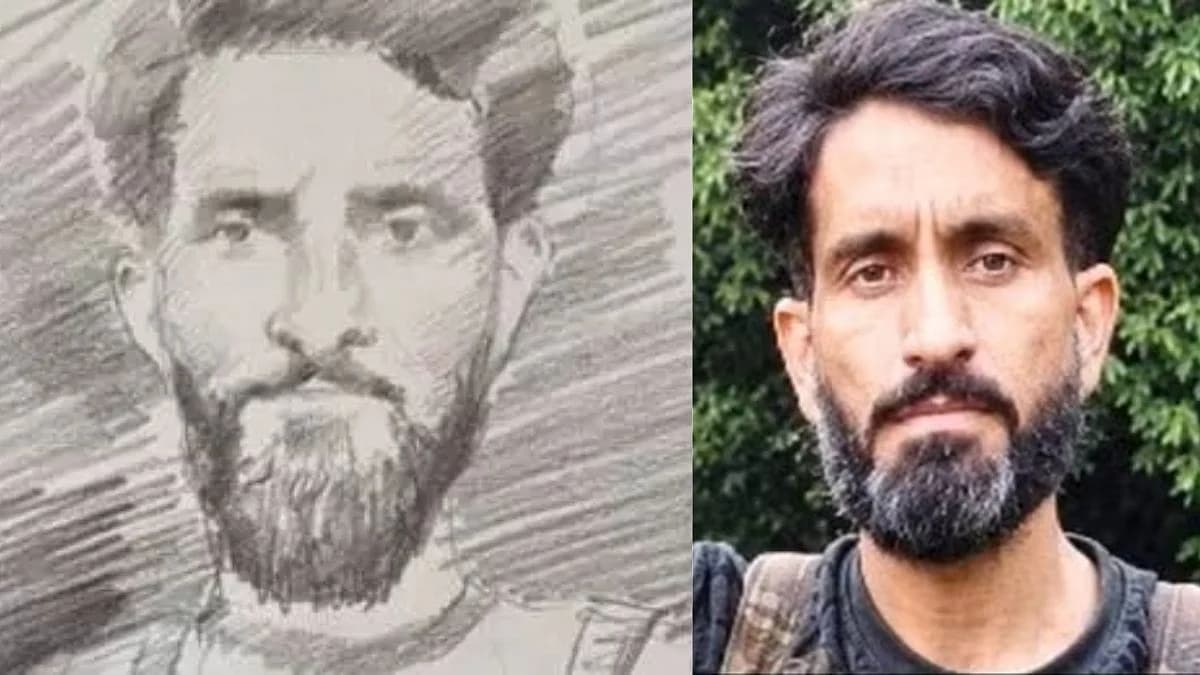
On 30 September 2026, Indian security forces announced that a senior Lashkar-e-Taiba (LeT) commander, Mohammad Asif alias Hashim Moosa, had been killed in an encounter in Jammu and Kashmir’s Budgam district. The following day, Pakistan’s military presented a living retired soldier named Muhammad Asif at a press conference in Rawalpindi and rejected India’s account.
The two announcements created a problem that neither side resolved through its public statements. India identified the recovered body as a militant it said had been involved in attacks across Jammu and Kashmir. Pakistan argued that the identification was false and that the man named by Indian authorities was alive in Pakistan.
The central question is straightforward: was the person killed in Budgam Hashim Moosa, as Indian authorities maintain, or has Pakistan demonstrated that India confused a deceased militant with a living former soldier? The public evidence reviewed for this report does not independently settle that question.
The encounter itself and the competing official claims are documented. The disputed identity, the alleged militant’s precise operational history and Pakistan’s accusation of a false-flag operation require separate scrutiny. Treating either government’s account as independently proven would go beyond the available evidence.
What Happened During Operation Korag?
According to the Indian Army’s Chinar Corps, a joint operation involving the Army, Jammu and Kashmir Police and the Central Reserve Police Force began in the Korag area of Yousmarg after intelligence inputs indicated suspicious activity. The forces challenged the suspected militants, who opened fire. One militant was reported killed in the exchange.
During a subsequent search in the general area of Palmaidan on 30 September, security personnel recovered a body and what the Army described as “war-like stores”. Indian authorities subsequently identified the deceased as Mohammad Asif alias Hashim Moosa, also known as Moosa Fauji or Asif Fauji in Indian reporting.
The Ministry of Home Affairs said the operation formed part of Operation Sheruwali, a wider effort launched in May 2026 to track the Lashkar network operating in Jammu and Kashmir. It described Moosa’s death as a serious setback for the organisation and said the four senior commanders in the group it was tracking had now been neutralised in separate operations.
These details establish the Indian government’s account of the operation. The recovery of a body and the announcement of an identity are distinct events, however. The public identification remains contested because Pakistan subsequently presented a man with a matching name and military background who said he was alive.
India’s Claim: A Senior LeT Commander Was Killed
Indian authorities described Hashim Moosa as a Pakistan-based LeT commander who had operated across the Pir Panjal region and the Kashmir Valley. They attributed several attacks in Jammu and Kashmir to the group with which he was allegedly associated.
The Ministry of Home Affairs connected the group to incidents including the Kandi attack in 2023, the Dera Ki Gali attack in December 2023, the Shahsitar attack in May 2024, the Shiv Khori attack in June 2024, the Gagangir and Bootapathri attacks in October 2024, and the Pahalgam attack in April 2025. These are official Indian attributions and should be distinguished from independently established findings about the responsibility of each individual.
The alleged Pahalgam connection gives the identification particular political and security weight. The April 2025 attack killed 26 people, and Indian authorities subsequently pursued several suspected militants. Indian reporting identified Moosa as a wanted figure associated with that network.
Indian accounts also described the individual as a former member of Pakistan’s Special Services Group (SSG), with previous service in the Pakistan Army. The claim matters because it would suggest that a trained former soldier had allegedly joined a militant organisation operating in Kashmir. However, the reported military background is itself part of the contested identity dispute; it should not be treated as independent proof that the deceased and the living man presented by Pakistan were the same person.
Pakistan’s Counter-Claim: A Retired Soldier Appears Alive
On 1 October, Lieutenant General Ahmed Sharif Chaudhry, Director General of Pakistan’s Inter-Services Public Relations (ISPR), held a press conference in Rawalpindi. He rejected India’s identification and presented a man introduced as retired Havildar Muhammad Asif, a former member of the Pakistan Army’s Special Services Group.
The man said he was from Pindi Gheb in Attock district and had retired from military service in 2023. He told the press conference that he had learned through social media that Indian reporting had declared him dead. He denied being the militant described by Indian authorities.
Chaudhry characterised the Indian account as a “false-flag” operation and accused New Delhi of manufacturing a narrative against Pakistan. He also warned that any Indian attack based on the incident would carry a severe cost.
Pakistan’s presentation established that a living man identified by its military as Muhammad Asif appeared publicly and denied being the deceased militant. It did not, by itself, establish the identity of the body recovered in Budgam. That would require independently authenticated identification evidence linking the body to one individual and distinguishing him from the person presented in Rawalpindi.
There is a further distinction between disproving one identity claim and proving a wider allegation. Even if a name or biographical detail had been wrongly matched, that alone would not establish Pakistan’s claim that the encounter was deliberately staged as a false-flag operation. Evidence of deliberate fabrication would be needed to support that conclusion.
The Evidence Gap: What Would Resolve the Dispute?
The strongest way to assess the competing accounts is to separate the questions they raise.
- Identity of the deceased: Independently authenticated forensic identification, reliable biometric comparisons or other verifiable records could help establish who was killed.
- Identity of the man presented in Rawalpindi: His military service and personal identity need to be assessed separately from the identity of the recovered body.
- Alleged militant affiliation: Evidence connecting the deceased to LeT, including authenticated records and corroborated investigative findings, would help establish the Indian claim.
- Links to earlier attacks: Specific evidence tying the individual to particular incidents is needed to distinguish an official allegation from a proven role.
- The false-flag allegation: Evidence of deliberate staging or fabrication would be required to substantiate Pakistan’s broader accusation.
Public statements and photographs can help establish what each government claims, but they are not substitutes for independently verifiable identification. Neither the Indian announcement nor Pakistan’s press conference should be treated as conclusive proof of all the claims made around the encounter.
The absence of publicly available independent verification does not prove that either side is lying. It means the central factual dispute remains unresolved in the material reviewed for this report.
Why the Dispute Matters Beyond One Encounter
India and Pakistan have long contested responsibility for militant violence, cross-border activity and security incidents in Jammu and Kashmir. In such an environment, a counter-terror operation can quickly become part of a wider political argument over state responsibility, military credibility and the legitimacy of security action.
The Budgam episode is especially sensitive because the Indian account connects the deceased to the Pahalgam attack, which killed civilians and intensified India-Pakistan tensions in 2025. Pakistan’s counter-claim challenges the identity at the centre of that announcement and portrays the operation as deliberate deception.
Each side has an incentive to establish its own version publicly. India has an interest in demonstrating that its intelligence and counter-terror operations can identify and remove senior militant figures. Pakistan has an interest in contesting allegations that its former military personnel are involved in militancy and in rejecting claims that it sponsors attacks in Kashmir.
Those incentives explain why the dispute became a public information contest. They do not tell us which account is correct. A credible assessment must resist the temptation to treat a government’s incentive to make a claim as proof that the claim is false - or true.
The Makkah Defence Alliance and the Escalation Question
During the 1 October press conference, Pakistan’s military spokesperson also reaffirmed Pakistan’s commitment to the Makkah Defence Alliance and the security of Saudi Arabia and the holy sites. The alliance reference formed part of the wider press briefing; it was not independent evidence about the identity of the person killed in Budgam.
The distinction matters. A warning that an Indian attack would incur a severe response can increase the political stakes of an already disputed incident, but it does not establish that military escalation is inevitable. The alliance statement concerned Pakistan’s stated defence commitments, while the encounter dispute concerned the identity and alleged affiliation of a deceased individual.
The relevant escalation risk lies in how governments use the competing accounts. If either side cites the incident to justify further military action, the dispute could move beyond public accusations. Conversely, if the parties avoid attaching new operational decisions to the unresolved identity claim, the immediate confrontation may remain primarily political and informational.
India’s Security Credibility and the Cost of Unverified Claims
For India, the operational claim and the subsequent identity dispute raise different questions. The first concerns whether security forces successfully engaged an armed individual during an intelligence-led operation. The second concerns the reliability of the identification announced afterward.
Accurate identification is important in counter-terrorism because it supports investigations, attribution of past attacks and public confidence in security institutions. When a named individual is publicly declared dead and another person with a matching identity appears alive, the government making the original claim faces a legitimate demand for verifiable clarification.
Pakistan also faces a burden of proof. Presenting a living former soldier does not automatically establish that he is the person Indian authorities intended to identify, nor does it independently prove that the encounter was fabricated. The identity of the deceased and the military record of the living man are related questions, but they are not interchangeable.
For both countries, the most credible route out of the dispute would be the release or independent examination of verifiable evidence. Repeating accusations without addressing the identity question may reinforce domestic narratives while leaving the factual issue unresolved.
Global Chanakya Assessment
The Budgam encounter is best understood as two connected but distinct events: an Indian counter-terror operation in which a body was recovered, and a subsequent dispute in which Pakistan presented a living retired soldier and challenged India’s identification of the deceased.
The public record supports the existence of the encounter, India’s identification of the deceased as Hashim Moosa and Pakistan’s presentation of Muhammad Asif as a living former soldier. It does not independently establish that the two were the same person, that India deliberately staged a false-flag operation, or that every attack attributed to Moosa was personally directed by him.
The most important strategic issue is the gap between official claims and independently verifiable evidence. In an India-Pakistan crisis, disputed facts can become inputs into public mobilisation, diplomatic messaging and military signalling before they have been independently settled. That creates room for miscalculation, especially when the allegations concern terrorism and alleged links to a serving or retired military establishment.
The assessment should change only when stronger evidence becomes available: authenticated identification records, forensic findings, credible independent reporting or an official explanation that directly addresses the discrepancy. Until then, the responsible conclusion is that the identity dispute remains unresolved.
Intelligence Forecast
In the near term, both governments may continue to defend their public accounts. India may emphasise the operational result and its wider campaign against LeT networks, while Pakistan may continue to use the appearance of the retired soldier to challenge Indian credibility.
The risk of escalation depends on whether the disputed incident is linked to concrete actions. New military threats, cross-border incidents or official claims that the episode justifies retaliation would raise concern. Continued public argument without new operational steps would indicate that the immediate contest remains focused on narrative and credibility.
Neither outcome can be predicted from the identity dispute alone. The decisive development would be independently verifiable evidence about the deceased and any subsequent action explicitly tied to the encounter.
Indicators to Monitor
- Any formal Indian government or Army response directly addressing Pakistan’s 1 October presentation.
- Publication or independent verification of forensic or biometric evidence identifying the deceased.
- Authenticated records clarifying the military service and identity of the man presented by Pakistan.
- New investigative findings concerning the deceased’s alleged LeT affiliation and links to specific attacks.
- Official statements tying the encounter to a proposed retaliatory or military action.
- Verified changes in military activity or security posture along the Line of Control.
- Further statements by Pakistan concerning the Makkah Defence Alliance and whether those statements are connected to any concrete response to India.