
Hamas-Israel War Timeline Analysis: 2023 to 2026
Every war has an official start date and, eventually, an official end date. Between those two markers, in this particular war, lies a death toll that climbed past 72,000, a hostage saga that consumed two years of international diplomacy, a ceasefire signed with enormous fanfare in Egypt, and a subsequent eight months in which that same ceasefire was violated more than three thousand times without any binding consequence for the party doing the violating. The Hamas-Israel war is the rare modern conflict whose timeline genuinely needs two parallel tracks to be told honestly: the official sequence of attacks, operations, and agreements that appears in government statements and news headlines, and the much messier, much more violent reality of what actually happened to the roughly two million people trapped inside Gaza while the official version of events was being written.
This report builds that timeline carefully, phase by phase, from the October 7, 2023, attack through the war's most intense military phase, into the fragile ceasefire architecture of late 2025, and up to the present moment in mid-2026, where the war's "second phase" - disarmament, governance, reconstruction - remains almost entirely unimplemented. Understanding this timeline matters because it is, in many ways, a case study in how a modern war can technically end on paper while continuing, in substance, on the ground.
Executive Summary
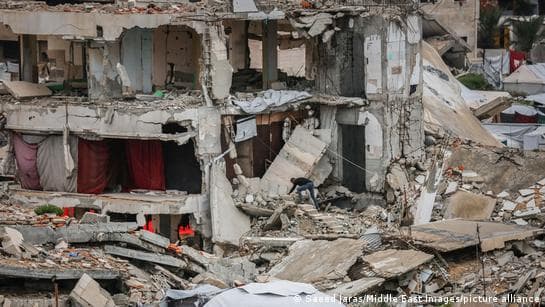
The Hamas-Israel war began on October 7, 2023, with a Hamas-led attack on southern Israel that killed approximately 1,200 people and resulted in roughly 250 hostages taken into Gaza. Israel's military response, conducted over the following twenty-four months, produced one of the most destructive urban military campaigns of the twenty-first century, with confirmed Palestinian deaths in Gaza reaching at least 72,991 by June 2026, including more than 20,000 children, alongside the near-total destruction of the territory's housing stock and civilian infrastructure.
A negotiated end to the war's active combat phase arrived through President Trump's twenty-point peace plan, signed by Israel and Hamas in Sharm el-Sheikh on October 9, 2025, which secured the release of all living hostages in exchange for thousands of Palestinian prisoners and an initial Israeli troop withdrawal to a demarcated "yellow line." This first phase was implemented relatively faithfully within days. The plan's far more ambitious second phase - Hamas disarmament, the establishment of a Palestinian technocratic governing committee, full Israeli withdrawal, and comprehensive reconstruction - has stalled almost completely in the eight months since, with Israel continuing to expand territorial control beyond the agreed demarcation line and Hamas refusing disarmament terms it considers a one-sided demand.
The result, documented extensively by Gaza's Government Media Office and independent media monitoring, is a ceasefire that exists far more robustly in diplomatic communiqués than in the lived reality of Gaza's population, where Israeli strikes have continued at a reduced but still lethal pace, humanitarian aid has consistently fallen short of agreed volumes, and the governance architecture meant to oversee implementation remains largely non-functional on the ground. This report traces that full arc and assesses where the conflict's still-unresolved core issues are most likely headed through the remainder of 2026.
Background
The October 7, 2023, attack did not emerge from a vacuum, even though its scale and brutality shocked observers across the political spectrum. It followed sixteen years of Israeli blockade and periodic military operations against Gaza since Hamas seized control of the territory in 2007, a decades-long broader Israeli-Palestinian conflict rooted in unresolved questions of statehood, occupation, and security dating to before Israel's 1948 founding, and a specific period of heightened regional tension tied to normalization efforts between Israel and several Arab states under the Abraham Accords framework, which Hamas and its allies viewed as further marginalizing the Palestinian cause from regional diplomatic priorities.
The attack itself, carried out by Hamas fighters who breached the Gaza-Israel border fence at multiple points, killed approximately 1,200 people, the overwhelming majority of them civilians, including attendees at a music festival near the border and residents of nearby kibbutzim. Approximately 250 people were taken hostage into Gaza, encompassing Israeli citizens, foreign nationals, and dual citizens. The attack triggered an immediate Israeli declaration of war and the beginning of a sustained military campaign, beginning with intensive aerial bombardment and progressing into a ground invasion of Gaza launched in late October 2023.
The war's subsequent two years proceeded through several distinct phases: an initial intensive combat period through early 2024 focused on northern Gaza and Gaza City; a sustained campaign through central and southern Gaza, including extended operations around Khan Younis and Rafah, through 2024 and into 2025; and periodic, ultimately unsuccessful, ceasefire and hostage-release negotiations mediated primarily by Qatar and Egypt, with intermittent American involvement under both the Biden and subsequent Trump administrations. Several partial, temporary truces were reached during this period, including a November 2023 weeklong pause and a more substantial, though still temporary, ceasefire in early 2025, each of which ultimately collapsed back into renewed combat.
The death toll's scale and the war's humanitarian consequences drew sustained international scrutiny throughout this period, including proceedings before the International Court of Justice regarding allegations of genocide and before the International Criminal Court regarding war crimes allegations against senior Israeli and Hamas officials. Israel has consistently rejected these characterizations, framing its campaign as a necessary and proportionate response to an existential security threat and a hostage crisis, while citing Hamas's documented practice of embedding military infrastructure within civilian areas as a central complicating factor in distinguishing combatants from civilians during operations.
Current Situation: The Full Timeline
Phase One: The Diplomatic Breakthrough (September-October 2025)
The path to the current ceasefire architecture accelerated dramatically in the final months before its signing. President Trump's administration, building on months of quieter diplomatic groundwork involving Qatar, Egypt, and Turkey, produced a comprehensive document formally titled "Implementation Steps for President Trump's Proposal for a Comprehensive End of Gaza War" - the operational framework for what became known publicly as the twenty-point plan.
Trump announced on October 8, 2025, that Israel and Hamas had reached agreement to begin the plan's first phase, under which all living hostages were to be released in exchange for 2,000 Palestinian prisoners, including 250 serving life sentences, within seventy-two hours of an Israeli withdrawal to pre-designated lines within Gaza. The formal signing occurred days later in Egypt. Following mediation by Egypt, Qatar, and Turkey, representatives from roughly thirty countries gathered on October 13 for a signing ceremony led by President Trump, though Israel and Hamas themselves were notably absent from the ceremony itself, an early sign of how much implementation work remained despite the formal diplomatic milestone.
Phase Two: The Hostage-Prisoner Exchange (October 2025)
The plan's first concrete deliverable proceeded with relative speed and faithfulness to its terms, in sharp contrast to almost everything that followed. On October 13, 2025, Hamas released all twenty remaining living Israeli captives in exchange for 250 Palestinians serving long prison sentences and 1,700 Palestinians who had been detained by Israel since October 7, 2023. This exchange represented the war's single most significant humanitarian breakthrough since its outbreak two years earlier, ending the agonizing uncertainty that had defined Israeli public life regarding the hostages' fate throughout the war's duration.
Phase Three: Governance Architecture Established on Paper (January 2026)
The ceasefire's far more ambitious second phase - covering Hamas disarmament, Palestinian governance transition, and reconstruction - formally began three months after the initial truce, in January 2026, with the naming of the institutions meant to oversee it. The Board of Peace and the Palestinian technocratic National Committee for the Administration of Gaza were established and formally named in January 2026, but neither body became operational on the ground in Gaza in the months that followed, leaving a governance vacuum that both continued Israeli military control and persistent Hamas presence filled by default.
Phase Four: The Violations Accumulate (October 2025-June 2026)
What distinguishes this ceasefire from a genuine cessation of hostilities is the sheer documented scale of continued violence throughout the period it has nominally been in effect. Israel violated the ceasefire agreement at least 3,201 times between October 10, 2025, and June 9, 2026, through continued air, artillery, and direct-fire attacks, according to Gaza's Government Media Office, with confirmed Palestinian deaths in Gaza since October 7, 2023, reaching at least 72,991, including 20,179 children, as of June 10, 2026. Independent media analysis corroborates the pattern's near-constant nature rather than its being episodic. An Al Jazeera analysis found Israel had attacked Gaza on 218 of the first 243 days of the ceasefire, meaning only 25 days passed entirely without violent attacks, deaths, or injuries being reported.
Phase Five: Territorial Compression and the Disarmament Standoff (Ongoing)
Throughout this period of nominal ceasefire and accumulating violations, the territorial reality on the ground shifted steadily in Israel's favor. Under the October 2025 agreement, Israeli forces withdrew to a demarcation line known as the "yellow line," which originally encompassed roughly 53 percent of Gaza, but that line continued shifting toward the Mediterranean Sea in the months that followed, compressing Gaza's displaced population into an ever-shrinking strip of territory and leaving Israel in control of more than half of Gaza's total territory.
At the center of the standoff blocking further progress sits the disarmament question. Israeli officials have stated the plan requires Hamas to step back from governing Gaza and have its weapons decommissioned, with Nikolay Mladenov, director-general of the Gaza Board of Peace, noting that armed factions maintaining independent military command and control structures cannot be permitted to continue, even as the plan includes provisions for voluntary weapons buyback, conditional amnesty, and safe passage abroad for those willing to disarm. Hamas has consistently and explicitly rejected this framing as one-sided. A Hamas spokesperson described Israel's disarmament demand as a "crude" double standard asking concessions only from the Palestinian side, while accusing Mladenov of bias toward Israel and insisting Hamas would not discuss the plan's second phase unless Israel first fully implemented the first phase's terms.
Phase Six: Humanitarian Shortfall (Ongoing)
The ceasefire's humanitarian provisions have similarly underdelivered against their stated targets throughout this period. While the ceasefire called for 600 aid trucks to enter Gaza daily, actual deliveries fell far short of that target, and six months into the agreement, 77 percent of Gaza's population still faced acute food insecurity, with severe shortages in medical supplies, fuel, and shelter materials persisting largely due to Israeli restrictions on items classified as "dual-use." Medical evacuation needs have remained similarly unmet. More than 18,000 patients, including 11,000 cancer patients, have required urgent medical treatment but have been unable to evacuate Gaza, with fewer than 400 patients permitted to leave through the Rafah crossing since it reopened in February 2026.
Strategic Analysis
The Hamas-Israel war's timeline reveals a recurring structural pattern that explains why this conflict has proven so resistant to genuine resolution despite multiple negotiated agreements: each side has consistently been willing to implement the portions of any deal that cost it little while resisting implementation of the portions that would require a fundamental strategic concession. The October 2025 ceasefire's first phase - hostages for prisoners, an initial troop pullback to a still-favorable demarcation line - asked both parties for something they were broadly willing to give. Its second phase - full Hamas disarmament, full Israeli withdrawal, genuine Palestinian self-governance - asks each party for precisely the concession its entire wartime strategy has been built around avoiding.
Israel's strategic objective throughout the war's two-year combat phase, and continuing through the ceasefire's implementation period, has remained remarkably consistent: the complete dismantling of Hamas's military and governing capacity in Gaza, paired with a security architecture that prevents recurrence of an October 7-style attack. Continued Israeli territorial expansion beyond the originally agreed yellow line during the disarmament impasse is not strategic drift; it reflects a calculated logic in which each additional kilometer of held territory becomes a fact on the ground strengthening Israel's position in any eventual final settlement, while simultaneously degrading whatever operational space Hamas retains within an increasingly compressed strip.
Hamas's strategic calculation, in turn, rests on continued survival as a political and military actor with genuine relevance to Gaza's governance, betting that sustained international attention to Gaza's humanitarian catastrophe and growing fatigue among Western publics over the war's duration will eventually produce a settlement on terms more favorable than unilateral disarmament. Israeli officials have characterized this as Hamas actively rebuilding its military and civilian capabilities and tightening its control over Gaza even while nominally party to the ceasefire, framing the group's posture as preparation for renewed confrontation rather than genuine transition toward peace - a characterization Hamas disputes, though the available evidence lends at least partial credibility to elements of the Israeli assessment.
The Board of Peace's persistent non-operational status throughout this period is, analytically, the single most important explanatory factor for why the ceasefire's violation count has been allowed to climb into the thousands without consequence. A peace architecture that exists on paper and in named institutions but lacks functioning presence on the ground cannot enforce the very terms it was established to oversee. This is compounded by the underlying asymmetry of the American mediating role: the United States has continued large-scale arms transfers and diplomatic backing to Israel throughout the ceasefire period, even while nominally overseeing an agreement Israel has violated thousands of times, a dynamic that international legal scholars have noted leaves the agreement functioning as a political instrument rather than a strongly enforceable legal one, given the absence of meaningful consequences for the violating party.
Global Impact
The war's timeline has reshaped the broader Middle Eastern diplomatic landscape in ways extending well beyond Gaza itself. The Board of Peace framework drew formal participation from roughly sixty countries, including Bahrain and Pakistan among others, reflecting a genuine, if uneasy, regional and international consensus around the need for a structured end to active combat, even as many of these same participating governments have voiced sustained criticism of Israel's conduct during the implementation period. The League of Arab States has characterized Israel's posture as one of "permanent war," explicitly rejecting the notion that the ceasefire framework represents genuine progress toward Palestinian statehood.
For Europe, the war's prolonged, unresolved second phase has produced a familiar pattern of declaratory concern without practical leverage. UN officials have specifically flagged Israel's continued withholding of nearly $2.5 billion in Palestinian clearance revenue, alongside large-scale West Bank settlement expansion, as developments undermining any realistic prospect of a two-state solution regardless of how Gaza's ceasefire implementation proceeds. This West Bank dimension matters as a parallel, slower-moving but structurally significant track running alongside the Gaza timeline specifically.
For the wider Indo-Pacific and South Asian readership this platform serves, the Hamas-Israel war's trajectory offers a instructive case study in the limits of great-power-brokered ceasefire architecture when the principal mediator maintains a fundamental military alignment with one party. The pattern - strong diplomatic credit claimed at the moment of signing, followed by a slow, largely unenforced erosion of the agreement's more demanding provisions - bears watching as a template that may recur in other protracted disputes where American mediation operates from structural asymmetry rather than genuine neutrality.
Risk Assessment
The most acute near-term risk remains a formal Israeli decision to resume full-scale combat operations, a course explicitly floated by Israeli security sources if Hamas continues refusing disarmament. An Israeli security source indicated that if Hamas continues refusing to disarm, the Israeli military will restart fighting in Gaza to "complete their mission" - language suggesting that the current reduced-intensity violation pattern could give way to a formal, comprehensive resumption of the war's most destructive phase rather than continuing indefinitely at current levels.
A prolonged stalemate risks cementing Gaza's permanent territorial division, leaving two million Palestinians without a viable future while entrenching a dangerous, unsustainable fragmentation.
A second significant risk involves the humanitarian catastrophe's continued normalization into something the international system simply absorbs as a baseline condition rather than an active emergency demanding urgent correction. With acute food insecurity still affecting more than three-quarters of Gaza's population eight months into a nominal ceasefire, and tens of thousands of patients unable to access necessary medical evacuation, the territory risks producing long-term humanitarian and developmental damage that will outlast whatever specific political settlement eventually concludes the conflict's active military dimension.
A third risk lies in the reconstruction financing gap. The scale of destruction documented throughout the war's combat phase requires resources far exceeding what has been mobilized to date, and continued uncertainty over Gaza's governance structure makes international donors and financial institutions understandably reluctant to commit major reconstruction financing while the territory's basic political and security future remains unresolved - creating a self-reinforcing cycle in which the absence of reconstruction progress itself becomes a further obstacle to the governance transition reconstruction financing depends upon.
Future Scenarios
Scenario Analysis - the following projections are analytical simulations grounded in current trends, not confirmed intelligence or guaranteed outcomes.
Scenario One: Continued Managed Low-Intensity Conflict (Most Likely, roughly 45% probability)
The current pattern persists through the remainder of 2026: a nominal ceasefire under near-constant violation, continued Israeli territorial consolidation beyond the yellow line, continued Hamas refusal to fully disarm, and a Board of Peace that remains largely non-operational. This extends the present equilibrium indefinitely rather than resolving it in either direction.
Scenario Two: Formal Resumption of Full-Scale Combat (Moderate Likelihood, roughly 30% probability)
Israel formally declares the disarmament impasse unresolvable through continued negotiation and resumes large-scale military operations, framed as completing the war's originally stated objectives, returning Gaza to its most destructive combat phase with correspondingly severe humanitarian consequences.
Scenario Three: Negotiated Disarmament Breakthrough (Lower Likelihood, roughly 15% probability)
Sustained pressure from Egypt, Qatar, and Turkey, combined with genuine American operationalization of the Board of Peace and the National Committee for the Administration of Gaza, produces a disarmament framework Hamas accepts in exchange for credible governance and statehood-pathway guarantees.
Scenario Four: International Legal Pressure Forces Implementation (Lower Likelihood, roughly 10% probability)
Continued International Court of Justice and International Criminal Court proceedings, combined with mounting pressure from European and Arab governments over the implementation gap, produce sufficient diplomatic cost that the United States exerts genuine pressure on Israel to operationalize the Board of Peace and adhere more closely to the yellow line's original terms.
Intelligence Forecast
Watch closely for any formal Israeli announcement of renewed large-scale Gaza operations following further breakdown in Mladenov's disarmament talks with Hamas representatives. Watch the Board of Peace's operational status specifically, since its continued non-functional presence on the ground remains the clearest indicator of the broader plan's practical failure regardless of diplomatic statements to the contrary. Watch humanitarian aid delivery figures against the ceasefire's stipulated 600-truck daily target as a leading indicator of Israel's practical commitment to the agreement's humanitarian provisions. Watch West Bank settlement and clearance revenue developments as a parallel indicator of broader Israeli-Palestinian trajectory independent of Gaza's specific implementation status.
Final Strategic Takeaway
The Hamas-Israel war's timeline, read in full, tells a story considerably less reassuring than the headline declaration of its "end" in October 2025 suggested. The war's first phase - hostages home, prisoners released, an initial troop pullback - delivered genuine, meaningful relief after two years of devastating combat. Everything since has demonstrated how much distance remains between a ceasefire's signing and its substance. More than three thousand documented violations, a death toll still climbing, a territory still being compressed, and a disarmament standoff with no resolution in sight collectively describe a war that has changed its intensity without resolving its fundamental drivers. Until the Board of Peace becomes genuinely operational and the gap between the agreement's text and Gaza's daily reality actually closes, the most accurate way to describe this conflict's timeline is not a story that ended in October 2025, but one that simply changed chapters.