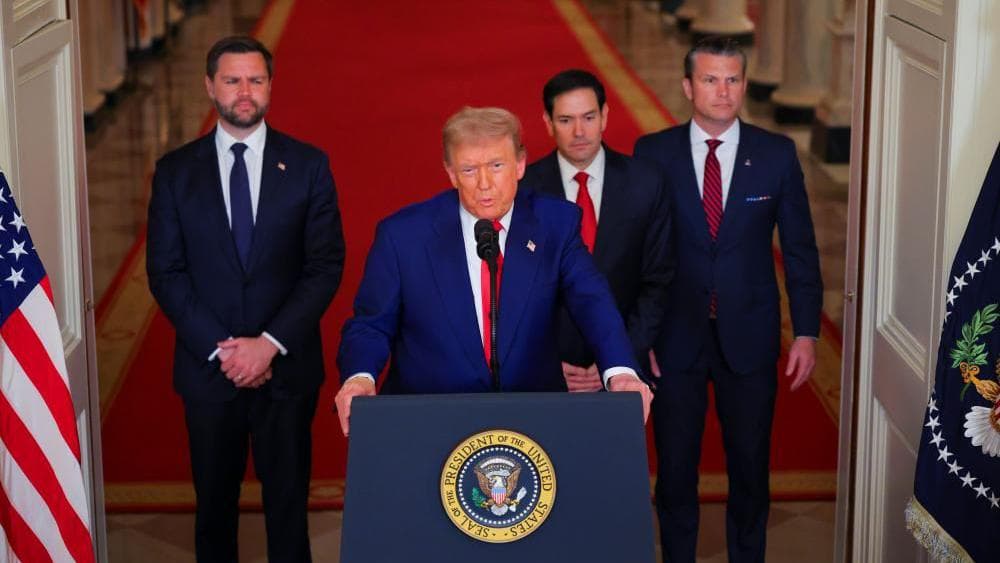
Trump's Election Calendar War: Why the Iran Bombing Is on Hold Until November
Executive Summary
On September 22, 2026, standing at the United Nations General Assembly podium in New York, President Donald Trump presented the world with what he framed as a binary choice: Iran makes a deal, or he "annihilates the Islamic Republic." Then, in the same speech, he told world leaders he believed a deal would come "right after the election" - because Iran was "waiting to see how I do in the midterm election." Two days later, on September 25, Iran's Foreign Minister Abbas Araghchi proposed precisely the kind of deal that could open the Strait of Hormuz within seven days - lifting the blockade that has produced the largest oil supply disruption in recorded history. Trump rejected it by September 27, publicly confirming "they made a proposal but I rejected it," while The Wall Street Journal reported he had privately told aides he expected to resume bombing after November's midterm elections on November 3.
The 2026 Iran war began on February 28, when the United States and Israel launched Operation Epic Fury - a coordinated strike campaign that assassinated Supreme Leader Ali Khamenei and targeted Iran's nuclear infrastructure, ballistic missile stockpiles, and military command structure. Iran responded by closing the Strait of Hormuz, attacking US bases across the Middle East, striking Saudi and Emirati infrastructure, and igniting the most severe global energy supply disruption since the Suez Crisis. Seven months in, the war has no exit and no clear military path to its stated objective. What it has is an American election in five weeks.
This article examines the strategic reality behind Trump's Iran calculus - the domestic political constraints reshaping a military campaign, the multiple failed ceasefire attempts, the munitions depletion problem, the fractured Iranian political landscape that makes a clean deal structurally difficult, and what November 3 is actually likely to produce.
Strategic Background: The War That Nobody Planned to Last This Long
Trump's original war aims, as stated publicly, were straightforward: destroy Iran's ballistic missile capabilities, eliminate its navy, prevent Iran from ever acquiring a nuclear weapon, and sever its support for proxy forces across the Middle East. On February 28, B-2 stealth bombers led the initial US strikes, targeting Khamenei, senior IRGC commanders, nuclear facilities, and underground cruise missile storage. Iran's Supreme Leader was killed in the opening hours of the campaign. By all the metrics of a classical military decapitation operation, the first days of Operation Epic Fury were operationally successful.
The problem was what came next. Iran's response was not regime collapse - it was asymmetric denial. Tehran closed the Strait of Hormuz. Iranian-backed militias across Iraq, Syria, and Lebanon activated. Houthi forces in Yemen escalated attacks on Saudi territory and Red Sea shipping simultaneously. By March 2, the IRGC had officially confirmed the strait was closed to "unfriendly nations." By March 18, Israel's strike on Iran's South Pars gas field - damaging 12 percent of Iran's total gas production - had pushed oil prices from roughly $80 to over $108 per barrel. Trump's war had been launched partly on the promise that his administration had delivered low energy prices. Within weeks, it had produced the opposite.
The diplomatic track began almost immediately and immediately ran into the structural problem that would define the next seven months. Iran's fractured post-Khamenei leadership meant there was no single interlocutor empowered to make a binding deal - different factions held different views on what accommodation with the United States was permissible and what would be seen domestically as capitulation. US demands, delivered via Pakistani mediators in late March in a 15-point proposal, included an end to Iran's nuclear program, limits on its missiles, reopening the Strait, restrictions on proxy support, and sanctions relief. Iran rejected the proposal. The pattern that would repeat - proposed ceasefire, rejection, short pause, threat, brief diplomatic opening - was set.
The Ceasefire Carousel: Six Attempts, Zero Resolutions
The war has now cycled through multiple attempted pauses and partial agreements, none of which have held. Each episode reveals something specific about why a resolution is structurally difficult regardless of Trump's electoral calendar.
In late March, Trump announced a two-week pause contingent on Iran immediately reopening the Strait of Hormuz, citing conversations with Pakistani Prime Minister Shehbaz Sharif and Field Marshal Asim Munir. Trump stated publicly that "almost all of the various points of past contention have been agreed to" - a claim immediately disputed by Iran and not evidenced in any subsequent outcome. Iran agreed that non-hostile vessels could pass with coordination from Iranian armed forces, but this fell well short of free commercial passage and came with conditions that the US did not accept as sufficient.
In early April, Trump threatened to destroy Iranian power plants if the Strait was not reopened. The threat was accompanied by a 10-day pause, then a 5-day pause, then resumed strikes. In May, Operation Project Freedom - a naval campaign against Iranian coastal defenses in the Strait - was paused by Trump who cited "progress during ongoing negotiations." The New York Times reported the real reason was that Saudi Arabia had denied the US access to its airspace and bases on its territory because Riyadh believed the operation was poorly conceived and risked unacceptable Iranian retaliation against Gulf infrastructure.
June produced the Islamabad Memorandum - a formal ceasefire framework negotiated with Pakistan's mediation and signed June 17, under which Iran agreed to partial restoration of Strait access and the US agreed to a halt in bombing. Trump justified the MoU at a G7 press conference in France by warning that "we run out of reserves at about four weeks" and that running out would cause "bedlam" - a candid admission of the domestic strategic vulnerability the war had created. The MoU collapsed on July 8 when Iran struck multiple commercial ships in the Strait to assert what Tehran characterized as its sovereign management rights over the waterway. US strikes resumed. The July bombing campaign ran for 13 consecutive nights before pausing again, with CENTCOM commander General Caine advising Trump that the bombing had reached the limit of its effectiveness in shifting Iranian negotiating behavior.
The September 25 proposal from Foreign Minister Araghchi was the latest iteration of an Iran offer that, in its essentials, has been on the table in various forms since April: Iran would reopen the Strait and restart nuclear talks in exchange for the US lifting its naval blockade of Iranian ports, waiving sanctions on Iranian oil sales, releasing approximately $12 billion in frozen Iranian assets, and observing a ceasefire covering the region including Lebanon and Yemen. Trump's public rejection - "they made a proposal but I rejected it" - combined with private reporting from the Wall Street Journal that he had told aides he expected to resume bombing after the midterms, closes this chapter of the diplomatic cycle.
The Domestic Political Calculation: War Through the Midterm Lens
The explicit connection between the Iran war's tempo and the November 3 midterm elections is unusual in the history of American military conflicts - not without precedent, but unusual in its visibility. Trump has made this connection publicly and repeatedly, including before a global audience at the UN General Assembly. The question is not whether the connection exists; Trump has confirmed it. The question is what it tells us about the strategic logic operating behind the military pause.
The war is deeply unpopular with the American public. Polling from Reuters/Ipsos conducted through late September showed that only 29 percent of Americans approved of the Iran strikes. Two-thirds of respondents - including 44 percent of Republicans - expected gasoline prices to keep rising. By September 9, when Trump promised a $5,000 "Trump Dividend" to every American adult contingent on Republicans retaining Congress in November, the war's economic cost had become the dominant domestic political liability facing the Republican Party. The Dividend proposal carried no funding mechanism and would cost over a trillion dollars - but its timing made the political context obvious.
Nearly 20 Republican congressional candidates had, by September, publicly called for an end to the Iran conflict. Gasoline prices had hit especially hard in the Senate battleground states that would determine whether Republicans retained their congressional majority: Texas, North Carolina, and Georgia saw some of the largest diesel price increases of any state in the country. Trump told reporters in mid-September that gas prices would take "a little bit longer than the midterms" to come down, but that "right after the election, oil prices are going to be tumbling downward." That framing - the war ends after November 3, not before - treats military de-escalation as a political deliverable rather than a military conclusion.
The historical precedent is limited. The Globe and Mail, in a September 28 analysis, cited only one comparable case: Lyndon Johnson ordering a halt to North Vietnam bombing in October 1968 to help Hubert Humphrey's presidential campaign. The parallel is imperfect - Johnson was supporting a vice-presidential candidate, not defending his own congressional majority - but the structural principle is the same: military tempo calibrated to electoral timing rather than battlefield logic. Trump himself addressed this directly at the UN, saying "I am not in a hurry" when pressed on the election connection, while simultaneously predicting a deal "right after" November 3.
The Munitions Problem: The Hard Constraint Behind the Pause
Behind the domestic political calculation sits a harder military reality: the United States has run down its munitions stockpiles at a rate the defense industrial base cannot currently replenish. This constraint operates independently of electoral timing but aligns with it - it gives Trump a military reason to pause that runs parallel to, and reinforces, the political reason.
The Wall Street Journal reported that Trump is "reluctant to resume major combat operations" partly because the United States "wants to reserve dwindling munitions for other contingencies." CNN's reporting from late July confirmed that CENTCOM commander General Caine had recommended stopping the Strait bombing campaign both because it had reached the limit of its effectiveness and because of concerns about munitions stockpile depletion. The Hill reported in August that the Pentagon had approximately 2,200 Patriot missiles and around 450 THAAD missiles before the conflict - numbers significantly reduced by seven months of combat and by the Patriot stockpile draws also associated with Ukraine transfers. Experts quoted in reporting on the issue noted it would take a minimum of several years for the US defense industrial base to replenish depleted precision-guided munitions at scale regardless of how quickly Congress funds additional production.
The CIA and the Defense Intelligence Agency both assessed, according to CNN reporting from late July, that continued bombing of Iranian targets at current intensity was unlikely to shift Iran's negotiating position. That assessment removes the military justification for resuming at the same scale and removes the leverage argument - if bombing doesn't move Iran toward a deal, the costs of resumed bombing (munitions, oil price escalation, allied Saudi reluctance to host US operations, risk of Iranian retaliation against Gulf infrastructure) are not offset by corresponding movement toward the stated US objectives.
Trump's public framing has consistently denied this constraint exists. He and Defense Secretary Pete Hegseth have "vigorously defended" the quantity of US weapons stockpiles and Trump warned that those leaking sensitive information on munitions numbers were "being hunted down." But the strategic reality is that the pause in major combat operations since late July is consistent with the military and intelligence assessments, regardless of what political explanations the White House prefers publicly.
Iran's Position: Leverage Without Coherence
Iran's negotiating position is structurally complex in ways that explain why seven months of attempted diplomacy have produced no durable outcome, irrespective of American electoral timing.
The assassination of Khamenei on February 28 removed the single figure who held the Iranian system's decision-making together. The factions that now constitute Iranian political authority - hardline IRGC commanders, pragmatist technocrats, clerical establishment figures competing to succeed Khamenei in religious authority - hold meaningfully different views on what accommodation with the United States is strategically permissible and what constitutes surrender. Trump administration officials have themselves pointed to this fractured leadership as an obstacle. NPR reporting from late July cited an unnamed regional official noting that "the people in charge in Iran may worry that compromising with the US could be seen domestically as capitulation to threats."
Iran's core interests in the Strait are not simply military. By asserting management rights over the Strait of Hormuz - what the June Islamabad Memorandum acknowledged as an "Iranian role in the management of the strait," a formulation that became one of Tehran's primary public justifications for the MoU - Iran has been seeking to convert military pressure into a permanent legal and political recognition of Iranian sovereignty over the waterway. This is a strategic objective that predates the current conflict and will outlast whatever deal ends it. Any deal that does not address this claim gives Iran's hardliners grounds to argue the war was lost, while any deal that formally acknowledges Iranian management rights over the Strait gives US critics and allies grounds to argue the war produced a strategic defeat.
Iran also has a version of the electoral calculation. Tehran knows that a deal concluded before November 3 gives Trump a political victory that might help Republicans in the midterms. Iran knows that a deal concluded after November 3 - in a potentially different political environment, where a weakened Trump or a Democratic Congress constrains his options - may come with better terms. The Wall Street Journal's reporting that Trump privately believes Iran is "waiting to see how I do in the midterm election" is almost certainly correct. The symmetry of the electoral calendar is not lost on either side.
The Energy Shock: Implications for India and the Global South
The Strait of Hormuz crisis has produced what the International Energy Agency characterized as the "largest supply disruption in the history of the global oil market." Shipping traffic through the Strait - which carried approximately one-fifth of the world's oil and LNG in peacetime - fell to nine vessel transits per day at the time of writing, versus several hundred under normal conditions. Vessel transits had dropped more than 90 percent from peacetime levels even before Iran's most recent escalations. The IEA coordinated the release of 400 million barrels of emergency reserves from member-country stockpiles, while Trump separately authorized the release of 172 million barrels from the US Strategic Petroleum Reserve - a depletion that itself creates medium-term vulnerability if a second major energy disruption were to follow.
India is among the countries most directly exposed to this disruption. China, India, Japan, and South Korea collectively accounted for 75 percent of oil and 59 percent of LNG exports through the Strait of Hormuz before the war. India's dependence on Persian Gulf oil is structural and cannot be quickly diversified. The Indian government ordered oil refineries to increase LPG production for domestic use as early as March 2026 in response to supply constraints. Trump called Prime Minister Modi on March 24, the same week the first pause went into effect, to discuss the war and the Strait closure - a call India's government characterized as supporting "de-escalation and restoration of peace at the earliest." India's position has been consistent: advocate for diplomacy, avoid direct alignment with either the US military campaign or Iran's position, maintain energy supply through whatever channels remain open.
The energy shock has also directly affected India's economic calculus in its relationship with Washington. A US law passed in September 2026 authorizes tariffs of up to 100 percent on major buyers of Russian oil and gas - targeting China and India, both of which have continued purchasing discounted Russian crude throughout the Iran war disruption. India faces a double bind: the Iran war has disrupted its primary Gulf energy supply while simultaneously increasing its dependence on Russian crude, which Washington is now threatening to penalize under the same legislative package. New Delhi's diplomatic balancing act - not alienating Washington, not curtailing Russian energy purchases, not publicly endorsing a war it regards as destabilizing - is under increasing strain.
The broader Global South has been hit hard. Countries in Southeast Asia, Africa, and Latin America that cannot absorb extended high energy prices through strategic reserves or domestic production face compounding economic pressures that are translating, in some cases, into political instability. The IEA's characterization of the disruption as the largest in history is not rhetorical - it is the baseline condition under which the rest of the world's economic planning is now operating, and it has persisted for seven months with no confirmed end date.
The Post-Midterm Scenarios: Deal, Annihilation, or Stalemate?
Trump's UN speech presented a clean binary: deal or annihilation. The operational reality presents a messier set of options, none of which cleanly resolves the war's strategic stalemate.
A negotiated deal requires Iran to make concessions on nuclear enrichment that its post-Khamenei leadership has not authorized, and it requires the United States to accept Iranian management language around the Strait that Washington has not formally agreed to. The June Islamabad Memorandum that acknowledged Iranian "management" of the Strait collapsed within weeks. Any successor agreement faces the same structural tensions. Iran's latest proposal - the seven-day Araghchi roadmap - requires the US to lift its naval blockade, waive oil sanctions, and release $12 billion in frozen assets before nuclear talks even restart. Trump has rejected this sequencing; he wants the nuclear constraint agreed before sanctions are lifted. This gap is not just a bargaining distance - it reflects a genuine disagreement about whether Iran's nuclear program is the war's primary purpose or one issue among several.
A resumption of full-scale bombing faces the constraints already described: munitions depletion, CIA and DIA assessments that bombing has not and likely will not shift Iran's negotiating position, Saudi reluctance to host operations that risk escalatory retaliation against Gulf infrastructure, and the certain continuation of the energy price shock that has already become a domestic political liability. Trump's statement to aides about expecting to resume after the midterms is qualified in the Journal's reporting: "officials cautioned that his position could change over the coming weeks and could be affected by the election results." If Republicans suffer severe midterm losses, the political incentive structure for a dramatic military escalation changes significantly.
The most likely near-term outcome is continued stalemate: sporadic US strikes on Iranian Strait-related targets, continued Iranian harassment of commercial shipping, continued mediation through Qatar, Oman, and Pakistan, and no comprehensive deal until the political and military constraints on both sides shift enough to make one possible.
Risk Matrix
Miscalculation risk: Seven months of tit-for-tat strikes, with multiple actors (US, Israel, Houthis, Iraqi militias, Iranian IRGC) operating in overlapping theaters, creates high probability of an incident - a ship sinking with significant civilian casualties, an accidental strike on a non-combatant vessel, an exchange that crosses a threshold either side has publicly defined as requiring escalation - that forces decision-making under time pressure without a negotiating framework in place.
Republican midterm outcome risk: If Republicans lose the House or the Senate on November 3, Trump's domestic political constraints on the Iran war shift dramatically. Congressional Democrats and even some Republicans could use legislative tools - appropriations riders, war powers resolutions, or simply public pressure - to constrain the administration's military options. Trump's threatened post-midterm "annihilation" escalation becomes politically more difficult under a divided Congress.
Iranian nuclear threshold risk: The stated primary US war objective was to prevent Iran from acquiring a nuclear weapon. The CIA and other assessments of how much Iran's nuclear infrastructure was actually degraded by the initial strikes have not been made public in any detail. If Iran, in the seven months of the conflict, has been able to reconstitute or advance elements of its nuclear program using dispersed or hardened facilities that were not destroyed in Operation Epic Fury, the war may be achieving the opposite of its stated purpose - creating conditions for accelerated nuclear development under cover of wartime chaos.
Saudi Arabia stability risk: Iran's attacks on Saudi oil infrastructure and Houthi strikes on Saudi territory have imposed costs on Riyadh that Saudi Arabia's leadership did not authorize and has been managing without public attribution. Saudi reluctance to host US military operations - as evidenced by the May Operation Project Freedom suspension - reflects a real tension between Riyadh's interest in containing Iran and its unwillingness to absorb Iranian retaliation for US decisions it did not make. A major successful Iranian strike on Saudi oil infrastructure or a significant Houthi escalation against Riyadh could force Saudi Arabia into a more openly contested political position.
Munitions depletion cascade risk: The Patriot stockpile draw from both the Iran war and Ukraine transfers has direct implications for the credibility of US extended deterrence commitments globally. Taiwan, South Korea, and European NATO allies have all been briefed on US munitions constraints. The signal being sent - that the United States has finite precision-guided munitions and is willing to deplete them for Middle Eastern operations - affects calculations by adversaries in other theaters simultaneously.
Scenario Analysis
Base Scenario - High Probability: November 3 midterms produce a contested result - Republicans retain Congress by reduced margins. Trump, freed from the immediate electoral constraint, resumes military pressure on Iran through targeted strikes rather than a return to full-scale bombing, while simultaneously authorizing resumed diplomatic engagement through Pakistani and Qatari mediators. By January 2027, a revised version of the Islamabad Memorandum is reached, under which Iran reopens the Strait to commercial traffic in exchange for partial sanctions relief and a framework for nuclear talks. The nuclear talks themselves proceed slowly and without binding constraint, producing neither a comprehensive deal nor a resumed war. Oil prices fall from peak levels but do not return to pre-war baselines, as the global energy infrastructure's routing away from the Strait during the crisis has reduced - but not eliminated - dependence on that corridor.
Key assumptions: Republicans retain Congress; Trump has sufficient political space to pursue diplomacy rather than escalation; Iran's post-election internal political balance allows a deal on Strait reopening without requiring public concessions on nuclear enrichment; Saudi Arabia's oil infrastructure survives without a major additional strike before November.
Bull Scenario - Low Probability: Republicans perform better than expected on November 3, giving Trump a strong domestic political mandate. Iran's internal balance shifts - pragmatist and technocrat factions gain enough authority to accept the Araghchi proposal's framework as the basis for serious talks, with sequencing modified to allow partial Strait reopening and initial nuclear-related confidence-building measures simultaneously. A comprehensive deal is signed by early 2027 that includes verifiable nuclear constraints, Strait reopening, phased sanctions relief, and an Iranian commitment to reduce proxy activity in Yemen, Lebanon, and Iraq. Energy prices fall sharply. Trump claims the war as a strategic success. The region's longer-term strategic architecture - with Iran constrained, Saudi Arabia reassured, and the Gulf states more integrated with Israel - becomes the claimed outcome.
Key assumptions: Iran's political cohesion sufficient for comprehensive deal; Trump willing to accept Iranian face-saving language on nuclear sovereignty; Israel willing to accept a deal that does not eliminate Iran's entire nuclear infrastructure; Saudi Arabia and UAE willing to endorse the outcome; Houthis willing to stand down in Yemen.
Bear Scenario - Low-to-Moderate Probability: Republicans suffer severe midterm losses. Trump, facing a hostile Congress and reduced political legitimacy, decides in November or December to dramatically escalate the Iran campaign - including strikes on Iranian nuclear facilities not yet hit, or strikes on Iranian civilian infrastructure - rather than negotiate from a position of domestic weakness. Iran responds by fully mining the Strait, sinking a US Navy vessel or causing significant American military casualties, and activating all proxy forces simultaneously in a regional escalation wave. Saudi Arabia's Abqaiq oil facility is successfully struck by Iranian or Houthi missiles, destroying 5-7 percent of global oil supply in a single event. Brent crude reaches $150 or above. Global financial markets experience a shock comparable to 2008. The United States and Iran are in a full-scale war with no established diplomatic framework, no mediating momentum, and the US military operating against constrained munitions stockpiles without the ability to quickly replenish precision-guided weapons.
Key assumptions: Republican losses sufficient to trigger Trump's escalatory instinct; Iranian willingness to absorb escalation rather than seek accommodation; a successful major strike on Gulf energy infrastructure; the munitions constraint creating perverse incentives to escalate with what remains rather than preserve deterrence for other theaters.
Intelligence Forecast
Over the next 6 to 24 months, the following developments are assessed as most likely:
The period between now and November 3 is assessed as militarily quiet by design. The US will conduct limited targeted strikes on Iranian Strait-related targets to maintain pressure without triggering escalation, and the current diplomatic track through Qatar - where Araghchi says Iran has not received a formal US response to its latest proposal - will continue at a technical level despite Trump's public rejection of the seven-day framework.
The November 3 midterm result is the single largest variable determining what happens next. The two most consequential outcomes - strong Republican retention versus significant Democratic gains - produce fundamentally different strategic environments. This assessment declines to forecast the electoral outcome, noting only that polling available at the time of writing showed a competitive environment with Republicans defending majorities under unfavorable conditions primarily created by the Iran war's fuel price impact.
Iran's negotiating position is assessed as unlikely to fundamentally change before November 3. Tehran has no incentive to enable a pre-election deal that helps Trump domestically. Post-November 3, Iran's calculus is more complex - a weaker Trump may offer better deal terms but may also face political constraints that make him less able to deliver sanctions relief even if he agrees to it.
A durable Strait reopening agreement is assessed as likely achievable within six months of November 3 if both sides' political constraints allow it. The structural incentive for both sides - Iran needs Strait revenues, the US needs energy price relief - is strong enough to produce a deal once the electoral constraint is removed. The nuclear question is a different matter: a comprehensive, verifiable, binding nuclear constraint on Iran is not achievable in the 6-to-24-month forecast window under any scenario in which Iran's post-Khamenei leadership retains any internal political coherence.
For India, the energy shock will persist in reduced form even after a Strait deal is reached. Global shipping routes reconfigured around the Strait's closure will take time to reconvert. Indian refiners that have built dependencies on Russian crude during the disruption will face Washington's sanctions pressure under the new legislation regardless of how the Iran war ends. New Delhi's diplomatic autonomy is under structural strain that predates and will outlast the current military pause.
US munitions stockpile recovery is assessed as a multi-year process regardless of what happens in Iran. Defense industrial base expansion contracts signed in mid-2026 will not produce meaningful additional precision-guided munitions output before 2028. This creates a real and sustained constraint on American military credibility across multiple theaters.
Global Chanakya Assessment
The framing of Trump's Iran pause as an "election calendar war" is accurate as far as it goes. But it understates the more durable strategic problem that the calendar has obscured.
The 2026 Iran war was launched with stated objectives - denuclearization, proxy cessation, Strait access - that are structurally incompatible with the kind of military campaign the US has actually been conducting. Airstrikes can kill leadership figures, degrade infrastructure, and impose economic costs. They cannot produce the political transformation inside Iran - a new government willing to permanently constrain its nuclear program and abandon its regional proxies - that the stated US objectives require. Seven months of air campaign and seven ceasefire attempts have confirmed what the CIA and DIA assessments stated explicitly: bombing does not move Iran's negotiating position toward the US's required terms.
This matters because the post-midterm scenario that Trump's aides have described - "renewed bombing" - faces the same strategic ceiling regardless of whether munitions stockpiles are replenished. More bombing produces more Iranian disruption of the Strait, more energy price escalation, more domestic American political pressure, and the same Iranian refusal to accept the US's sequencing on nuclear talks. The cycle has already run to exhaustion once. Running it a second time on the same logic produces the same outcome.
The overlooked strategic variable is Iran's nuclear program. Trump claimed at the UN in June 2025 that Iran's nuclear program had been "obliterated." That claim contradicts the stated rationale for continued military pressure - if the nuclear program is obliterated, the primary casus belli for the war is removed. If the nuclear program is not obliterated - which the continued US insistence on nuclear constraints as a condition of any deal implies - then the war has not achieved its primary objective after seven months and the largest strategic petroleum reserve release in American history. One of these claims cannot be true simultaneously, and neither the White House nor the intelligence community has publicly resolved the contradiction.
The indicator that would most clearly signal whether a genuine post-midterm deal is structurally possible: Iran's foreign ministry, not its IRGC, taking the lead role in public diplomatic communications after November 3. If the pragmatist-technocrat faction gains visible authority in Iran's post-election diplomatic outreach, a deal is achievable. If IRGC hardliners continue to dominate the public posture while moderates are kept away from negotiations, the structural obstacle to any lasting agreement is not Trump's electoral calendar - it is Iran's internal political settlement, which the war itself has made more rather than less difficult to achieve.
Indicators to Monitor
- November 3 US midterm election results - House and Senate seat changes, with particular attention to Republican margin of survival
- Trump's post-election public statements on Iran within the first 72 hours of results
- Identity of Iran's post-election diplomatic interlocutors - IRGC commanders versus Foreign Ministry officials
- Strait of Hormuz daily vessel transit data - published by Reuters using ship-tracking data
- Brent crude oil price movements as a proxy for diplomatic progress expectations
- Saudi Arabia's posture on US military basing rights after the midterms
- Progress or collapse of Qatar-mediated diplomatic back-channel
- Official US munitions procurement contracts and delivery timelines post-midterms
- Congressional war powers resolutions or funding restrictions on Iran military operations
- Iran's internal political signaling - which faction controls public statements on ceasefire conditions
- Houthi attack tempo on Saudi infrastructure and Red Sea shipping
- Israeli military posture toward Iran - whether Netanyahu pushes for escalation or endorses deal framework post-midterms
- India-US diplomatic communications on Iranian oil sanctions under the new tariff legislation
- IEA strategic reserve depletion rates and member-country emergency stock levels
- Any public reference to the US Cushing oil stockpile levels approaching the 14-15 million barrel operational minimum
FAQ
When did the 2026 Iran war begin? The war began on February 28, 2026, when the United States and Israel launched coordinated strikes on Iran under the codename Operation Epic Fury. The strikes killed Supreme Leader Ali Khamenei and targeted Iran's nuclear infrastructure, ballistic missile stockpiles, and military command structure. Iran responded by closing the Strait of Hormuz and attacking US military bases across the Middle East.
What is Iran's current proposal? Iranian Foreign Minister Abbas Araghchi presented a seven-day roadmap on the sidelines of the UN General Assembly on September 25, 2026. Under the proposal, Iran would reopen the Strait of Hormuz and restart nuclear talks within seven days if the US lifted its naval blockade of Iranian ports, waived sanctions on Iranian oil sales, released approximately $12 billion in frozen Iranian assets, and observed a ceasefire covering the region including Lebanon and Yemen. Trump rejected the proposal on September 27.
Why is Trump holding off on resumed bombing until after November? According to Wall Street Journal reporting citing US officials, Trump privately told aides he expects to resume bombing Iran after the November 3 midterm elections, skeptical that Iran will meet his demands before then. He also publicly stated at the UN that Iran was "waiting to see how I do in the midterm election" and that he expected a deal "right after the election." A parallel military reason is US munitions stockpile depletion - Pentagon reports and intelligence assessments indicate that continued bombing has reached the limit of its effectiveness in shifting Iranian negotiating behavior.
What is the Islamabad Memorandum? The Islamabad Memorandum of Understanding was a ceasefire framework reached in June 2026 under Pakistani mediation, under which Iran agreed to partial restoration of Strait of Hormuz access and the US agreed to halt bombing operations. The MoU collapsed on July 8, 2026, when Iran struck multiple commercial ships in the Strait to assert what Tehran described as its sovereign management rights over the waterway.
How has the Iran war affected India? India is among the countries most directly exposed to the Strait of Hormuz closure, given that China, India, Japan, and South Korea account for 75 percent of oil and 59 percent of LNG exports through the Strait. The Indian government ordered increased LPG production for domestic use and has supported diplomatic de-escalation while maintaining energy imports through alternative channels including Russian crude. India now faces potential US sanctions under legislation targeting major buyers of Russian oil, creating a diplomatic double bind.