
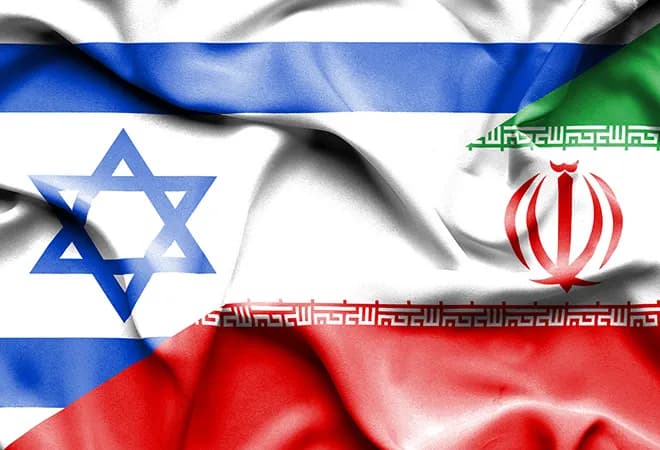
Iran-Israel Proxy War Explained: From Shadow War to Open War
For nearly four decades, Iran and Israel fought a war neither country officially declared. It was waged through intermediaries - Hezbollah rockets fired from southern Lebanon, Hamas tunnels dug beneath Gaza, Houthi missiles launched at Red Sea shipping, militia attacks on American bases in Iraq and Syria - a careful architecture of deniability that allowed Tehran to bleed Israel and its allies without ever putting the Islamic Republic's own territory or leadership directly in the crosshairs. That architecture, built across the careers of multiple Iranian supreme leaders and sustained through billions of dollars in funding, weapons transfers, and training programs across what Tehran called its "Axis of Resistance," collapsed entirely on the morning of February 28, 2026.
At 06:45 UTC that day, Israeli warplanes struck a residential compound in Tehran where Supreme Leader Ali Khamenei was meeting with senior officials. He died in the strike, along with members of his family and several of his most senior commanders. Within minutes, American B-2 bombers and Tomahawk-armed warships joined the assault, targeting Iran's fortified ballistic missile facilities under an operation Washington called Epic Fury and Israel called Roaring Lion. The proxy war was over. What replaced it was the most direct, most destructive confrontation between Iran, Israel, and the United States in the Islamic Republic's history - a war that, even after a ceasefire and a formal memorandum of understanding, has left every element of the old proxy architecture either shattered, mutating, or fighting on regardless of what any document in Switzerland says.
Executive Summary
The Iran-Israel confrontation has undergone a fundamental transformation over the past eighteen months, evolving from a decades-old proxy war fought primarily through non-state armed groups into direct state-on-state warfare. The June 2025 "Twelve-Day War" - in which Israel struck Iranian nuclear and military facilities, killing senior commanders and scientists, with the United States joining to strike three nuclear sites before a ceasefire took hold - proved to be only the opening act. Mass anti-government protests inside Iran in early 2026, combined with sustained Israeli lobbying of President Trump, produced authorization for a far larger operation: Operation Epic Fury, launched February 28, 2026, which killed Supreme Leader Ali Khamenei in its opening strikes and triggered more than five weeks of direct combat between Iran on one side and the United States and Israel on the other.
The war's costs have been staggering by any measure. The conflict produced the largest-ever supply disruption of the global oil market, with Iran's closure of the Strait of Hormuz and direct attacks on energy infrastructure rippling through natural gas, fertilizer, aviation, and tourism industries worldwide, while the cost to the US military alone was estimated at nearly $29 billion by mid-May, with the Pentagon requesting a further $200 billion, and Iran assessing damage to its own economy at between $300 billion and as much as $1 trillion. A ceasefire was reached on April 7-8, but proved immediately fragile, with Israel launching a major bombing campaign against Hezbollah in Lebanon mere hours after the announcement, an act Iran characterized as a direct violation given its insistence that any ceasefire encompass the Lebanon front as well.
What followed was nearly three months of brinkmanship centered on the Strait of Hormuz, through which roughly a fifth of the world's oil passes, with the United States imposing a naval blockade on Iranian shipping while Iran maintained its own blockade of the waterway, producing what observers described as a "dual blockade" of the Persian Gulf. A formal Memorandum of Understanding was digitally signed on June 15, 2026, by President Trump, Vice President JD Vance, and Iranian Parliament Speaker Mohammad Bagher Ghalibaf, extending the ceasefire by sixty days, authorizing toll-free reopening of the Strait of Hormuz, lifting the US naval blockade, and initiating sixty days of nuclear negotiations, with a formal signing ceremony scheduled for June 19 in Switzerland. Even as this diplomatic process unfolded, however, Israeli strikes on Lebanon continued, and the proxy network's most resilient node - Hezbollah - has shown no sign of standing down regardless of what Tehran and Washington agree to on paper.
This report traces the proxy war's original architecture, explains how each node of Iran's regional network functioned and how each has fared through the direct war's eruption, and assesses what remains of Tehran's "Axis of Resistance" as the region moves into an uncertain post-war phase that, by every available account, has not actually ended the underlying conflict so much as changed its form once again.
Background
Iran's proxy strategy emerged from a specific strategic logic developed after the 1979 Islamic Revolution: a militarily and economically constrained Iran, isolated by Western sanctions and lacking the conventional military capacity to confront Israel or the United States directly, could nonetheless project power and impose costs on its adversaries by cultivating, arming, and funding non-state armed groups across the region that shared Tehran's broader ideological hostility to Israel and American regional influence. This network became known, in Iranian state messaging, as the Axis of Resistance, and it was built methodically over four decades.
Hezbollah, founded in Lebanon in the early 1980s with direct Iranian Revolutionary Guard Corps support, became the network's flagship asset - a heavily armed, politically entrenched force controlling substantial territory in southern Lebanon and wielding genuine influence within Lebanon's formal government structures. Hamas, an originally distinct Palestinian Islamist movement with roots in the Muslim Brotherhood, developed a increasingly close, though historically more transactional, relationship with Tehran over time, receiving funding, weapons technology, and training even as the two maintained different ideological foundations - Hamas Sunni, Iran's leadership Shia. The Houthi movement in Yemen, which seized control of large portions of the country including the capital Sanaa during Yemen's civil war, became another increasingly important node, particularly for its demonstrated willingness to strike shipping in the Red Sea and Bab el-Mandeb Strait. Various Iraqi and Syrian militias, operating under the broad umbrella of "Popular Mobilization Forces" and similar designations, rounded out the network, providing Tehran with strike capability against American forces stationed across Iraq and Syria.
This proxy architecture allowed Iran to wage what amounted to sustained warfare against Israeli and American interests while maintaining a degree of plausible deniability and avoiding direct retaliation against Iranian territory for years at a stretch. The system's logic depended on Israel and the United States calculating that retaliation against the proxies themselves, while costly and recurring, was preferable to direct strikes on Iran that risked a far larger regional conflagration. That calculation held, with periodic exceptions, for decades.
The system's first major rupture came with the October 7, 2023, Hamas attack on Israel and the subsequent Gaza war, which set off a cascading sequence of escalation across every node of Iran's network simultaneously. Hezbollah opened a sustained front against northern Israel in solidarity with Hamas. The Houthis began attacking Red Sea shipping linked to Israel. Iraqi militias intensified strikes on American bases. Israel responded with an increasingly aggressive campaign against the network's leadership and infrastructure, including the assassination of Hamas political leader Ismail Haniyeh and a strike on the Iranian consulate in Damascus, both of which prompted direct Iranian missile strikes on Israeli territory in April and October 2024 - the first time in decades Iran had struck Israel directly rather than exclusively through proxies.
The proxy war's logic finally broke down completely with the Twelve-Day War of June 2025. Israel bombed military and nuclear facilities across Iran in a surprise attack lasting from June 13 to June 24, 2025, assassinating senior military leaders, nuclear scientists, and politicians while damaging or destroying Iranian air defenses, with Iran retaliating with over 550 ballistic missiles and more than 1,000 suicide drones targeting Israeli population centers and military, energy, and government sites, before the United States intercepted Iranian attacks and itself bombed three Iranian nuclear facilities on June 22. A ceasefire took hold on June 24, but it proved to be merely an intermission rather than a conclusion.
Current Situation
The interlude between the Twelve-Day War and the far larger conflict that followed lasted barely eight months, and it was Iran's own internal political fragility, as much as any external trigger, that set the stage for what came next. At the beginning of 2026, Iran experienced its most widespread domestic demonstrations in decades, which the government suppressed with significant violence, even as Israel's security cabinet authorized additional strikes codenamed Operation Iron Strike in early January, with officials calculating that further strikes, or even the credible threat of them, would compound the political destabilization Iran's leadership was already facing from the street protests.
Israeli Prime Minister Benjamin Netanyahu used this moment of Iranian vulnerability to press President Trump directly for a far more ambitious joint operation than the Twelve-Day War had attempted - one explicitly targeting Iran's top leadership rather than solely its military and nuclear infrastructure. Following high-level meetings in February 2026, Trump authorized Operation Epic Fury, with reports indicating that Israeli intelligence provided by Netanyahu was a decisive factor in the decision to proceed. The operation's scale and ambition exceeded anything in the prior conflict by an order of magnitude. At 06:35 UTC on February 28, Trump gave the order to proceed, and ten minutes later CENTCOM announced strikes against Iran using Tomahawk missiles, HIMARS launchers, and long-range standoff weapons, while the Israeli Air Force simultaneously launched an unprecedented wave of decapitation strikes that killed Supreme Leader Ali Khamenei along with several senior officials and members of his family who were attending meetings at his residential compound.
Iran's retaliation was immediate and expansive, targeting not just Israel but the broader American regional security architecture and Gulf shipping infrastructure. The IRGC announced the closure of the Strait of Hormuz to US- and Israel-allied shipping within hours of the initial strikes, triggering a global oil-price spike that would shadow the remainder of the conflict, while Iran retaliated within hours with hundreds of drones and ballistic missiles. Iran also retaliated by firing missiles at seven Gulf states, hitting civilian infrastructure and airports in the United Arab Emirates, residential areas in Qatar, and an apartment building in Bahrain, demonstrating the conflict's rapid spillover well beyond the Iran-Israel bilateral dimension.
Leadership succession inside Iran proceeded with remarkable speed despite the decapitation strike's apparent intent to produce paralysis. The Iranian regime replaced Ali Khamenei with his son, Mojtaba Khamenei, even as the broader military and political system continued struggling under sustained attack, with the Revolutionary Guard Corps publicly declaring readiness for complete obedience to the new supreme leader within days of the transition. This succession, while accomplished without the total institutional collapse some American and Israeli planners may have hoped to trigger, nonetheless represents a significant and still poorly understood shift in the Islamic Republic's internal power structure, given Mojtaba Khamenei's far thinner public political record compared to his father.
The war's most consequential and economically disruptive front proved to be the Strait of Hormuz rather than any single battlefield engagement. By late March, IRGC officials suggested Iran might push its Houthi allies in Yemen to block the Bab el-Mandeb Strait as well, further straining global shipping, and on March 28 the Houthis did launch missiles and drones toward Israel, opening yet another front in the expanding regional conflict despite having reached their own separate ceasefire with the United States the previous year regarding Red Sea shipping attacks. The danger of crossfire and Iranian threats led to severe disruption of traffic through the Strait, one of the world's most volatile oil chokepoints, producing fuel shortages across parts of Asia and rippling effects through the global economy.
The first ceasefire, reached after more than five weeks of fighting, demonstrated almost immediately how unstable the broader regional architecture beneath it remained. Just hours after the United States and Iran announced their April 7-8 ceasefire, disagreement emerged over whether Lebanon was included in its scope, and the IDF conducted a blitz across Lebanon that killed hundreds of people and wounded more than 1,000 others, straining the fragile ceasefire between the United States and Iran even as it nominally held on the primary Iran-Israel front. Washington subsequently pressed Israel to de-escalate specifically on the Lebanon track, leading to direct Israel-Lebanon engagement and an eventual, though similarly fragile, separate ceasefire arrangement.
The months that followed settled into a pattern of mutual economic strangulation centered on the Strait of Hormuz, with neither side willing to fully back down. After Iran refused to reopen the Strait, blaming continued Israeli attacks on Lebanon, and following the failure of Pakistan-brokered talks in Islamabad, Trump announced a US naval blockade of Iran beginning April 13, producing what observers termed a "dual blockade" of the Persian Gulf - Iran blocking the strait from one direction, the United States blockading Iranian ports from the other. Trump's public diplomatic posture through this period proved notably unreliable as a guide to actual progress. Trump falsely claimed more than thirty times since March that the United States and Iran were nearing a deal to end the war, with no resolution occurring after each claim, before later admitting he had been deliberately manipulating financial markets upward by continuously emphasizing the possibility of a peace deal, citing his own fear of broader economic catastrophe as the reason he eventually committed to a genuine settlement.
The eventual diplomatic resolution, brokered substantially by Pakistan with support from Egypt, Saudi Arabia, and Turkey, produced the Islamabad Memorandum framework that culminated in the formal Memorandum of Understanding signed June 15. Even as this agreement formally extended the ceasefire and addressed the Hormuz blockade, Israel continued strikes across southern Lebanon as of June 17, despite the MOU's stated requirement to end hostilities "on all fronts," with Lebanon's Ministry of Health reporting a cumulative toll that had risen to 3,826 killed and 11,851 wounded by that point. Iran's foreign minister Abbas Araghchi stated bluntly that without the withdrawal of Israeli forces from territories they occupied, the war could not be considered fully concluded - a direct signal that Tehran views the Lebanon front's continuation as an unresolved breach of the broader settlement, regardless of the bilateral US-Iran progress.
Strategic Analysis
The shift from proxy war to direct war represents one of the most significant strategic ruptures in Middle Eastern security architecture in decades, and understanding why it happened requires recognizing what changed in the underlying calculus on both sides. For Israel, the cumulative effect of October 7, 2023, and the subsequent multi-front war against Hamas, Hezbollah, and Iranian-backed militias appears to have produced a decisive shift in threat tolerance: rather than continuing to absorb periodic proxy attacks while degrading the network incrementally, Israeli leadership concluded that only direct, decapitating strikes against Iran's own leadership and nuclear infrastructure could durably resolve the threat the network represented. This is a genuinely consequential doctrinal shift - from containment and attrition of proxies toward direct confrontation with the state sponsoring them.
For the United States, the decision to join Israel's strikes with direct American military force, including the assassination-enabling intelligence sharing and the use of strategic bombers against fortified Iranian facilities, represents a similarly significant departure from the post-Iraq War caution that had characterized American Iran policy for nearly two decades. Trump's framing of the operation's core objective - permanently eliminating Iran's nuclear weapons ambitions, following Tehran's apparent reconstitution of nuclear and missile programs after the Twelve-Day War's initial strikes - reflects a calculation that incremental strikes and sanctions pressure had definitively failed to achieve nonproliferation objectives, leaving direct, large-scale military action as the only remaining tool perceived to offer a durable solution.
Iran's domestic political fragility at the moment Epic Fury launched cannot be overstated as a contributing strategic factor. A regime already managing its most significant protest wave in decades, with internal tension reportedly extending into disagreements between President Masoud Pezeshkian and the IRGC's military leadership over conduct of the war, faced the additional shock of losing its supreme leader and much of its senior military command structure within the war's opening hours. Pezeshkian reportedly clashed directly with IRGC chief-commander Ahmad Vahidi over how the war was being conducted, warning that without a ceasefire, Iran's economy could collapse within three to four weeks - an extraordinarily candid acknowledgment of internal regime stress emerging even as the war was actively underway.
The succession to Mojtaba Khamenei, accomplished with surprising institutional speed, suggests Iran's clerical and security establishment had at minimum contingency-planned for exactly this scenario, even if the specific timing caught them by surprise. What remains genuinely uncertain is whether the new supreme leader, lacking his father's decades of accumulated personal authority and ideological credibility within the system, can sustain the same degree of internal cohesion the Islamic Republic has relied upon throughout previous crises, particularly given the scale of damage Iran's conventional military and nuclear infrastructure has sustained.
The proxy network's own fate through this period reveals a critical asymmetry worth examining carefully. Hamas, already severely degraded by two years of war in Gaza prior to Epic Fury's launch, played essentially no independent operational role in the 2026 conflict, having already been pushed into the ceasefire and disarmament negotiations covered extensively elsewhere on this platform. The Houthis, by contrast, demonstrated continued operational relevance and willingness to escalate even while nominally bound by a separate ceasefire with Washington, suggesting Yemen's geography and the movement's distance from direct retaliatory reach gives it a persistent capacity for disruptive action that the network's other nodes have largely lost.
Hezbollah represents the network's most strategically significant remaining asset and the clearest illustration of why declaring the broader Iran-Israel conflict "over" based on the US-Iran Memorandum of Understanding alone is analytically premature. Netanyahu's continued public commitment to intensifying strikes in Lebanon even as the broader US-Iran diplomatic track progressed toward formal agreement, alongside hardline Israeli political figures pushing for even more maximalist objectives including cutting Lebanese electricity and reoccupying Beirut's southern suburbs, demonstrates that Israel's war aims regarding Hezbollah specifically have not been resolved by, and may not be fully subordinate to, the broader Iran settlement. This matters enormously: a settlement that ends direct Iran-Israel-US hostilities while leaving the Hezbollah-Israel front unresolved is not actually a comprehensive resolution of the underlying conflict, merely a narrowing of its most dangerous and economically disruptive dimension.
Global Impact
The 2026 Iran war's economic disruption has been genuinely unprecedented in scale for a single regional conflict. The Strait of Hormuz closure and subsequent dual blockade produced the largest-ever supply disruption of the global oil market, with cascading effects across natural gas, fertilizer, aviation, and tourism sectors and substantial volatility across global financial markets throughout the conflict's duration. These effects reached well beyond the Middle East itself, contributing directly to the energy emergency the Philippines declared amid Strait of Hormuz disruptions, complicating the Russia-Ukraine peace process by consuming American diplomatic bandwidth, and feeding into broader global inflationary pressure that several major economies struggled to manage through the first half of 2026.
For the Gulf states, the war's spillover into their own territory and infrastructure represented a sobering demonstration of how quickly a bilateral Iran-Israel-US confrontation can become a genuinely multilateral regional crisis. Iranian missile strikes on civilian infrastructure and airports across the United Arab Emirates, Qatar, and Bahrain, alongside attacks on commercial vessels and continued threats against American partner nations, forced Gulf governments into the uncomfortable position of bearing substantial costs from a war they had no direct role in starting, with the cost to Arab countries alone estimated at $120 billion by the end of March.
For China, the war's disruption to global energy markets and shipping created both vulnerability and diplomatic opportunity. Xi Jinping's government pledged it would not provide military equipment to Iran while expressing interest in purchasing additional US oil to reduce its own dependence on Hormuz-transiting supplies, with Treasury Secretary Scott Bessent characterizing Chinese behind-the-scenes engagement on reopening the strait as very much in Beijing's own economic interest given China's substantial reliance on Gulf energy imports. This careful, calculated Chinese posture - avoiding direct entanglement while quietly working to restore the energy flows its own economy depends upon - illustrates Beijing's broader strategic preference for benefiting from American overextension in Middle Eastern conflicts without bearing any of the direct costs or risks of involvement.
For India, the war's effects were felt directly and tragically. A US submarine sank the Iranian warship IRIS Dena off the coast of Galle, Sri Lanka, as it was returning from the International Fleet Review 2026 held in Visakhapatnam, India - an episode illustrating how thoroughly the conflict's reach extended into the broader Indian Ocean region and how Indian-hosted multilateral naval engagements became entangled, however incidentally, with the war's violence. More broadly, India's continued energy import diversification efforts, balancing Gulf, Russian, and American supply sources, faced renewed pressure throughout the conflict's duration, reinforcing New Delhi's existing strategic emphasis on energy security diversification as a core national security priority.
For the broader international legal and diplomatic order, the war's conduct - including the deliberate targeting and killing of a sitting head of state in Khamenei, extensive civilian infrastructure damage across multiple Gulf states, and credible reports of internationally prohibited munitions use - has generated substantial legal and normative concern among international jurists and human rights organizations, even as the Trump administration has shown little inclination toward addressing these concerns through any formal accountability mechanism.
Risk Assessment
The most immediate and acute risk remains the Lebanon front's potential to reignite the broader conflict despite the formal US-Iran Memorandum of Understanding. Israel's demonstrated willingness to continue and even intensify Lebanon operations throughout the broader diplomatic process, combined with Hezbollah's continued operational capacity and explicit rejection of ceasefire terms it considers insufficient, means the single most volatile element of the entire Axis of Resistance network remains essentially unresolved, with genuine potential to draw renewed Iranian engagement if Tehran calculates that continued Israeli action against Hezbollah constitutes a breach of the broader settlement's spirit, as Foreign Minister Araghchi has already suggested.
Without the withdrawal of Israeli forces from territories they occupied, the war cannot be considered fully concluded.
A second significant risk involves the durability of Iran's internal political stability under Mojtaba Khamenei's leadership. A succession accomplished under conditions of active war, following the loss of senior military leadership and amid pre-existing domestic protest movements, carries inherent fragility that could manifest in unpredictable ways - ranging from internal power struggles within the security establishment to renewed mass unrest exploiting the regime's demonstrated vulnerability, with consequences for regional stability that are genuinely difficult to forecast given the opacity of internal Iranian elite politics.
A third risk concerns the sixty-day nuclear negotiation window established under the Memorandum of Understanding. Given Iran's stated position that it is not currently discussing its nuclear program as part of the broader ceasefire negotiations, any failure to reach a substantive nuclear agreement within this window - covering verification, enrichment limits, and sanctions relief - risks reproducing the precise conditions that led to war in the first place, particularly if Iran's damaged but not eliminated nuclear infrastructure proves capable of reconstitution, as occurred following the Twelve-Day War's initial strikes in 2025.
A fourth risk involves the Strait of Hormuz's continued vulnerability even after the formal blockade's lifting. With 327 vessels still anchored or stopped near Hormuz approaches as of mid-June and shipping experts projecting three to four months before traffic fully normalizes, the global energy market's recovery from this disruption remains incomplete, and any renewed flare-up - on the Lebanon front, around continued Houthi activity, or through a breakdown in the nuclear negotiation track - could rapidly reproduce the supply disruption that defined the war's most economically damaging phase.
A fifth risk, more diffuse but strategically significant, involves the broader regional precedent this war has set regarding the threshold for direct state-on-state conflict in the Middle East. The successful, if extraordinarily costly, use of direct decapitation strikes against a nuclear-armed-adjacent state's top leadership establishes a template that other regional and global actors will study closely, with implications for crisis stability in other protracted state rivalries that extend well beyond the immediate Iran-Israel-US triangle.
Future Scenarios
Scenario Analysis - the following projections are analytical simulations grounded in current trajectories, not confirmed intelligence or guaranteed outcomes.
Scenario One: Fragile Multi-Track Stabilization (Most Likely, roughly 40% probability)
The US-Iran Memorandum of Understanding holds at the bilateral level, the Strait of Hormuz fully reopens over the following several months, and nuclear negotiations proceed without producing a comprehensive deal but also without a renewed direct US-Iran confrontation. The Lebanon front remains separately, persistently volatile, with continued Israeli strikes and periodic Hezbollah responses that fall short of triggering a full reignition of the broader regional war, effectively settling into its own distinct, lower-intensity but unresolved confrontation parallel to the broader Iran-US-Israel stabilization.
Scenario Two: Nuclear Negotiation Failure and Renewed Direct Confrontation (Moderate Likelihood, roughly 25% probability)
The sixty-day nuclear negotiation window expires without a substantive agreement, with Iran refusing the verification and enrichment limits the United States demands, given the new leadership's need to demonstrate sufficient resolve domestically following the loss of Ali Khamenei. This produces renewed direct strikes, potentially on a smaller scale than the initial Epic Fury operation but still involving direct US or Israeli military action against remaining Iranian nuclear and military infrastructure.
Scenario Three: Lebanon Front Reignition Drawing Renewed Iranian Involvement (Moderate Likelihood, roughly 25% probability)
Continued Israeli operations against Hezbollah, potentially including the more maximalist objectives some Israeli political figures have publicly advocated, produce a scale of Lebanese civilian and Hezbollah casualties severe enough that Iran's leadership, despite its own severely degraded military capacity, calculates it must respond in some form to maintain credibility within what remains of the Axis of Resistance network, risking a renewed, though likely more limited, direct confrontation distinct from the broader nuclear negotiation track.
Scenario Four: Genuine Regional De-escalation and Diplomatic Normalization (Lower Likelihood, roughly 10% probability)
Iran's new leadership, recognizing the scale of damage sustained and the genuine economic catastrophe risk its own officials have acknowledged, pursues a more fundamental strategic reorientation away from proxy warfare and toward genuine diplomatic engagement, potentially including indirect normalization steps with Israel facilitated by Gulf and Pakistani mediation, paired with a substantive, verifiable nuclear agreement. This would represent the most favorable plausible outcome but requires a degree of Iranian strategic reorientation that current evidence does not yet strongly support.
Intelligence Forecast
Watch the Lebanon front closely as the single most likely trigger for renewed broader escalation; any significant intensification of Israeli operations beyond the current pattern, or any Hezbollah action that produces substantial Israeli civilian casualties, would represent the clearest leading indicator of Scenario Three materializing. Watch the nuclear negotiation track's substantive progress over its sixty-day window specifically regarding verification mechanisms and enrichment limits, since Iran's explicit current position of declining to discuss its nuclear program signals a genuine risk that this track could collapse entirely once the broader ceasefire-related negotiations conclude.
Watch Mojtaba Khamenei's consolidation of authority within Iran's security and clerical establishment over the coming months; any visible internal friction, factional struggle, or renewed mass protest activity would represent a significant indicator of continued regime fragility with unpredictable implications for Iran's external posture. Watch Strait of Hormuz shipping normalization data closely as a leading economic indicator; continued anchored-vessel backlogs beyond the projected three-to-four-month normalization window would suggest underlying confidence in the ceasefire's durability remains limited within the commercial shipping and insurance sectors specifically.
Watch Houthi activity in the Red Sea and Bab el-Mandeb corridor independently of the broader Iran-US track, given the movement's demonstrated willingness to act with a degree of operational independence from Tehran's own ceasefire commitments. Watch Gulf state diplomatic and economic positioning, particularly regarding any further compensation claims or security guarantee requests directed at Washington given the substantial, largely uncompensated costs Gulf states absorbed from a war fought primarily by other parties on their doorstep.
Final Strategic Takeaway
The four-decade Iran-Israel proxy war did not end in 2026 so much as it was overtaken by something more dangerous: a direct war that proved both sides' old assumptions about the limits of acceptable escalation had quietly expired. Israel and the United States demonstrated a willingness to strike a sitting supreme leader directly, something that would have seemed almost unthinkable in prior decades of careful, proxy-mediated confrontation. Iran demonstrated, in turn, that even after losing its top leadership and absorbing catastrophic damage to its military and nuclear infrastructure, its state apparatus could reconstitute leadership and continue fighting for months rather than collapsing outright, a resilience that should recalibrate Western assumptions about regime fragility in Tehran going forward.
What remains of the old proxy network - a battered Hamas, a Hezbollah still fighting on Lebanon's ground despite every ceasefire announcement, Houthis still launching missiles, Iraqi militias still simmering - suggests the underlying architecture of Iranian regional influence has been damaged but not dismantled, and that the Memorandum of Understanding signed in Switzerland addresses the war's most economically disruptive symptom, the Strait of Hormuz, far more comprehensively than it addresses the war's actual root cause: a multi-decade contest for regional dominance between Iran and Israel that has now survived direct decapitation strikes, the death of a supreme leader, and global economic disruption on a scale rarely seen in a single regional conflict. The proxy war, in its old form, is finished. Whatever replaces it - a genuinely stabilized region, or merely a pause before the next escalation, this time potentially without the deniability the old proxy architecture once provided - remains the single most consequential open question in Middle Eastern geopolitics heading into the second half of 2026.