
Russia's Praetorian Guard: How the Niger Coup Attempt Cemented Moscow's Role as the Sahel's Kingmaker
Executive Summary
In the early hours of 28-29 August 2026, a faction of Niger's armed forces calling themselves the Armed Forces for the Restoration of the Fatherland launched simultaneous assaults on Air Base 101 at Diori Hamani International Airport, the Presidential Palace, and the national broadcaster in Niamey. The mutineers briefly seized control of the base, held Russian Africa Corps personnel hostage, and declared General Abdourahamane Tiani no longer head of state.
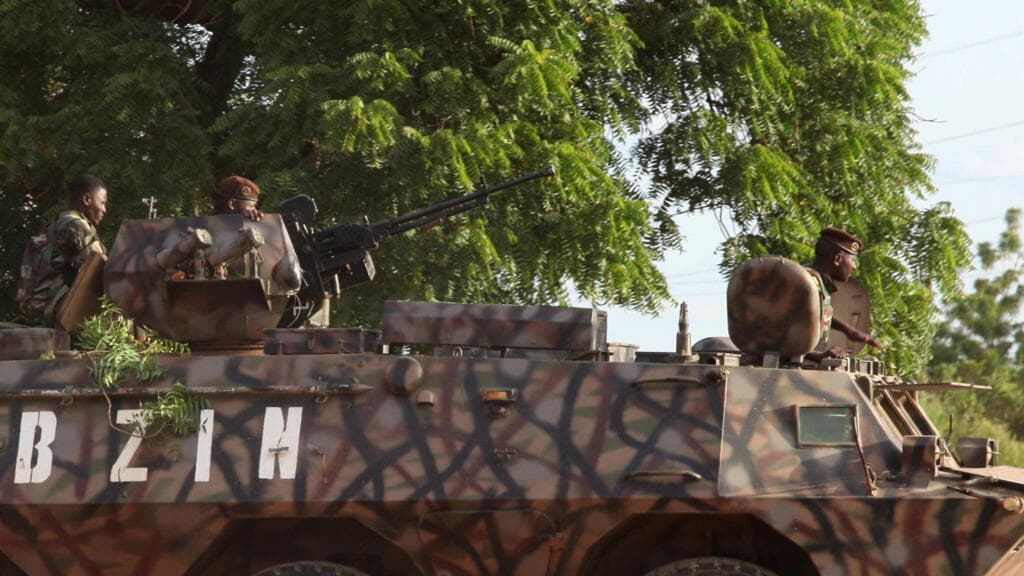
By evening, the coup had failed. Niger's Presidential Guard, backed by Russia's Africa Corps using kamikaze drones and armored vehicles, retook the base. General Tiani survived. Russia publicly confirmed its involvement. Sahel expert Yvan Guichaoua, speaking to Radio France Internationale, said without much qualification: "I don't think it's an exaggeration to say that the Russians saved the day."
The episode was strategically clarifying in ways that weeks of diplomatic communiqués rarely are. Russia is no longer a contractor in the Sahel. It is the guarantor of last resort - the force that decides who stays in power and who does not. That is a kingmaker role, and understanding what Russia wants in exchange for playing it is essential to any serious assessment of the region's trajectory.
Strategic Background: The Coup Belt and Western Retreat
Between 2020 and 2023, a string of military coups reshaped West Africa's political order. Mali fell in 2020 and again in 2021. Burkina Faso followed in 2022. Niger's elected President Mohamed Bazoum was overthrown on 26 July 2023 by his own Presidential Guard commander, Abdourahamane Tiani. Each junta expelled French and American military forces and reached toward Moscow. The pattern was consistent enough to give analysts a name for the geography: the coup belt.
The coups were not Russian-engineered in any simple or direct sense. They emerged from genuine domestic grievances - corruption, ethnic favoritism in military resources, the visible failure of French-backed counterterrorism strategy, and a generation of officers who had watched their colleagues die on jihadist frontlines while Niamey's political elite remained insulated. But Wagner, and later Africa Corps, was positioned to benefit from every failure. Each time a junta formed, Russian offers of security assistance arrived quickly. Each time France or the United States was expelled, Russia moved into the resulting vacuum.
By mid-2026, Niger, Mali, and Burkina Faso had formalized this alignment through the Alliance of Sahel States (AES), a regional bloc explicitly constructed around rejection of ECOWAS and Western security partnerships. The command center of the AES is located at Air Base 101 in Niamey - the same base the August mutineers targeted.
Historical Context: From Wagner to Africa Corps
Russia's initial Africa instruments were commercially structured. Wagner Group operated with formal deniability, allowing the Kremlin to maintain distance while its operatives collected gold in Mali and secured political relationships across the continent. That architecture became a liability after Yevgeny Prigozhin's death in August 2023 following his short mutiny against Russian military leadership.
Africa Corps replaced Wagner as Russia's primary military instrument on the continent. Unlike its predecessor, Africa Corps sits directly under the Russian Ministry of Defence and is commanded by Lieutenant General Andrey Averyanov. The shift from deniable mercenaries to an official state military formation has practical consequences: Russia can no longer pretend its Sahel operations are private commercial ventures. When Africa Corps deploys drones and troops to crush a coup, the Russian state is doing that - and Moscow chose to confirm it publicly the day after the August 2026 operation.
Africa Corps is thought to have deployed roughly 200-300 personnel in Niger, concentrated at Air Base 101. The base, which previously hosted American counterterrorism forces, now houses the Africa Corps logistics and command hub, the AES joint military command, and - critically - approximately 1,050 metric tons of uranium yellowcake seized from the nationalized French mining operation at Somaïr. The strategic layering at that single location is not accidental.
The August 2026 Mutiny: What Happened and Why
The mutiny's operational logic pointed directly at Niger's internal fault lines rather than external conspiracy. The soldiers who moved on Niamey came from special forces units stationed in Ouallam, Téra, and Dosso - all in the southwest, where Islamic State Sahel Province (ISSP) and the al-Qaeda affiliate Jama'at Nusrat al-Islam wal-Muslimin (JNIM) have inflicted the heaviest casualties on Nigerien forces.
The precipitating grievances were structural. Tiani spent twelve years commanding the Presidential Guard before taking power in the 2023 coup. His loyalty to that unit shaped his government's resource allocation: the Presidential Guard received better equipment, better postings, and better pay than regular army units fighting jihadists in the field. Chatham House's Paul Melly captured the sentiment among the mutineers succinctly - young officers on the front line saying, in effect: "Three years ago things were getting better, but look at things now."
The security data supports that frustration. According to the Armed Conflict Location and Event Data project, Niger recorded 5,836 fatalities from political violence during Tiani's first three years in power, compared to 3,199 in the equivalent period before the coup - an increase of more than 80 percent. JNIM attacked Niamey's airport in June 2026 for the first time. ISSP had struck the same complex in January. Two jihadist assaults on the capital's most strategic complex in a single year, and the junta had no satisfactory answer.
The mutineers also briefly seized Turkish-supplied drones at the airport - a detail that suggests operational planning rather than pure spontaneity. Their statement claimed Tiani had been removed. They had no political program beyond that declaration, and they issued no further public communications. By evening, they had lost.
Russia's intervention was decisive. Africa Corps personnel, already present at Base 101, were initially held hostage by the mutineers. After the Nigerien government formally requested Russian assistance, Africa Corps deployed drones and armored vehicles. The kamikaze drone strikes appear to have been the turning point, forcing groups of mutineers to surrender or withdraw under sustained aerial pressure. Within roughly 24 hours, the coup was over. Around a hundred soldiers were detained at the base.
Power Center Analysis: Who Benefits and Who Loses
Russia
Moscow won the most visible strategic dividend from the night's events. Africa Corps saved Tiani, and Russia publicly claimed credit for it. The signal delivered to every junta leader in the Sahel - and every would-be challenger - was unambiguous: if you align with Moscow, Russia will fight to keep you in power. If you try to overthrow a Russian-backed leader, you will face Russian weapons.
This is a qualitatively different proposition from anything Russia offered before. Prior to August 2026, Russia's Africa role involved training, political support, and counterterrorism assistance. The Niger operation was direct intervention against an internal military challenge. Russia has now demonstrated it will function as a praetorian guard for aligned regimes. That capability, demonstrated credibly and publicly, transforms the calculus for both African governments seeking security guarantees and for those contemplating challenging them.
Russia also has immediate material interests at stake in Niger's stability. The approximately 1,050 metric tons of uranium at Air Base 101 has been the subject of reported Rosatom negotiations, and Russia's state nuclear corporation has been formally discussing a 2,000 MWe nuclear power plant project with Niger. A change of government could disrupt those arrangements. Africa Corps's institutional interest in keeping Tiani in power, as Control Risks analyst Beverly Ochieng noted, is inseparable from the Kremlin's resource interests.
Niger's Tiani Government
Tiani survived, but the mutiny revealed the depth of his domestic vulnerabilities. His junta came to power promising to deliver security where Bazoum failed. Three years later, jihadists are attacking the capital's airport twice in a single year, and frontline soldiers are angry enough to launch a coup attempt. The regime's legitimacy depends on military solidarity and security delivery. Both are now visibly strained.
Survival came at a cost. Tiani now owes his continued rule explicitly to Russian intervention. Every Nigerien officer and political actor understands that without Africa Corps, the August mutiny might have succeeded. That dependence is not negotiating leverage - it is structural subordination. Niger cannot credibly threaten to change partners without risking its own government's survival.
Algeria
One of the more significant developments from the August crisis was Algeria's decision to deploy four Sukhoi Su-30 fighter jets and an Il-78 aerial tanker to Niamey on 30 August. Algeria described this as "strategic support." This was, by multiple accounts, the first time Algeria had deployed military aircraft beyond its borders under the constitutional reforms enacted in 2020. Algiers stated its "full solidarity and firm support" for Niger's government.
Algeria's intervention reflects genuine strategic interests. Niger borders Algeria to the south, and Algerian security planners watch Sahel instability with acute concern about spillover, migration, and militant expansion. But Algeria's deployment alongside Russia's is also notable: two non-Western security actors coordinating to suppress a coup attempt, in a country that had previously hosted American and French forces. The geopolitical optics are deliberate.
The West
Washington and Paris have no meaningful role in Niger any longer. American forces were expelled from Air Base 101 after the 2023 coup. French military presence ended at the same time. ECOWAS attempted to organize a military intervention after the 2023 coup and failed to generate the necessary consensus. No Western power issued anything more than procedural statements about the August 2026 mutiny. The vacuum they left is now occupied, and the cost of re-entry - if it were even desired - has increased sharply.
The Uranium Dimension: Russia's Strategic Resource Play
Niger holds approximately 6.7 percent of global identified uranium reserves and was supplying roughly a quarter of European Union nuclear utility needs before the 2023 coup disrupted export relationships. That resource sits at the center of a complex legal and geopolitical dispute that has not been resolved.
Tiani's government nationalized the Somaïr uranium mine in June 2025, ousting Orano, the French state-backed nuclear company that had operated it for decades. An international arbitration tribunal at the World Bank's ICSID ruled in September 2025 that the nationalization violated Niger's investment commitments and prohibited any transfer of the stockpiled uranium pending resolution. Niger has claimed its sovereign right to sell the material anyway. Since the nationalization, not a single kilogram has been exported to international markets. More than 1,800 tons of uranium concentrate, valued at close to $380 million, remain landlocked - Niger lost its export route through Benin amid that country's political deterioration.
Russia's Rosatom has been publicly linked to discussions about acquiring uranium from Niger and has expressed formal interest in constructing a nuclear power plant there. Le Monde has reported that Rosatom planned to transport at least part of the stockpiled uranium overland through Burkina Faso to the Togolese port of Lomé. The legal constraint from ICSID complicates this. Russia has sourced uranium elsewhere in the interim. But the long-term resource calculus that motivates Africa Corps's presence in Niger is uranium above everything else.
Security analysts at Aldebaran Threat Consultants characterized Africa Corps's role explicitly: it is not primarily a counterterrorism force - it is a regime protection service, and the regime it protects sits atop one of the world's more significant uranium deposits. The two functions are inseparable.
Military and Security Implications
The August mutiny exposed three structural weaknesses in Niger's security architecture that Russia's intervention papered over but did not resolve.
First, the tiering problem. The Presidential Guard and regular army units are operating under fundamentally different conditions. Soldiers dying against ISSP in Tillabéri do not receive the same equipment, pay, or institutional regard as officers close to Tiani. That disparity will generate further resentment. The August mutineers came from the southwest front specifically because that is where soldiers are dying fastest.
Second, the jihadist threat has not been degraded by Russia's presence. ACLED data for Tiani's three-year period shows fatalities increasing by 80 percent compared to the equivalent pre-coup period. JNIM and ISSP attacked the airport twice in 2026. Africa Corps can protect Tiani's government from internal challengers. It has demonstrably not secured Niger's territory from jihadist expansion. That contradiction - military praetorian guard that cannot do counterterrorism - is at the core of Russia's strategic exposure in the Sahel.
Third, Base 101's strategic concentration is a critical vulnerability. The airport complex hosts Africa Corps headquarters, AES joint command, Niger's military drone fleet, and a major uranium stockpile. Two successful jihadist attacks on that location in early 2026 and one near-successful internal coup attempt in August demonstrate that the asset is contested from multiple directions simultaneously.
Economic and Trade Implications
Niger's economic condition has deteriorated since the 2023 coup. The uranium export freeze has eliminated a significant revenue stream. Niger announced in December 2025 that it would sell uranium stockpiles on the open international market "with complete independence," but the ICSID ruling creates legal obstacles for any buyer willing to take the risk. Rosatom has expressed interest while sourcing elsewhere. The gap between Niger's uranium assets and its ability to monetize them is widening.
On oil, Niger signed a $1 billion investment agreement with China in 2026 to raise production toward 145,000 barrels per day by 2029, including renegotiated pipeline fees through Benin. It also announced a $1.9 billion refinery project at Dosso with Canadian and American participants. These deals suggest the junta is trying to diversify revenue beyond the uranium standoff. But the broader economic picture - a landlocked country with blocked uranium exports, no Western investment appetite, and jihadist pressure on its territory - remains constrained.
For Europe, the longer-term concern is structural. If Rosatom eventually resolves the legal and logistical obstacles and gains access to Niger's uranium reserves, Moscow will hold influence over a material that supplied a quarter of EU nuclear utilities' needs until recently. That would represent a significant extension of European energy dependence on Russian state entities - precisely the vulnerability the EU has been working to reduce since 2022.
Diplomatic Positioning and Alliance Dynamics
The AES's response to the August mutiny was immediate and categorical. Both Mali and Burkina Faso condemned the attempted coup and expressed support for Tiani. The AES collectively described the mutiny as a "destabilization plot" that had been "contained and thwarted." This solidarity is not simply rhetorical - the three AES governments face similar domestic vulnerabilities and have mutual interest in establishing a norm against internal military challenges to AES-aligned leaders.
Russia's public confirmation of its intervention role was deliberate signaling. The Russian Ministry of Defence confirmed it provided ground and aerial support. The Russian ambassador to Niger confirmed the assistance had been formally requested. Moscow is not hiding what it did. The transparency serves the deterrence function: potential coup plotters in Bamako and Ouagadougou now know Russia will do in their capitals what it did in Niamey.
Algeria's parallel intervention adds a second layer to the emerging security architecture. Algeria has historically maintained studied neutrality in sub-Saharan African conflicts. Deploying combat aircraft to Niger represents a significant departure. Algiers appears to have calculated that Niger's stability is a direct security interest, and that supporting Tiani - alongside Russia - is preferable to managing the consequences of his fall.
Second- and Third-Order Consequences
The second-order consequence most worth watching is the demonstration effect on Mali and Burkina Faso. Both governments face similar internal pressures - frontline soldiers with justified grievances, jihadist expansion their Russian partners cannot contain, and economies squeezed by Western financial exclusion. The August events showed that Russia will act to preserve an aligned government under military threat. That assurance may reduce the probability of successful coups in the short term. It may also encourage AES juntas to take greater domestic risks - suppressing dissent more aggressively, redistributing resources more nakedly toward loyal units - under the assumption that Russian backing insulates them from consequences.
The third-order risk is equally serious: if Africa Corps is being used to protect regimes from their own militaries rather than to fight jihadists, the jihadist threat continues to compound. JNIM and ISSP are expanding southward. Neither organization has been meaningfully degraded by the Russian presence in Mali or Niger. A Russian force effective at protecting a junta from internal challengers is not the same as a force effective at territorial counterterrorism. The Sahel's stability deficit will continue to deepen even as individual regimes become harder to remove.
For the broader international system, the August events send a message that Russia's Africa bet is paying off strategically. The Kremlin is demonstrating that it can be a reliable security guarantor where Western powers have retreated, and it is doing so with a relatively small deployed force. That demonstration strengthens Russia's global positioning at a time when the Ukraine war has damaged its military reputation elsewhere. The Sahel is one front where Russia can credibly claim to be winning.
India's Strategic Position
India's interests in the Niger situation operate at two distinct levels: uranium supply and Sahel precedent.
On uranium, Niger had direct relevance to India's nuclear energy ambitions. In 2015, during the India-Africa Forum Summit, Niger offered uranium supply to India as New Delhi was actively diversifying its nuclear fuel sources. That possibility is now significantly more complicated. Niger's uranium exports are legally frozen by ICSID arbitration, physically blocked by export route disruption, and strategically targeted by Russian state commercial interests. If Rosatom eventually acquires the primary operational role in Niger's uranium sector, Russia will sit across a supply chain that India had hoped to access independently.
India's broader uranium diversification strategy - currently drawing on Russia, Kazakhstan, Canada, Australia, and Namibia - means Niger's removal from the near-term supply picture is not a crisis. But the principle is concerning: Russian state entities are working to consolidate uranium supply relationships across the Global South in ways that could eventually constrain the menu of independent options available to countries like India.
At the precedent level, India has watched the Sahel's Western displacement with calibrated attention. India's own Africa engagement has been expanding, and the demonstration that Russia can function as a military kingmaker in a strategically important resource region is relevant to Indian assessments of where African governments are heading and which partnerships are durable. India has maintained significant trade and diplomatic engagement with West Africa. The region's deepening alignment with Moscow, formalized through the AES, is a factor in India's strategic calculus even if it generates no immediate crisis.
Scenario Analysis
Base Scenario: Russian Consolidation, Protracted Instability (Probability: High)
Tiani survives the August 2026 crisis and governs with more explicit Russian backing. Africa Corps strengthens its presence at Base 101. The uranium export deadlock continues as legal proceedings with Orano remain unresolved. JNIM and ISSP continue their southward expansion, attacking Niger's territory with ongoing effectiveness because Africa Corps is focused on regime protection rather than territorial counterinsurgency. Frontline soldier grievances persist and generate periodic unrest, but none succeeds without Russian opposition. Niger's economic condition deteriorates. The AES remains intact but cannot generate the military capacity to reverse jihadist gains. The Sahel's coup belt stabilizes politically at Russian-guaranteed junta rule while becoming less secure territorially.
Key assumptions: Russia maintains its deployed force in Niger, Tiani avoids further fractures in his inner circle, and no external shock forces a Russian redeployment from West Africa.
Bull Scenario: Russia Delivers Counterterrorism Results (Probability: Low)
Following the August crisis, Russia increases Africa Corps deployment in Niger with a meaningful shift toward counterterrorism operations in Tillabéri. Upgraded intelligence sharing, expanded drone operations, and better coordination with Niger's frontline units generate measurable degradation of ISSP and JNIM capabilities. The uranium export deadlock is resolved through negotiated settlement with Orano or its assets are transferred to a buyer willing to absorb the legal risk. Niger's resource revenues recover. Frontline soldier grievances diminish as the security situation improves. The AES generates a regional counterterrorism architecture with genuine operational effect.
Key assumptions: Russia allocates additional resources to Niger beyond regime protection, Rosatom resolves the uranium legal deadlock, and JNIM and ISSP fail to exploit internal Nigerien divisions further.
Bear Scenario: Cascading Instability (Probability: Medium)
A second, better-organized coup attempt succeeds - or JNIM/ISSP attacks on Niamey escalate to a level that triggers political collapse. Russia either cannot respond in time or finds its forces insufficient against a more coordinated challenge. The AES begins to fragment as Mali or Burkina Faso faces similar internal breakdowns. Niger's uranium stockpile becomes a contested asset in a period of political transition, attracting competing external actors including China and Gulf states. The legal vacuum around the uranium creates proliferation-adjacent risks as unverified buyers attempt to access the stockpile. The Sahel's jihadist presence expands into coastal states - Togo, Benin, Ghana - at an accelerated pace.
Key assumptions: Tiani fails to address the Presidential Guard-regular army resource disparity, jihadist pressure on Niamey intensifies, and a second coup attempt incorporates lessons from August 2026's failure.
Intelligence Forecast
6 months: Tiani's government will likely implement a purge of military units involved in the August mutiny and attempt to restructure resource allocation within the armed forces to reduce frontline grievances. This will probably be incomplete - political loyalty constraints limit how much Tiani can redeploy resources away from Presidential Guard units. Africa Corps will likely quietly increase its presence at Base 101 following the coup attempt. JNIM and ISSP will continue targeting Niamey's airport complex and expand southward into adjacent regions.
12 months: Russia's uranium negotiations with Niger - both the Rosatom power plant project and the stockpile question - will advance or stall decisively based on the ICSID legal proceedings and Niger's willingness to defy international arbitration. If Niger unilaterally sells stockpiled uranium to Rosatom in defiance of the tribunal ruling, expect a major international legal and political confrontation involving France, the EU, and potentially the United States. Algeria's deepened security engagement with Niger will produce formal military cooperation structures not previously in place.
18-24 months: The AES faces its most significant test: whether it can function as a genuine collective security architecture or whether it remains three individually Russian-dependent juntas with a shared logo. Russia's ability to maintain meaningful force levels in West Africa while prosecuting operations in Ukraine will face resource pressure. Any significant Russian military setback in Europe could reduce Africa Corps capacity, creating vulnerability in the Sahel precisely when jihadist groups are at their most active. Niger's uranium will either have found a buyer willing to absorb legal risk, or it will remain frozen - and Niger's fiscal position will have deteriorated further either way.
Global Chanakya Assessment
The conventional reading of the August 2026 Niger mutiny treats it as evidence that Russia has won in the Sahel. That reading is too simple and probably wrong in its implications.
Russia has won a specific, limited competition: it has displaced France and the United States as the preferred security partner of Sahel military juntas. That displacement is real, durable, and strategically significant. But the regime protection model Africa Corps has built creates a structural trap that Russia has not yet acknowledged publicly. A force optimized to protect a junta from internal challengers is not the same force that defeats jihadists. The more effective Africa Corps is at the first task, the more the second task deteriorates - because junta survival is prioritized over territorial security.
ACLED's data makes this visible: fatalities under Tiani's Russian-backed rule increased 80 percent compared to the pre-coup period. JNIM and ISSP are more operationally capable today in Niger than they were three years ago. Russia is spending political capital and deployed forces to sustain a government that is losing the war it claimed it would win. The longer that contradiction persists, the more it will generate exactly the kind of frontline soldier grievances that produced the August mutiny in the first place.
The variable most likely to be underweighted in current analysis is resource exhaustion. Russia is fighting an active war in Ukraine. Africa Corps's Niger deployment is 200-300 personnel. Those numbers are sustainable at current operational tempo. They are not necessarily sustainable if the jihadist threat escalates, if the uranium situation generates a confrontation requiring additional political management, and if a second coup attempt requires another decisive military intervention - all simultaneously. Russia's Sahel investment is generating returns, but it is also generating obligations at a time when Moscow's strategic bandwidth is not unlimited.
The indicator worth watching most carefully is not the next coup attempt. It is whether Africa Corps begins conducting offensive counterterrorism operations in Tillabéri. If Russia is serious about building a durable strategic position in Niger, it eventually has to demonstrate that it can address the threat that is actually destroying the state. If it remains a praetorian guard and nothing more, the state it is guarding will continue to weaken beneath it.
Indicators to Monitor
- Africa Corps force levels at Base 101 in Niamey - any increase signals Russian commitment to expanded operations
- Military court proceedings against August 2026 mutineers - scope and severity will indicate how Tiani assesses the threat
- Resource reallocation within Niger's armed forces - whether frontline units receive improved pay and equipment
- JNIM and ISSP attack frequency and geography in Niger - particularly any further strikes on Niamey or oil infrastructure
- ICSID proceedings on the Orano uranium nationalization - any ruling or Niger defiance of existing orders
- Rosatom-Niger uranium stockpile negotiations - public statements or commercial agreements
- Algeria-Niger military cooperation developments - formalization of the security relationship indicated by the August Su-30 deployment
- AES joint military operations in Tillabéri - whether the Alliance generates real counterterrorism activity or remains symbolic
- Russian foreign minister and defence ministry statements on Niger and AES commitments
- Indicators of second coup planning in Niger - unusual troop movements, officer reassignments, communications intercepts reported by regional security analysts
- Niger-China oil pipeline and refinery project progress - alternative revenue streams that could reduce Niamey's resource desperation
- ECOWAS and West African coastal state responses to continued Sahel jihadist southward expansion
Frequently Asked Questions
Who attempted the coup in Niger in August 2026?
A mutinous faction of Niger's armed forces calling themselves the Armed Forces for the Restoration of the Fatherland. The soldiers came primarily from special forces units deployed in Niger's southwest - Ouallam, Téra, and Dosso - against ISSP and JNIM jihadist groups. The mutiny appears to have been led by young officers frustrated with resource disparities between frontline units and the Presidential Guard, and with the deteriorating security situation under Tiani's rule.
What exactly did Russia's Africa Corps do during the Niger coup attempt?
Africa Corps deployed drones and armored vehicles in support of Niger's Presidential Guard after the Nigerien government formally requested assistance. Kamikaze drones were used to force mutineers to surrender or withdraw from Base 101 at Niamey's airport. The Russian Ministry of Defence publicly confirmed it provided both ground and aerial support. Russia's ambassador to Niger confirmed the assistance had been formally requested before it was provided.
What is Africa Corps and how does it differ from Wagner Group?
Africa Corps is a Russian Ministry of Defence paramilitary formation that replaced Wagner Group in Africa following Yevgeny Prigozhin's death in 2023. Unlike Wagner, which operated with commercial deniability, Africa Corps is directly under state control and commanded by Lieutenant General Andrey Averyanov. The shift means Russia can no longer distance itself from its Sahel operations - they are official Russian military activity.
Why is Niger's uranium strategically important?
Niger holds approximately 6.7 percent of global identified uranium reserves and was supplying roughly a quarter of European Union nuclear utility needs before the 2023 coup disrupted those relationships. The junta nationalized the main French-operated mine in June 2025 and seized approximately 1,050-1,150 metric tons of uranium concentrate. Russia's Rosatom has expressed interest in acquiring the material and in constructing a nuclear power plant in Niger. The uranium's legal status is frozen by an international arbitration ruling, but it remains physically at Air Base 101 - the same base Russia helped protect during the August 2026 coup attempt.
What does this mean for India?
Niger had previously offered uranium to India during the 2015 India-Africa Forum Summit, making it a potential addition to India's nuclear fuel diversification strategy. Russian commercial consolidation of Niger's uranium sector would reduce India's independent access to that supply source. More broadly, Russia's demonstrated ability to function as a military kingmaker in Africa's resource-rich Sahel has implications for Indian strategic assessments of regional alignment, Africa engagement, and the long-term distribution of uranium supply relationships in the Global South.