
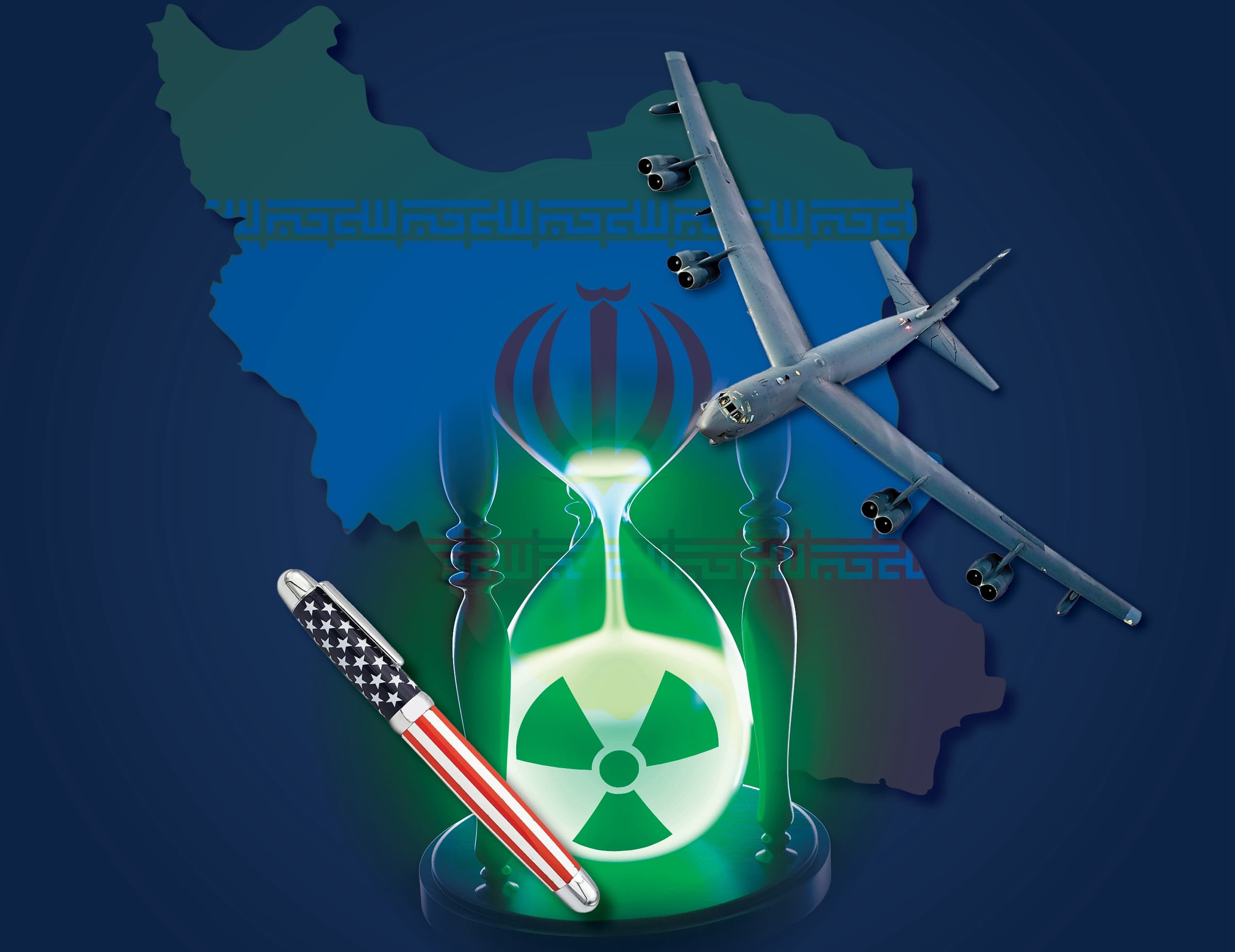
After the War: Will Iran's Nuclear Program Trigger a Second, Wider Regional War?
Executive Summary
This question can no longer be answered in the hypothetical. The war that decades of nonproliferation diplomacy, sanctions regimes, and deterrence theory were designed to prevent has already been fought. On February 28, 2026, the United States and Israel launched a coordinated strike campaign against Iran that killed Supreme Leader Ali Khamenei, decapitated significant portions of the Islamic Revolutionary Guard Corps command structure, and struck at least nine to twelve nuclear weaponization-related facilities across Iranian territory. Iran responded by closing the Strait of Hormuz, attacking United States bases and Gulf Arab states, and drawing the conflict into Lebanon, where the already-fragile Hezbollah ceasefire collapsed entirely. What followed was five weeks of direct kinetic war between a nuclear-armed Israel, the conventional and nuclear superpower United States, and Iran - the most significant Middle Eastern military confrontation since the 2003 invasion of Iraq, and arguably the most consequential nonproliferation-driven military action since the original conception of preventive counter-proliferation strikes.
The war did not end cleanly. A succession of ceasefires collapsed through March and April 2026. A dual blockade - Iranian mining of the Strait of Hormuz against an American naval blockade of Iranian ports - paralyzed roughly a quarter of the world's seaborne oil trade for months. Direct talks in Islamabad in April 2026, the highest-level US-Iran engagement since the 1979 revolution, failed. It was not until June 17, 2026 that Donald Trump and Iranian President Masoud Pezeshkian remotely signed the Islamabad Memorandum of Understanding - a fourteen-point framework agreement establishing a sixty-day window for negotiating a permanent settlement, governing the reopening of Hormuz, addressing the disposition of Iran's highly enriched uranium stockpile, and outlining a path toward sanctions relief and a 300-billion-dollar reconstruction commitment.
As this report goes to publication, that ceasefire is already fraying with alarming speed. On June 26, 2026, the United States struck Iranian coastal sites after Trump declared the ceasefire violated. On June 28, Iran retaliated with ballistic missiles and drones against the US Ali Al Salem Air Base in Kuwait and the US Fifth Fleet headquarters in Bahrain. As of June 29, 2026, the United States and Iran are described in real-time reporting as having paused strikes but remain in active disagreement over the terms of continued negotiation. The question this report addresses, then, is not whether Iran's nuclear program will trigger a regional war - it already has. The question is whether the current, visibly deteriorating ceasefire holds, or whether the region is sliding toward a second and potentially more catastrophic phase of the same conflict, this time with a wounded but undefeated Iranian regime, a degraded but unverified nuclear program, and a coalition of belligerents whose appetite for further escalation each carries entirely different incentives.
Strategic Background
Iran's nuclear program has been the central preoccupation of Middle Eastern security planning for over two decades, but the strategic logic that made it so dangerous was never primarily about an Iranian decision to build a bomb. It was about ambiguity - the deliberate maintenance of what proliferation analysts call a threshold or hedging capability, in which Iran developed enrichment infrastructure, accumulated near-weapons-grade material, and built the technical knowledge base for weaponization, all while stopping short of the final assembly decision that would constitute an unambiguous breakout. Iran suspended its formal, structured nuclear weapons program in 2003, following the US invasion of Iraq, according to consistent assessments of the US intelligence community across multiple administrations. What persisted afterward was not a weapons program in the conventional sense but a deliberately maintained capability - enrichment levels reaching 60 percent U-235, a stockpile that the IAEA verified at 440.9 kilograms before the June 2025 strikes, and centrifuge and weaponization-relevant infrastructure that gave Iran what analysts characterized as the ability to produce its first nuclear device within months, had the political decision been made.
That ambiguity was itself the strategic instrument. Iran used its enrichment program and uranium stockpile as leverage in negotiations, signaling willingness to dilute or export higher-enriched material in exchange for sanctions relief while never fully closing the option of weaponization. The Bulletin of the Atomic Scientists and other proliferation-focused analysts consistently characterized this as nuclear hedging - developing the technical infrastructure to assemble a weapon on short notice while stopping short of actual production, a strategy that maximized Iranian negotiating leverage while minimizing the unambiguous provocation that would trigger preventive military action.
The strategy worked until it did not. Donald Trump's withdrawal from the Joint Comprehensive Plan of Action in 2018, the subsequent maximum pressure sanctions campaign, the further Iranian enrichment escalation that followed, and the eventual UN snapback sanctions reimposition in September 2025 created a deteriorating economic and security environment in which Tehran's negotiating leverage diminished even as its enrichment stockpile grew. December 2024 IAEA reporting found enrichment approaching weapons-grade levels and an unprecedented stockpile without credible civilian justification. By May 2025, the IAEA reported Iran had amassed a record amount of military-grade enriched uranium. On June 12, 2025, the IAEA declared Iran in non-compliance with its nonproliferation obligations for the first time in twenty years. The next day, Israel struck.
Historical Context
Israel's campaign against the Iranian nuclear program is best understood as the culmination of a strategic doctrine - sometimes called the Begin Doctrine, after Israeli Prime Minister Menachem Begin's 1981 strike on Iraq's Osirak reactor - that holds that Israel will use preventive military force to deny hostile regional states the capability to threaten Israel with nuclear weapons, regardless of the diplomatic costs. Israel applied that doctrine against Iraq in 1981 and against Syria's covert nuclear reactor at Al-Kibar in 2007. The application against Iran had been anticipated, debated, and partially executed through covert means - the Stuxnet cyberattack of 2010, the assassination of Iranian nuclear scientists through the 2010s, and repeated sabotage operations against Iranian centrifuge facilities - for over fifteen years before the conventional military campaign of June 2025.
What changed in 2025 was the convergence of Israeli political will, American presidential backing, and Iranian regional weakness. The October 7, 2023 Hamas attack and the subsequent Gaza war had already triggered a broader regional confrontation involving Hezbollah, the Houthis, and Iranian-backed militias across Iraq and Syria. By 2025, Hezbollah had been severely degraded by Israeli operations in Lebanon, the Assad regime in Syria had collapsed, and Iran's regional proxy network - the so-called Axis of Resistance that had constituted Tehran's primary deterrent and retaliatory capability against direct attacks on its homeland - was a fraction of its pre-2023 strength. This was the strategic window in which Israeli Prime Minister Benjamin Netanyahu lobbied Trump for a joint strike specifically targeting Iranian leadership, citing Israeli intelligence assessments as the decisive factor in Trump's authorization of what was designated Operation Epic Fury.
The first phase of the war, June 13-24, 2025, saw Israel launch large-scale attacks targeting Iranian military leadership and nuclear scientists, followed by United States strikes on Iranian nuclear sites including the Midnight Hammer operation against Fordow. IAEA reporting confirmed the aboveground pilot fuel enrichment plant at Natanz was destroyed, with likely additional underground damage from power loss; damage was confirmed at Esfahan's chemical laboratory, uranium conversion plant, and fuel manufacturing facilities; no damage was reported at Fordow in this initial phase. Five nuclear weaponization sites were attacked and destroyed or damaged. This first phase ended in a ceasefire that held, uneasily, for approximately eight months - a period during which Iran restricted IAEA access, accused the agency of bias for failing to condemn the strikes, and continued enrichment-adjacent activity that satellite imagery would later reveal at the Esfahan tunnel complex.
The second and far more consequential phase began on February 28, 2026, when the United States and Israel launched coordinated strikes that killed Khamenei himself, along with senior negotiating figures including Ali Larijani - an assassination that occurred amid active nuclear negotiations, a sequencing that arms control analysts have characterized as evidence the strikes were planned for months and launched while diplomacy was still nominally underway, rather than triggered by any sudden discovered emergency. The killing of a sitting Supreme Leader of Iran by direct military action represents an escalation without precedent in the modern history of state-to-state conflict in the Middle East, fundamentally altering the political character of the confrontation from a counter-proliferation strike to an act that many in the region interpreted as regime decapitation.
Current Situation Assessment
The state of the Iranian nuclear program as of late June 2026 is one of profound and deliberate ambiguity - not because Iran has successfully concealed a continuing weapons program, but because the war itself destroyed the verification architecture that would allow anyone, including Iran's own scientific establishment, to know with confidence what remains. The IAEA's most recent reporting confirms that Iran stopped cooperating with verification activities after February 28, 2026, informing the agency that normal safeguards were legally untenable and materially impracticable given the threats and acts of aggression it had experienced. The IAEA has not had access to any of Iran's four declared enrichment facilities for over eight months as of its June 2026 reporting. It cannot verify the location, composition, or current status of the pre-war stockpile of 440.9 kilograms of 60-percent enriched uranium - material that, if further enriched, would be sufficient for multiple nuclear devices.
The military assessment of the program's degradation is more concrete but still incomplete. The June 2025 and February-April 2026 strikes combined destroyed or damaged at least nine to twelve nuclear weaponization-related sites, including facilities linked specifically to weaponization research at Taleghan 2, Malek Ashtar University, and Imam Hussein University. Natanz's enrichment infrastructure and Esfahan's conversion and fuel manufacturing capability sustained significant damage. Critically, however, the most sensitive material - the high-enriched uranium stockpile - is assessed by IAEA Director General Rafael Grossi to be located substantially, though not entirely, within the Esfahan tunnel complex, a deeply buried facility that the Chairman of the US Joint Chiefs of Staff has acknowledged was too deeply buried for even the Massive Ordnance Penetrator to destroy. US military planners made the deliberate decision to target tunnel entrances rather than attempt destruction of the underground storage itself.
The technical consequence is a genuinely uncertain strategic picture. Before the strikes, credible assessments suggested Iran could have produced its first non-missile deliverable nuclear weapon within months if the political decision were made. Current assessments suggest this timeline has extended to more than a year, with significant new uncertainties about whether a resulting weapon would even function reliably, given the loss of testing infrastructure and the disruption to the technical teams that would need to execute weaponization. But this is an estimate built on incomplete information, because the strikes that degraded Iran's capability simultaneously destroyed the international community's ability to verify what that capability actually is. As one assessment from the arms control community has put it, the war traded transparency for destruction, verification for guesswork, and diplomacy for a widening conflict whose nuclear outcome is now less certain than before the bombs fell.
Politically, Iran is led by a wounded and reorganized leadership. Mojtaba Khamenei, son of the slain Supreme Leader, has assumed the position and endorsed the Islamabad Memorandum despite what he described as a different view - language that signals significant internal regime dissent about the wisdom of the negotiated settlement, dissent that likely reflects hardline factions, particularly within the IRGC, who view the ceasefire as capitulation following the killing of their previous leader. Iranian President Masoud Pezeshkian, a relative moderate whose negotiating posture has driven the diplomatic track, operates in a political environment shaped by both this internal hardline pressure and a January 2026 domestic crackdown that, according to multiple reports, saw the Iranian government kill thousands of civilians during the country's largest protests since the 1979 revolution - a crackdown that occurred in the immediate run-up to the February strikes and that suggests a regime simultaneously fighting for external survival and internal control.
Power Center Analysis
The United States: Trump's Maximalist Diplomacy
Donald Trump's approach to the Iran confrontation has combined maximalist rhetoric with genuine, if erratic, diplomatic engagement. His framing has shifted dramatically across the conflict's phases - from demanding unconditional surrender on March 6, 2026, to claiming premature victory on multiple occasions in March, to authorizing the historic direct talks in Islamabad in April, to signing the memorandum in June while simultaneously threatening to go right back to dropping bombs if dissatisfied with Iranian compliance. This oscillation reflects both Trump's characteristic negotiating style and a genuine strategic tension within the administration: Vice President JD Vance, who led the 300-member US negotiating team, has pursued a methodical, technically detailed diplomatic process, while Trump's public statements have repeatedly threatened immediate, devastating military escalation including a stated willingness to consider Iranian regime collapse as an acceptable outcome of continued noncompliance.
The American negotiating position, articulated through preconditions reported in May 2026, demanded Iran deliver 400 kilograms of enriched uranium to the United States, maintain only one operational nuclear facility, and accept a comprehensive ceasefire - terms that reflect an ambition not merely to degrade but to permanently dismantle Iran's enrichment capability. The Islamabad Memorandum's compromise - a minimum methodology of down-blending the high-enriched uranium stockpile under IAEA supervision rather than complete removal - represents a significant retreat from those maximalist preconditions, suggesting either genuine American flexibility or recognition that Iran's continued resistance, even after the death of its Supreme Leader, made the maximalist outcome unachievable through further military pressure alone.
Israel: Unbound by the Ceasefire
Israel's position within the post-war framework is the single most destabilizing element of the current settlement architecture. Netanyahu's government has explicitly and repeatedly stated that Israel considers itself not bound by the Islamabad Memorandum's provisions regarding Lebanon, asserting Israel's freedom of action against Hezbollah regardless of the broader US-Iran settlement. Israeli forces have continued strikes in southern Beirut throughout the ceasefire period, including strikes on June 7 and June 14, 2026 that nearly derailed the memorandum's signing entirely. Defense Minister Israel Katz has stated that Israeli forces will remain in southern Lebanese territory seized during the war, with the 200,000 displaced Lebanese residents from the security zone never to be allowed to return - a permanent territorial and demographic fact established through military force that virtually guarantees continued friction regardless of the US-Iran diplomatic track's success.
Israel's strategic calculation regarding Iran's nuclear program reflects the core logic of the Begin Doctrine taken to its furthest application: having killed the Supreme Leader and struck deep into Iran's nuclear infrastructure, Israeli strategic planners face the question of whether anything short of complete, verified elimination of Iranian enrichment capability constitutes acceptable risk. Given the demonstrated unreliability of IAEA verification under current conditions, and given Israel's stated position that it retains freedom of military action, the prospect of unilateral Israeli strikes resuming - independent of the US-Iran diplomatic track, and potentially against American wishes - remains a persistent structural risk throughout the negotiation period.
Iran: A Wounded Regime Negotiating from Weakness
Tehran's negotiating position reflects the reality of a regime that has suffered catastrophic losses - its Supreme Leader assassinated, its military and IRGC command structure decapitated, its proxy network across the region severely degraded even before the 2026 phase of the conflict began, and its economy crushed under reimposed snapback sanctions and the currency collapse that followed. Yet Iran has demonstrated, through its willingness to close the Strait of Hormuz, attack US bases directly, and strike Gulf Arab states that hosted no direct combat role, a continued capacity and willingness to impose substantial costs on its adversaries even while militarily overmatched. The dual blockade of Hormuz - Iranian mining and harassment against American naval blockade - demonstrated that Iran retains asymmetric leverage over global energy markets that conventional military degradation has not eliminated.
Internal Iranian politics now present the most significant variable shaping whether the ceasefire survives. Mojtaba Khamenei's endorsement of the memorandum despite his stated reservations signals a fragile consensus that hardline IRGC factions may not honor. The pattern of Iranian behavior since the memorandum's signing - initial cooperation followed by accusations that the United States and Israel violated ceasefire terms in Lebanon, followed by missile and drone strikes on US assets in Kuwait and Bahrain on June 28 - suggests either a deliberate Iranian strategy of calibrated retaliation to demonstrate continued capability while avoiding war-ending escalation, or a genuine loss of central control over military decision-making within a fractured command structure still reconstituting itself after the loss of its top leadership.
Pakistan: The Unlikely Mediator
Pakistan's emergence as the primary mediating power in the US-Iran confrontation is among the most significant and least anticipated developments of the conflict. Prime Minister Shehbaz Sharif, alongside Field Marshal Asim Munir and Foreign Minister Ishaq Dar, brokered both the April ceasefire negotiations and the eventual June memorandum, with Pakistani military assets providing protective escort for Iranian delegations traveling to Islamabad. Pakistan's position as a nuclear-armed Muslim-majority state with historical relationships to both Iran and the Gulf Arab states, combined with its strategic relationship with China, positioned Islamabad uniquely to serve as an acceptable intermediary for all parties in a way that traditional mediators - Qatar, Oman, the European Union - could not fully replicate, even as Qatari mediation in Tehran played a parallel and complementary role in narrowing key gaps before the Pakistani-hosted formal signing.
Military and Security Implications
The military implications of the 2026 Iran war extend across the entire architecture of Middle Eastern security and far beyond. The closure of the Strait of Hormuz - through which approximately 25 percent of the world's seaborne oil trade and 20 percent of global LNG trade transits - for an extended period demonstrated a vulnerability in global energy security that no amount of Western strategic petroleum reserve capacity or LNG diversification could fully absorb. The Strait of Hormuz crisis saw Iranian mining operations so extensive and poorly tracked that Iran itself reportedly lost track of mines it had planted, leaving the strait only partially navigable even after Iran's nominal agreement to reopen it - a circumstance that underscores how military escalation, once initiated, generates consequences that outrun even the initiating party's control.
The assassination of a sitting Iranian Supreme Leader establishes a precedent whose long-term strategic consequences for deterrence theory and regime survival calculations across the authoritarian world are still being processed. Regimes in North Korea, and to a lesser extent China and Russia, will draw lessons from the demonstrated willingness of the United States and a regional ally to conduct leadership decapitation strikes against a major regional power, even one previously assessed as possessing only a hedging nuclear capability rather than an actual weapon. The lesson many proliferation analysts fear authoritarian regimes will draw is precisely the opposite of what counter-proliferation strategy intends: that only an actual, tested nuclear deterrent - not a hedging capability - provides genuine insurance against this kind of attack, a lesson that could accelerate rather than deter future proliferation decisions by states observing Iran's fate.
The strikes on Iran's Bushehr nuclear power plant - Iran's only operational civilian nuclear reactor, built in partnership with Russia's Rosatom - represent a particularly dangerous dimension of the conflict's military conduct. Multiple projectile strikes near the reactor complex, including a March 18, 2026 strike that destroyed a structure 350 meters from the reactor itself, and subsequent strikes that killed at least one facility worker, occurred despite IAEA Director General Grossi's explicit calls for adherence to the agency's Seven Indispensable Pillars for nuclear safety during conflict. The targeting of an operational power reactor - as opposed to enrichment or weaponization-related facilities - carries radiological risk that extends the conflict's potential consequences far beyond conventional military and political damage, and the reported evacuation of Rosatom technical staff signals a degree of operational risk to reactor safety systems that has not been fully or transparently assessed.
Hezbollah and the broader Axis of Resistance network's role in the conflict illustrates both the degradation of Iran's regional deterrent architecture and its continued, if diminished, capacity to draw the conflict into multiple theaters simultaneously. The reignition of the Israel-Hezbollah war in Lebanon, displacing approximately one-sixth of Lebanon's population, demonstrates that even a severely weakened Iranian proxy network retains the capacity to generate humanitarian catastrophe and regional escalation risk independent of the central US-Iran-Israel confrontation. The eventual Israel-Lebanon framework agreement, announced June 26, 2026, as a first step toward peace, remains fragile and contingent on continued restraint from a Hezbollah leadership that has been decimated but not eliminated.
Economic and Trade Impact
The economic consequences of the 2026 Iran war have been severe and global in scope. The disruption to Strait of Hormuz shipping triggered fuel shortages across Asia and rippling effects through global energy markets, with major shipping companies including Maersk, CMA CGM, and Hapag-Lloyd suspending transits through the strait and related Red Sea routes for extended periods. Oil prices experienced significant volatility throughout the conflict, with sharp drops of up to 11 percent on news of partial strait reopening followed by renewed spikes as closures resumed. The broader Middle Eastern energy disruption compounded the European energy security challenges already underway from the Russian gas phase-out, creating a simultaneous, multi-theater stress test of global hydrocarbon supply chains that exposed the fragility of energy systems still dependent on a small number of critical maritime chokepoints.
Iran's domestic economy has been devastated. The September 2025 reimposition of UN snapback sanctions, combined with the direct costs of war, caused significant currency depreciation and price increases for basic staples including meat and rice, compounding economic hardship that had already driven the January 2026 protests that preceded the war's second phase. The Islamabad Memorandum's reconstruction provisions - a US commitment to develop, with regional partners, a plan involving at least 300 billion dollars for Iranian reconstruction and economic development - represent an extraordinary financial commitment contingent on Iranian compliance with the nuclear and security provisions of the agreement, structured explicitly as what US officials have described as a dial mechanism in which Iranian good behavior is rewarded with escalating economic relief.
The release of Iran's frozen assets - reported at approximately 24 billion dollars - has emerged as one of the most contentious implementation issues in the post-memorandum period. Iranian officials have explicitly conditioned their continued participation in the 60-day negotiation track on US delivery of this financial commitment, while American officials have offered conflicting characterizations of what was actually agreed. This financial dispute, seemingly technical, carries significant strategic weight: Iran's ability to demonstrate any tangible benefit from the ceasefire to its own domestic constituency, particularly hardline factions skeptical of the deal, depends substantially on visible economic relief materializing on a credible timeline.
Diplomatic Positioning
The diplomatic architecture surrounding the post-war settlement reflects a complex, multipolar mediation structure that diverges significantly from the bilateral US-Iran or US-Israel-Iran frameworks of previous Middle Eastern crises. Pakistan's central mediating role, China's documented influence in encouraging Khamenei's predecessor regime to accept the initial April ceasefire, and Qatari parallel-track engagement in Tehran collectively represent a diplomatic environment in which American unilateral leverage, while still dominant, operates within a more genuinely multipolar mediation structure than characterized previous US-Iran crises.
International reaction to the Islamabad Memorandum has been broadly welcoming but conspicuously cautious. Japanese Prime Minister Sanae Takaichi's emphasis on the steady implementation of the memorandum by all parties, and her explicit hope for swift final agreement on the nuclear issue and other outstanding matters, reflects the anxiety of major Asian energy importers whose economies were directly damaged by the Hormuz disruption. French President Emmanuel Macron's call for swift and full implementation, paired with his pointed emphasis on Lebanese state sovereignty, signals European concern that the Lebanon dimension of the conflict - explicitly excluded from Israeli acceptance of ceasefire terms - represents the most likely trigger for renewed wider conflict. Turkish President Erdogan's emphasis on vigilance against possible acts of sabotage until the day signatures were affixed proved prescient, given the strikes that nearly derailed the signing on June 14.
The IAEA's diplomatic position throughout the crisis has been one of professional frustration bordering on institutional crisis. Director General Grossi's personal participation in the most recent rounds of technical talks reflects the agency's recognition that its traditional verification role has been fundamentally compromised by the conflict - a reality Grossi himself acknowledged when describing the post-memorandum period as the moment the technical work starts on Iran's nuclear program, a characterization that implicitly concedes the agency currently possesses no reliable technical picture of that program at all. Iran's November 2025 termination of the Cairo agreement, which had governed a more limited inspection framework following the first ceasefire, and its subsequent restriction of access to even the unaffected, non-strike-damaged facilities, demonstrates a deliberate Iranian strategy of using verification access itself as negotiating leverage - precisely the dynamic the Islamabad Memorandum's minimum methodology provision is intended to resolve through internationally supervised down-blending.
Regional Fallout
The Gulf Arab states occupy an acutely exposed position in the aftermath of the conflict. The United Arab Emirates, Saudi Arabia, and Kuwait each experienced direct retaliatory strikes during the war, with the June 28, 2026 Iranian missile and drone attacks on the Ali Al Salem Air Base in Kuwait and the US Fifth Fleet headquarters in Bahrain demonstrating that Gulf states hosting American military infrastructure remain primary targets for Iranian retaliation regardless of their own non-involvement in the initial Israeli-American strike decision. Saudi Arabia and the UAE's reported intervention to delay a previously scheduled American attack on Iran in May 2026 - alongside Qatar - illustrates the acute interest Gulf states have in preventing further escalation that would directly threaten their own territory, energy infrastructure, and desalination facilities, the latter explicitly threatened by Iran as a target if the conflict resumed at scale.
Lebanon has borne perhaps the heaviest humanitarian cost of the conflict's regional spillover, with more than one-sixth of the country's population displaced as the Israel-Hezbollah war reignited alongside the broader US-Iran-Israel confrontation. The June 26, 2026 Israel-Lebanon framework agreement, described by Secretary of State Marco Rubio as a first step toward peace, represents a genuine if fragile diplomatic achievement, but Israel's continued occupation of southern Lebanese territory and its explicit refusal to allow the return of 200,000 displaced residents establishes a permanent grievance structure that will continue generating friction and potential renewed conflict independent of the broader nuclear settlement's success or failure.
Iraq and Iraqi Kurdistan have experienced significant spillover violence, with sixteen reported missile and drone attacks against Iraqi Kurdistan since the ceasefire's implementation, including strikes against exiled Iranian Kurdish militant groups that demonstrate Iran's continued willingness to project force against perceived domestic opposition operating from neighboring territory, even during the nominal ceasefire period. This pattern - continued low-intensity Iranian military action against non-state targets even while observing the broader ceasefire with the United States and Israel - illustrates the multidimensional and only partially controllable character of the conflict's continuing aftermath.
The Houthi movement in Yemen, which announced its intention to resume attacks on Israel and commercial shipping at the war's outset, represents a continuing wildcard whose actions remain largely outside the control of the primary belligerents and whose Red Sea shipping disruption capability compounds the Strait of Hormuz vulnerability in ways that could independently trigger renewed broader conflict regardless of the formal US-Iran negotiating track's progress.
Global Strategic Consequences
The 2026 Iran war represents a watershed in the global nonproliferation order whose consequences will reshape strategic calculations for every state weighing the costs and benefits of nuclear hedging or acquisition. The demonstrated willingness of the United States and Israel to conduct preventive strikes that killed a sitting head of state, combined with the demonstrated limitations of those strikes in actually eliminating the underlying technical capability - the deeply buried Esfahan stockpile remains substantially intact and unverifiable - sends a genuinely ambiguous signal to the broader world about the strategic value of nuclear hedging versus actual weaponization.
For North Korea, already a declared nuclear weapons state, the Iran war likely reinforces the foundational logic of its own program: that only demonstrated, tested nuclear capability provides reliable deterrence against exactly the kind of decapitation strike Iran experienced. For states contemplating future hedging strategies - and several Middle Eastern, East Asian, and other regional powers maintain latent civilian nuclear infrastructure that could theoretically support weapons-relevant capability - the lesson may cut in a destabilizing direction: hedging without weaponization invites preventive strikes, while actual possession, however internationally condemned, has proven to deter them.
For the broader architecture of nonproliferation diplomacy, the conflict represents a serious institutional wound. The IAEA's verification capability has been fundamentally degraded by a conflict that destroyed both physical infrastructure and the cooperative relationship that verification depends upon. Any future nonproliferation regime addressing Iran, or any state in comparable circumstances, must now contend with the precedent that military strikes against nuclear facilities can simultaneously degrade weapons-relevant capability and eliminate the international community's ability to verify the results of that degradation - an outcome that satisfies neither the counter-proliferation objective nor the broader nonproliferation regime's institutional integrity.
For the global energy system, the war definitively demonstrated that Strait of Hormuz risk is not a theoretical scenario planning exercise but an operational reality with global economic consequences. This realization will accelerate the diversification away from Hormuz-dependent supply chains that was already underway for other reasons - including the broader restructuring of global LNG markets driven by the European Russian gas phase-out - but the diversification timeline, measured in years for new pipeline and terminal infrastructure, cannot fully insulate the global economy from a repeat or extension of the disruption that has already occurred.
Risk Matrix
- Risk Level: Critical - The Islamabad Memorandum's 60-day negotiation window expires in mid-August 2026 without a permanent settlement, and the current pattern of reciprocal strikes - US action against Iranian coastal sites, Iranian retaliation against US bases in Kuwait and Bahrain - escalates into a renewed full-scale conflict before a final agreement can be reached.
- Risk Level: Critical - Israel conducts unilateral strikes against the Esfahan tunnel complex or other suspected nuclear material storage sites, independent of or in direct contradiction to the US-Iran diplomatic track, on the assessment that the IAEA's inability to verify the HEU stockpile constitutes unacceptable proliferation risk that only further military action can address.
- Risk Level: High - Hardline IRGC factions within Iran, dissatisfied with Mojtaba Khamenei's endorsement of the memorandum despite his stated reservations, undermine or seize control of the negotiating position, reasserting maximalist positions on enrichment rights and Hormuz administration that make a permanent settlement politically impossible for the current Iranian leadership to deliver.
- Risk Level: High - The financial dispute over the release of 24 billion dollars in frozen Iranian assets remains unresolved, providing Tehran with a credible justification for withdrawing from the 60-day technical negotiations while placing responsibility for the breakdown on the United States.
- Risk Level: High - Renewed Israel-Hezbollah conflict in Lebanon, driven by Israel's continued occupation of southern Lebanese territory and refusal to permit displaced residents' return, escalates independently of the US-Iran nuclear track and draws Iran back into direct confrontation in defense of its remaining regional proxy network.
- Risk Level: Medium - The down-blending methodology for Iran's highly enriched uranium stockpile, agreed in principle in the Islamabad Memorandum's final text, proves technically or politically unworkable given the IAEA's continued lack of physical access to the Esfahan tunnel complex, stalling the central nonproliferation achievement the agreement was designed to deliver.
- Risk Level: Medium - Houthi attacks on Red Sea shipping resume at scale, compounding Strait of Hormuz vulnerability and creating a second maritime chokepoint crisis that strains global energy markets independent of the primary US-Iran-Israel negotiating track's outcome.
- Risk Level: Low (near-term) - A comprehensive, durable, and fully verified permanent settlement is reached within the current 60-day window that satisfies all parties' core demands, including complete IAEA access restoration, agreed HEU disposition, full sanctions relief, and a stable Lebanon resolution. The accumulated mistrust, domestic political constraints on all sides, and unresolved Lebanon dimension make this comprehensive outcome unlikely within the stated timeline.
Scenario Analysis
Scenario One: Fragile Continuation and Extended Negotiation (Most Probable, 6-12 Month Horizon)
The most probable near-term trajectory is a continuation of the pattern already visible in the days surrounding this report's publication: periodic violations, retaliatory strikes, and renewed diplomatic intervention to prevent full collapse, without either a complete breakdown into renewed full-scale war or a comprehensive final settlement within the initial 60-day window. The Islamabad Memorandum's extendable-by-mutual-consent provision will likely be invoked, pushing the negotiation timeline into the autumn of 2026. Pakistan, Qatar, and potentially China continue intermittent mediation. The Strait of Hormuz remains nominally open but operates well below pre-war capacity, with periodic disruptions tied to the cycle of violation and retaliation. Iran's nuclear program remains in a state of genuine, unresolved ambiguity, with the IAEA achieving only partial, contested access to affected facilities. This is not peace - it is the management of an unresolved war through a diplomatic process that lacks the trust required for genuine resolution but that all parties, exhausted by the costs already incurred, are reluctant to fully abandon.
Scenario Two: Negotiated Settlement and Managed De-escalation (Moderate Probability, 12-24 Month Horizon)
If the financial dispute over frozen assets resolves favorably for Iran, if Mojtaba Khamenei's leadership consolidates sufficient internal authority to overcome hardline IRGC resistance, and if Israel can be persuaded or pressured into a genuine Lebanon settlement that addresses the displaced persons question, a comprehensive final agreement becomes achievable within twelve to eighteen months. This outcome would see Iran's HEU stockpile down-blended under verified IAEA supervision, a permanent Hormuz security framework established in consultation with Gulf littoral states, substantial sanctions relief and reconstruction investment flowing into the Iranian economy, and a formalized end to the conflict's Lebanon dimension. This scenario does not eliminate Iran's underlying enrichment knowledge or technical capability - that cannot be bombed or negotiated away - but it would establish a verified, monitored constraint regime that meaningfully extends any future breakout timeline and restores functional IAEA access.
Scenario Three: Renewed Full-Scale Conflict (Lower Probability, Higher Consequence)
A breakdown of the current ceasefire - triggered by unilateral Israeli action against the Esfahan complex, a hardline IRGC seizure of negotiating authority in Tehran, or an escalating cycle of strikes and retaliation that outpaces diplomatic intervention capacity - produces a renewed full-scale conflict more destructive than the initial 2025-2026 war. Iran, having lost its Supreme Leader and significant military capability but retaining demonstrated willingness to close Hormuz and strike US and Gulf Arab targets, would face a United States and Israel newly unconstrained by the diplomatic process and potentially willing to pursue the regime-ending outcome that Trump has repeatedly threatened. This scenario carries the highest risk of an uncontrolled radiological incident given the demonstrated willingness of both sides to strike near or at the Bushehr operational reactor, the highest risk of sustained global energy market disruption, and the highest risk of drawing in additional regional and international actors, including a Russia whose Rosatom personnel and historical relationship with Iran's nuclear infrastructure creates direct, if indirect, stakes in any renewed strikes on Bushehr specifically.
Intelligence Forecast (6-24 Months)
The immediate six-month horizon will be dominated by the fate of the 60-day Islamabad Memorandum negotiation window, which expires in mid-August 2026 absent mutual extension. The pattern of strikes and counter-strikes visible in the final days of June 2026 - US action against Iranian coastal sites, Iranian retaliation against Kuwait and Bahrain - represents the most immediate test of whether the diplomatic framework can survive its first serious stress test. The resolution of the frozen assets dispute, which Iran has explicitly identified as a precondition for substantive technical negotiations, will be the most important near-term indicator: failure to resolve this issue within weeks risks providing hardline factions in Tehran with sufficient justification to abandon the process entirely.
IAEA access restoration will be the second critical indicator. Grossi's stated intention that the technical work starts now on Iran's nuclear program signals an agency preparing for intensive verification activity, but actual physical access to the Esfahan tunnel complex - where the bulk of the HEU stockpile is believed to remain - has not yet been achieved and may prove to be the single most contentious technical issue in the coming negotiation rounds. The down-blending methodology agreed in principle requires exactly this access to implement; its absence would represent a fundamental failure of the memorandum's core nonproliferation objective regardless of progress on other fronts.
The Israel-Lebanon dimension deserves close independent monitoring across the twelve-to-eighteen-month horizon, as it operates substantially outside the US-Iran negotiating framework and carries its own escalation dynamics. The permanence of Israeli occupation in southern Lebanon, absent a negotiated withdrawal and resolution of the displaced persons question, constitutes a long-term destabilizing factor that could trigger renewed Hezbollah-Iran coordination independent of, and potentially undermining, progress on the broader nuclear settlement.
On the Gulf security architecture, watch for the development of the maritime security framework that the Islamabad Memorandum envisions for the Strait of Hormuz, involving consultation between Iran, Oman, and other Persian Gulf littoral states. The credibility and durability of this framework will determine whether global energy markets can develop confidence in sustained Hormuz access, a prerequisite for the broader de-escalation of the energy market volatility that has characterized the conflict's economic impact. Iran's parliamentary consideration of legislation restricting passage for vessels from hostile countries, reported in April 2026, remains a significant indicator of continued Iranian intent to use strait access as ongoing leverage rather than accepting unconditional reopening.
The twelve-to-twenty-four-month horizon will be substantially shaped by Iran's internal political trajectory under Mojtaba Khamenei's leadership and the question of whether genuine regime consolidation occurs or whether internal IRGC and clerical establishment fractures deepen into a more serious succession or legitimacy crisis. A regime fighting for its own internal coherence, simultaneously managing an external negotiation process and the aftermath of the January 2026 protest crackdown, faces structural pressures that could produce either a more pragmatic, externally accommodating posture born of weakness, or a more aggressive, externally confrontational posture designed to rally domestic legitimacy through continued resistance to perceived American and Israeli coercion.
Final Strategic Takeaway
The question of whether Iran's nuclear program would trigger a regional war has been definitively answered, and answered in the most consequential way imaginable: it triggered the assassination of a sitting Supreme Leader, a five-week direct war between the United States, Israel, and Iran, the closure of the world's most important oil chokepoint, the reignition of full-scale conflict in Lebanon, and damage to Iranian nuclear infrastructure whose precise extent may never be fully known, because the war that was meant to resolve the uncertainty about Iran's nuclear program instead deepened it by destroying the verification architecture that made certainty possible in the first place.
What remains is not a settled peace but an actively managed, fragile, and visibly deteriorating ceasefire - one whose violation, in real time as this report is published, demonstrates precisely how thin the margin between the current uneasy calm and renewed catastrophic escalation actually is. The Islamabad Memorandum represents a genuine diplomatic achievement, the product of extraordinary mediation by Pakistan and sustained, if erratic, engagement by an American administration whose rhetoric oscillates between maximalist threats and genuine accommodation. But agreements signed under these conditions, between a wounded and internally divided Iranian leadership and an American administration whose president has explicitly stated his willingness to abandon the agreement and go right back to dropping bombs, carry an inherent fragility that no amount of careful drafting can fully resolve.
The deeper strategic lesson of this conflict, for Iran and for every other state observing it, is genuinely unsettling for the architecture of global nonproliferation. Military force can degrade nuclear infrastructure. It cannot eliminate nuclear knowledge, and in this case it has not eliminated Iran's enriched uranium stockpile - it has simply rendered that stockpile's location and status unverifiable. Whether this outcome ultimately deters Iran from ever pursuing weaponization, or instead teaches Tehran and other observing states that the path to genuine security lies not in ambiguous hedging but in the kind of demonstrated, tested capability that has historically deterred this exact category of preventive strike, will not be known for years. What is known, with painful clarity, as of this report's publication, is that the region remains one significant violation, one unilateral Israeli strike, or one hardline Iranian faction's ascendance away from a war whose first phase has already proven more destructive, more destabilizing, and more uncertain in its ultimate outcome than virtually any pre-war assessment anticipated.
A ceasefire signed while missiles are still being exchanged is not peace. It is a pause negotiated by exhausted belligerents who have not yet decided whether exhaustion will produce wisdom or merely the energy to fight again.