
The Multipolar World Order in 2026: How the Architecture of Global Power Is Being Permanently Rewritten
Executive Summary
The year 2026 has arrived not with the polite shuffling of geopolitical furniture but with a structural earthquake. The post-Cold War unipolar order - that thirty-year experiment in American-led liberal hegemony - is not merely declining. It is being actively dismantled, negotiated around, and replaced by a volatile, multi-speed multipolar reality that no single capital fully controls or comprehends.
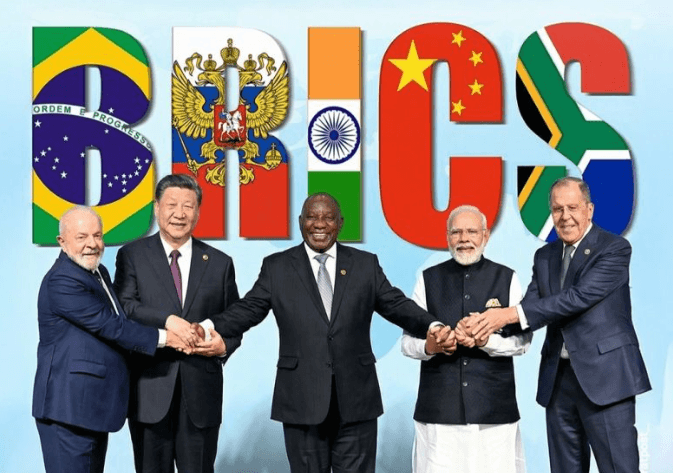
Three forces are driving this irreversible transformation simultaneously. First, the United States under President Donald Trump has weaponized its own disengagement - pulling troops from Germany, conditioning NATO commitments, walking away from multilateral institutions, and pursuing a transactional foreign policy that has shaken every alliance architecture Washington spent decades constructing. Second, China and Russia have moved beyond rhetoric into formal joint declarations advocating a multipolar world order, backed by a 47-page policy document issued after the Xi-Putin summit in May 2026 in Beijing. Third, the Global South - long treated as the passive audience of great-power theatre - has stepped onto the stage. Under India's BRICS presidency in 2026, a bloc representing nearly half the world's population and approximately 40% of global GDP is asserting itself not as an anti-Western coalition but as an independent civilizational and economic force demanding structural reform of global governance.
This is not the multipolarity that scholars debated in seminar rooms. It is messier, more dangerous, and more consequential than any theoretical model predicted. The rules-based international order is not being replaced by another order - it is being replaced by contested, overlapping, partially compatible and partially antagonistic regional architectures. Understanding this moment is not optional for any state, institution, or investor. It is the fundamental condition of survival in the decade ahead.
Background: The Long Unraveling of Unipolarity
To understand where we are in 2026, you must understand where we came from - and why the trajectory was always pointing here.
The American unipolar moment, which Francis Fukuyama famously and catastrophically mistook for the end of history, was never stable. It was the temporary product of a specific historical accident: the Soviet collapse left the United States as the sole superpower in a world that had organized itself around the logic of bipolar competition. The institutions built in that era - the United Nations, the IMF, the World Bank, the WTO, NATO - were either redesigned or simply inherited by Washington as instruments of liberal order projection.
That order began fragmenting long before 2026. The American invasion of Iraq in 2003, conducted without UN Security Council authorization, demonstrated that Washington would act unilaterally when strategic interest demanded. The 2008 financial crisis exposed the fragility of the Western economic model and triggered the first serious political discussions in Beijing and Moscow about reducing dependence on dollar-denominated systems. The Arab Spring, the Syrian civil war, and the pivot toward Asia under Obama all signaled a United States that was strategically overstretched, increasingly selective, and domestically exhausted by the costs of hegemonic management.
Then came the sequential shocks: Trump's first term in 2017-2021, which demonstrated that American multilateral commitments were politically revocable; the COVID-19 pandemic, which exposed the fragility of globally integrated supply chains and accelerated every country's thinking about strategic autonomy; Russia's full-scale invasion of Ukraine in February 2022, which shattered the post-Cold War European security architecture; and the return of Trump in 2025, which converted what had been a Republican rhetorical position into an institutionalized American grand strategy.
By 2026, the question is no longer whether the unipolar order is ending. That question was settled. The question now is what comes next - and who shapes it.
Current Situation: The World in 2026
The United States: Superpower in Strategic Retrenchment
The Trump administration's 2026 National Defense Strategy marks what analysts are calling a stark turn toward declarative realism. Where previous American strategic documents spoke carefully about competition management, guardrails, and alliance reassurance, the 2026 NDS is explicit about deterrence by denial along the First Island Chain, conditional partnership in NATO, and a fundamental reorganization of burden-sharing across all alliance structures. The message from Washington is unambiguous: America remains a superpower, but it is no longer interested in bearing the costs of other nations' security for free.
The practical consequences are already visible and destabilizing. In May 2026, the Pentagon announced the withdrawal of 5,000 troops from Germany, reducing American ground presence in Europe from four brigade combat teams to three. Secretary of State Marco Rubio - in a speech at the Munich Security Conference in February 2026 that stunned European chancelleries - explicitly acknowledged that multipolarity is inevitable while simultaneously articulating an American vision that critics have described as a revival of spheres-of-influence thinking. Rubio's speech drew a sharp line: Washington would focus its resources on domains where American strategic advantage was most decisive, expecting regional powers to manage their own neighborhoods.
Domestically, the Trump administration has continued its retreat from multilateral institutions, following up on previous exits from UN bodies and refusing to re-engage with the Paris Climate Agreement framework. This institutional disengagement has created vacuums that China has been methodical - if not always successful - in attempting to fill.
Yet it would be a strategic error to read American retrenchment as American weakness. The United States retains the world's most powerful military, the deepest capital markets, and unmatched technological leadership in critical domains including artificial intelligence, semiconductor design, and aerospace. What is changing is not American capability but American political will to use that capability in the service of a universal liberal order. That is a distinction with enormous consequences.
China: Selective Leadership, Strategic Patience
Xi Jinping has spent 2025 and 2026 navigating a paradox that defines China's current strategic position: the United States has created enormous opportunities for Chinese influence expansion through its own disengagement, yet Beijing has exploited these openings only modestly and selectively. As Stanford's Susan Shirk observed at the 2026 Oksenberg Conference, while Trump's alienation of allies through extreme tariffs and military postures has handed China a gift, Beijing has been cautious about overextending itself into the vacuum.
The reasons for this restraint are structural. China's domestic economy continues to face serious headwinds - a property sector still working through the aftermath of its 2021-2023 collapse, youth unemployment that remains politically sensitive, and deflationary pressures that have complicated Xi's growth targets. An overly aggressive foreign policy posture risks accelerating the economic decoupling that Western capitals have been pursuing since 2018, and Beijing's export-dependent industrial model cannot afford the full isolation that true confrontation would invite.
But strategically, China is playing a longer game than any single year's events suggest. The May 2026 Xi-Putin summit in Beijing produced a joint declaration on advocating a multipolar world and new type of international relations - a 47-page document that represents the most comprehensive Sino-Russian articulation of an alternative international order ever published. Beijing's approach to multipolarity is fundamentally different from Moscow's: where Russia thinks in concentric circles of influence rooted in historical claims over former Soviet space, China builds multipolar architecture through economic interdependence, infrastructure investment, and institutional diversification. The Belt and Road Initiative, the Asian Infrastructure Investment Bank, the Shanghai Cooperation Organisation, and now the expanded BRICS are all instruments of this patient architectural strategy.
The Taiwan question remains the single issue most capable of converting strategic competition into kinetic conflict. The 2026 NDS has replaced deliberate ambiguity with clearer deterrence language along the First Island Chain, signaling that Washington has drawn red lines even as its alliance management has become more transactional. Xi has received the message. The current Chinese calculus appears to favor continued economic and political pressure over military action - but that calculus could shift rapidly if domestic political pressures, economic deterioration, or a perceived window of American distraction presented an altered risk-reward equation.
Russia: Imperial Reconstitution as Geopolitical Project
Vladimir Putin has always understood multipolarity not as a philosophical preference but as a strategic tool. As Russia scholar Kathryn Stoner of Stanford's Freeman Spogli Institute put it plainly at the 2026 Oksenberg Conference: reclaiming imperial Russia is really the goal - multipolarity is merely the legitimating framework. For Moscow, a world of multiple poles means a world in which Russia's claims to a sphere of influence across former Soviet space cannot be overruled by Western institutions whose rules Russia has systematically violated.
Russia's war in Ukraine, entering its fifth year in 2026, has not produced the quick victory Putin anticipated in February 2022. But it has produced several strategic outcomes that matter enormously for the multipolar narrative. It has demonstrated that a major nuclear power can wage conventional territorial war in Europe without triggering NATO Article 5 - establishing a precedent that every revisionist power on earth has noted carefully. It has accelerated Europe's own military rearmament, paradoxically strengthening NATO's institutional position even as it strained transatlantic political unity. And it has deepened Russia's structural dependence on China for technology, trade, and diplomatic cover - a dependency that Beijing is not inclined to relieve, because a Russia that needs China is a Russia that cannot independently challenge Chinese interests.
Russia's Arctic strategy adds another dimension to this picture. The melting of Arctic ice is opening new shipping routes and creating shorter maritime corridors between Russia and North America, intensifying resource competition and giving Moscow new strategic leverage that extends well beyond Eastern Europe. This is one reason that Trump's openly stated interest in Greenland has been taken seriously by serious analysts - it is a response to genuine Arctic strategic concerns, not mere rhetorical theater.
Europe: The End of Comfortable Irrelevance
Europe entered 2026 in what one analyst accurately described as a state of nostalgia for the liberal order - paralyzed between the world it remembered and the world it now inhabits. That nostalgia is no longer affordable. The combination of Trump's conditional NATO commitments and Russia's ongoing aggression has forced European capitals to confront a reality they spent decades avoiding: they must be capable of defending themselves.
The numbers tell part of the story. European NATO allies and Canada increased defense spending by 20% in 2025 compared to the previous year. NATO leaders have agreed to move toward a new framework approaching 5% of GDP by 2035, up from the previous 2% target that most allies struggled to meet. NATO Secretary-General Mark Rutte has been explicit that this is not merely about spending more but about "smarter investment in the right capabilities" - a tacit acknowledgment that years of underinvestment have left significant gaps in actual deployable military capacity even where budget lines have grown.
But defense spending alone does not constitute strategic autonomy. Europe's political fragmentation - between Atlanticists and sovereigntists, between Eastern members focused on Russia and Southern members focused on the Mediterranean and Africa, between economies that can absorb higher defense burdens and those that cannot - means that European strategic agency remains limited and contested. Emmanuel Macron's persistent advocacy for European strategic sovereignty has gained intellectual ground but has not yet translated into the kind of unified European defense architecture that would genuinely reduce dependence on Washington.
The potential exit of Viktor Orbán from Hungarian politics - Hungary holds elections in 2026 - could remove one of the most consistent obstacles to EU institutional deepening. But even an Orbán-free Budapest would not resolve the fundamental question of whether Europe can act as a unified strategic actor when American leadership is absent or ambivalent.
India and BRICS: The Architecture of Negotiated Multipolarity
No actor in the current multipolar moment embodies its complexity more precisely than India. Under Narendra Modi and External Affairs Minister S. Jaishankar, New Delhi has refined what was once dismissed as non-alignment into something far more sophisticated: strategic autonomy deployed as active diplomatic capital, allowing India to engage Washington, Moscow, Beijing, Brussels, and Riyadh simultaneously on its own terms.
India's assumption of the BRICS presidency on January 1, 2026 - its fourth presidency since the grouping's inception - places it at the center of the most consequential test of the multipolar order yet. The expanded BRICS bloc now comprises ten full members: Brazil, China, Egypt, Ethiopia, India, Indonesia, Iran, Russia, South Africa, and the United Arab Emirates. This expanded grouping represents nearly half the world's population and approximately 40% of global GDP, making it impossible to dismiss as a talking shop for revisionist powers.
What India is attempting with its BRICS presidency is nothing less than the redefinition of what multipolarity means in practice. New Delhi is not interested in transforming BRICS into an overtly anti-Western alliance - such an alignment would sacrifice India's credibility as a truly independent pole and damage its relationships with the United States, Japan, Australia, and key European partners. Instead, India is advocating for what might be called negotiated multipolarity: a reformed global governance architecture that reflects the actual distribution of economic and demographic weight in the world, rather than the post-1945 or post-1991 power configurations that current institutions still encode.
At the May 2026 BRICS Foreign Ministers' Meeting in New Delhi, India set the agenda firmly around resilience, innovation, cooperation, and sustainability. This framing is deliberate: it emphasizes practical delivery over geopolitical disruption, seeking to make BRICS a vehicle for genuine development outcomes rather than a rhetorical weapon against the West. The challenge India faces is managing the internal contradictions of an expanded BRICS in which China's GDP is roughly five times India's, in which India and China share a contested Himalayan border, and in which members like Iran represent direct complications for India's relationships with partners like the United States and the Gulf states.
Strategic Analysis: The Architecture of the New Order
Multipolarity Is Not Anarchy - But It Is Not Order Either
The most important conceptual error in current debates about multipolarity is the implicit assumption that it represents either a clean alternative order or simple chaos. The reality is more complicated and more dangerous than either characterization suggests.
What is emerging in 2026 is what analysts at JP Morgan have called "diffuse, multi-speed multipolarity" - a system with little historical precedent, in which states and companies must navigate without familiar patterns. This system features several simultaneous dynamics that interact in non-linear ways.
First, there is the bifurcation of technological ecosystems. The American and Chinese technology spheres are increasingly diverging - in semiconductor supply chains, in telecommunications infrastructure, in artificial intelligence development frameworks, and in digital payment systems. Countries across the Global South are being pressured to choose between these ecosystems or to manage the growing costs and complications of straddling both. This technological bifurcation has no clean geopolitical parallel; it is a new form of structural power competition that does not map onto traditional military or diplomatic frameworks.
Second, there is the fragmentation of financial architecture. The weaponization of the dollar-dominated SWIFT system against Russia in 2022 accelerated conversations in Beijing, Moscow, Riyadh, and New Delhi about alternatives to dollar hegemony. While no alternative reserve currency is ready to replace the dollar - the yuan lacks the convertibility and the deep capital markets that reserve currency status requires - the directional movement is clear. BRICS is actively developing alternative payment mechanisms, and bilateral trade in non-dollar currencies is increasing across multiple corridors. The dollar's dominance is not ending in 2026, but its universality is being deliberately eroded.
Third, there is the multiplication of minilateral security arrangements. The QUAD (India, Australia, Japan, United States), AUKUS (Australia, United Kingdom, United States), the I2U2 (India, Israel, UAE, United States), and various bilateral defense partnerships are creating a complex web of overlapping security commitments that does not reduce to simple alliance blocs. These arrangements are issue-specific, capability-focused, and deliberately designed to avoid the rigidities of formal alliance structures. They represent a new architecture of security cooperation - one that is more flexible and more resilient to individual defection than traditional alliances, but also more difficult to coordinate in genuine crisis situations.
The Role of Middle Powers: The True Engine of Multipolarity
The narrative of multipolarity has been dominated by the major power triangle of the United States, China, and Russia. But the real engine of structural change is the rising influence of middle powers - states like Indonesia, Brazil, Turkey, Saudi Arabia, Vietnam, Nigeria, and South Africa - that are exploiting the instability of the current order to expand their strategic autonomy and influence within their regions.
Turkey represents perhaps the most striking example of this middle-power maneuver. Ankara maintains NATO membership while simultaneously pursuing BRICS partner status and applying for full membership, positioning itself at the intersection of multiple power architectures. This is not strategic confusion - it is strategic entrepreneurship. Turkey's geographic position and its control of the Bosphorus give it leverage over both the Black Sea security environment and energy transit routes that no single alliance can afford to lose.
Indonesia, under its new president, has moved to anchor ASEAN's institutional weight more firmly in global governance discussions, using its G20 experience and its position as the world's largest Muslim-majority democracy to assert an independent voice on issues ranging from Gaza to climate finance. Vietnam continues its extraordinary balancing act between economic integration with China and security cooperation with the United States, demonstrating that smaller states can exercise genuine strategic agency in a multipolar environment if they manage their dependencies skillfully.
Saudi Arabia's position is particularly consequential for the Middle East dimension of multipolarity. Riyadh's decision to join the expanded BRICS framework - even if full formal accession remains pending - signals that the Gulf's strategic alignment with Washington is no longer unconditional. The Abraham Accords architecture, the normalization process with Israel that has been disrupted but not fully reversed by the Gaza conflict, and Saudi Arabia's simultaneous engagement with China and Russia all reflect a Gulf strategic culture that has internalized the logic of multipolarity and is acting accordingly.
The Ideological Contest: What Does Multipolarity Actually Mean?
One of the most underanalyzed dimensions of the current multipolar transition is the ideological contest over what multipolarity actually means - because different actors mean very different things by the same word, and those differences have profound implications for what kind of international order emerges.
Russia's concept of multipolarity is rooted in a nineteenth-century Concert of Europe logic: great powers have natural spheres of influence, and international order is the product of great-power accommodation of each other's core interests. Moscow thinks in concentric circles - the first circle comprising former Soviet republics, the second former Warsaw Pact states - and considers Western encroachment into these circles via NATO expansion to be a fundamental violation of the legitimate multipolar order. This vision is essentially revisionist within Europe and conservative globally: Russia wants a world where great powers respect each other's spheres rather than a world where universal norms constrain great-power behavior.
China's concept of multipolarity is substantively different: Beijing advocates for a system in which all countries, regardless of size, have a voice on the international stage and equal representation in multilateral institutions, with sovereignty as a sacred principle guaranteed by international law. This framing is, in important respects, more formally aligned with existing UN Charter principles than Russian sphere-of-influence thinking - but it is also strategically self-serving. A sovereignty-absolutist international order conveniently insulates China from Western criticism of its Xinjiang policies, its Hong Kong governance, and its South China Sea behavior, while legitimizing Beijing's claim that Taiwan is a purely internal matter.
India's multipolarity concept is different again - and arguably the most genuinely pluralist of the three. New Delhi seeks a reformed multilateral order that reflects actual power distributions without being captured by any single pole, including China. India's foreign policy philosophy, articulated repeatedly by Jaishankar, holds that a country of India's civilizational weight should not have to choose between any two powers or blocs but should be able to engage all on terms that serve Indian national interests and broader global stability.
The United States, meanwhile, has a deeply ambivalent relationship with multipolarity. As Rubio acknowledged at Munich, it is inevitable - but Washington's instinct, even under a Trump administration that has disrupted its own alliance structures, is to resist a genuinely multipolar order in favor of preserving American primacy in critical domains even as it reduces the costs of that primacy. The 2026 NDS's emphasis on deterrence by denial and conditional partnership is not an embrace of multipolarity; it is an attempt to maintain hegemonic outcomes with diminished hegemonic investment.
Global Impact: What This Means Across Regions
Indo-Pacific: The Most Consequential Theater
The Indo-Pacific is where multipolar dynamics are most acute and most dangerous. Indo-Pacific nations are racing to adapt to a world in which the United States has become fundamentally unpredictable, as the 2026 Oksenberg Conference documented. Japan has accelerated its rearmament, moving toward defense spending levels not seen since the post-war constitutional constraints were first established. South Korea continues its difficult balancing act between its security dependence on Washington and its economic dependence on Beijing. Australia has deepened its AUKUS commitments while maintaining significant trade exposure to China.
The QUAD framework has become more operationally significant in 2026, but its coherence is tested by the question of how far Washington under Trump is willing to commit to collective Indo-Pacific security versus expecting allies to handle more of their own defense. The answer from the 2026 NDS - that allies must handle their own neighborhoods - creates both incentives for greater regional self-reliance and risks of miscalculation as US commitment ambiguity creates windows for Chinese pressure tactics.
Middle East: The Region Multipolarity Has Already Arrived
The Middle East in 2026 is the clearest demonstration that the multipolar order is not a future prediction but a present reality. The region now features simultaneous engagement from the United States, China, Russia, India, Turkey, and the EU - all competing for influence, all offering different value propositions, all unwilling to allow any single power to establish the kind of dominance that Washington enjoyed in the 1990s.
The Iran conflict, which drew in American and Israeli military action while producing cautious restraint from China, Russia, and much of the Global South, illustrated the limits of unipolar power projection in a multipolar environment. Several European governments adopted more independent positions than American planners expected, and the diplomatic fallout - including Spain blocking a US operation related to the Iran conflict - demonstrated that even NATO allies are no longer automatic participants in American-led military operations.
Gulf states are navigating this multipolar Middle East with considerable sophistication. The UAE's simultaneous membership in BRICS and its close security relationship with Washington, its economic diversification toward Asia and its Abraham Accords normalizations with Israel, reflect a Gulf leadership class that has abandoned any notion of exclusive alignment and embraced strategic multipolarity as both philosophy and practice.
Africa: The New Frontier of Multipolar Competition
Africa has become perhaps the most intense arena of multipolar competition, with China, Russia (through the Wagner/Africa Corps presence), the United States, France, Turkey, the UAE, India, and the EU all actively competing for political relationships, resource access, and military positioning across the continent. The decline of French influence in the Sahel - Mali, Burkina Faso, Niger have all expelled French forces - has created space that Russian and Chinese presence has partially filled, while Indian engagement through development financing and the Indian Ocean has deepened.
African states themselves are increasingly assertive beneficiaries of this competition. The Kenyan, Nigerian, and South African governments have all demonstrated that they can extract significant concessions from competing powers by playing them against each other - the oldest tool in the statecraft toolkit, newly available to states that were long too weak to use it effectively.
Risk Assessment
Systemic Risks of the Multipolar Transition
The most significant systemic risk of the multipolar transition is not great-power war - though that risk is real and should not be minimized - but the erosion of the collective action frameworks that the existing international order, imperfect as it is, has provided. Climate change, pandemic preparedness, nuclear non-proliferation, international financial stability - all of these challenges require coordinated international responses that become exponentially harder to achieve as the institutional architecture of global governance fragments.
The Stimson Center's 2026 global risk assessment identified the absence of a credible plan to protect the global commons as among the most dangerous features of the current multipolar transition. Even US Secretary of State Rubio, while acknowledging multipolarity's inevitability, has no coherent answer to the question of who manages global public goods in a world where no single power or coherent coalition is willing to bear those costs.
Nuclear risk represents a specific and acute danger within this broader systemic erosion. Russia's nuclear doctrine has been revised to lower the threshold for nuclear weapons use, and the breakdown of arms control architecture - with the New START treaty's fate uncertain and no successor framework under negotiation - means that the nuclear competition between the major powers is proceeding without the risk-management guardrails that existed during even the tensest moments of the Cold War.
Economic Risks: The Fragmentation of Global Trade
The weaponization of economic interdependence - sanctions, technology export controls, tariffs, investment restrictions - by both the United States and China has accelerated a fragmentation of global trade architecture that creates significant costs for the global economy and particular pain for smaller states caught in between. Trump's tariff policies have disrupted trade relationships that took decades to build, while Chinese industrial overcapacity in sectors like electric vehicles, solar panels, and steel is generating defensive responses from economies across the globe - including developing economies that China has positioned as partners in the Global South coalition.
The de-dollarization trend, while overstated in some quarters, represents a genuine medium-term risk to global financial stability. The dollar's reserve currency status has allowed the United States to fund its deficits at lower cost and to project financial power globally. If this status erodes - through the gradual development of alternative payment systems, bilateral currency arrangements, and digital currency infrastructure - the adjustment will be disruptive not just for the United States but for the global financial system that has been organized around dollar primacy for eight decades.
Future Scenarios
Scenario Analysis: Three Possible Multipolar Futures
Scenario One: Managed Multipolarity (Probability: 35%)
In this scenario, the major powers - the United States, China, India, the European Union, and Russia - gradually develop informal understandings about spheres of influence, issue-area leadership, and crisis management that allow competitive coexistence without catastrophic conflict. India's BRICS presidency in 2026 succeeds in establishing the bloc as a constructive voice for Global South interests rather than an anti-Western coalition, creating space for dialogue between the Western-led and non-Western institutional architectures. European strategic autonomy develops sufficiently to provide genuine security without complete dependence on Washington, reducing the alliance's vulnerability to American political volatility. The technology bifurcation between American and Chinese ecosystems stabilizes around clear boundaries rather than escalating into complete economic decoupling. This scenario requires significant diplomatic investment from all parties, particularly India as a bridging power, and assumes that domestic political pressures in the United States, China, and Russia do not force more confrontational external postures.
Scenario Two: Competitive Fragmentation (Probability: 45%)
The most likely scenario - and the one most consistent with current trajectories - is one of accelerating fragmentation without catastrophic collision. Global institutions continue to weaken, trade and technology blocs harden, regional security architectures become more pronounced, and the costs of global collective action problems (climate, pandemics, financial instability) accumulate without adequate multilateral responses. Middle powers expand their strategic autonomy and regional influence, making global coordination increasingly difficult. The Taiwan Strait remains a chronic crisis that periodically escalates to dangerous levels without triggering full-scale conflict. Ukraine remains in a frozen or slowly evolving conflict that drains European security resources without resolution. In this scenario, the world muddles through - avoiding catastrophe but also failing to generate the cooperative responses that the twenty-first century's structural challenges demand.
Scenario Three: Acute Multipolar Crisis (Probability: 20%)
A dangerous but plausible scenario in which one of several flashpoints - a Chinese military move on Taiwan, a Russian escalation in Ukraine involving tactical nuclear weapons, a direct clash between nuclear-armed states in South Asia, or a cascading financial crisis triggered by dollar system fragmentation - produces a systemic shock that the fragmented multipolar order lacks the governance architecture to manage. Unlike the Cold War, which had clear hotlines, arms control agreements, and mutually understood red lines developed over decades of adversarial engagement, the current multipolar system has none of these risk-management structures adequately developed for a multi-party environment. The principal danger is not deliberate great-power war but miscalculation in a system where the rules are contested, the actors are multiple, and the consequences of error are catastrophic.
Intelligence Forecast
Based on current trajectories and structural conditions, Global Chanakya's strategic assessment projects the following developments over the 12-24 month horizon:
- India's BRICS presidency will produce meaningful institutional outcomes in areas of financial architecture (alternative payment mechanisms, New Development Bank capitalization) and South-South trade facilitation, while stopping short of transforming BRICS into an anti-Western security alliance. India's diplomatic management of the China-Russia-Iran dimension will be the decisive variable.
- European defense spending will continue to increase but will not translate into genuine strategic autonomy within the 2026-2028 timeframe. The capability gaps created by decades of underinvestment cannot be reversed by budget decisions alone - the industrial, training, and doctrinal deficits require years to address. Europe will remain dependent on American extended deterrence even as it argues for greater strategic independence.
- The US-China technology war will intensify, with semiconductor export controls becoming more comprehensive and Chinese industrial policy responses becoming more aggressive. The race to develop advanced semiconductor manufacturing capacity outside the current Taiwan-centered supply chain will accelerate, with India, Japan, and the UAE emerging as significant new nodes in alternative semiconductor architectures.
- Dollar hegemony will face increasing pressure from alternative payment systems and bilateral currency arrangements, but no viable reserve currency alternative will emerge before 2030. The most likely outcome is a gradual, contested diversification of reserve assets rather than a clean transition to any single alternative.
- The Russia-Ukraine conflict will not reach a final resolution in this window. The most probable near-term outcome is some form of frozen conflict along current lines of control, with neither side achieving its maximalist objectives but both preserving core interests sufficiently to avoid a negotiated settlement that either domestic audience would accept.
- Middle powers will continue to expand their diplomatic leverage, with Turkey, Saudi Arabia, Indonesia, and Brazil all increasing their capacity to extract concessions from competing great powers. This middle-power assertiveness is not a challenge to multipolarity - it is its clearest expression.
Final Strategic Takeaway
The multipolar world order of 2026 is not a destination - it is a transition, and a deeply unstable one. The historical record of multipolar systems is not reassuring: the multipolar Concert of Europe produced relative stability for a century after 1815 but ultimately failed catastrophically in 1914. The interwar multipolar system of the 1920s and 1930s produced fascism, depression, and the deadliest conflict in human history. Multipolarity creates space for power, agency, and self-determination for states that were marginalized under unipolarity - but it also creates space for miscalculation, security competition, and the collapse of the collective action frameworks that humanity's most serious challenges require.
What distinguishes the current moment from previous multipolar transitions is the presence of nuclear weapons in the arsenals of multiple competing powers, the existential urgency of climate change, and the unprecedented interdependence of global supply chains, financial systems, and technological infrastructure. These factors simultaneously raise the costs of catastrophic failure and create powerful incentives for continued cooperation even between adversaries. They do not guarantee a good outcome - but they do mean that the complete breakdown of international order would be so catastrophic for all parties that even deeply adversarial states have strong incentives to manage competition within some limits.
The most important insight for states, institutions, and actors navigating this moment is this: the multipolar order will not be managed by any single power, including the United States. It will be managed - to the extent it is managed at all - by the collective capacity of multiple powers to develop informal understandings, institutional innovations, and crisis management frameworks adequate to a world that no longer has a single rules-setter. India's model of strategic autonomy - engaging all poles, committing exclusively to none, maintaining the credibility that comes from principled independence - is not merely a useful diplomatic posture. In the multipolar world of 2026, it is the most rational grand strategy available to any state that is not one of the two or three largest powers.
For China, the strategic challenge is to build a multipolar order that serves Chinese interests without generating the counter-coalition that Chinese assertiveness consistently risks producing. For Russia, the challenge is to sustain the narrative of great-power legitimacy while its economic base erodes under sanctions and its military is ground down in Ukraine. For the United States, the challenge - perhaps the hardest of all - is to accept that primacy and leadership are not the same thing, and that a country that retrenches from leadership while expecting to maintain primacy will eventually find itself with neither.
The world is being rewritten. The question is not whether the multipolar order arrives - it already has. The question is whether the states and institutions that inhabit it can develop the political wisdom to manage its dangers and realize its possibilities before the window for doing so closes.
Global Chanakya Intelligence Assessment: The multipolar transition of 2026 is the most consequential structural shift in international relations since 1991. States that understand its logic - and develop strategies adequate to its demands - will shape the century. States that do not will be shaped by it.