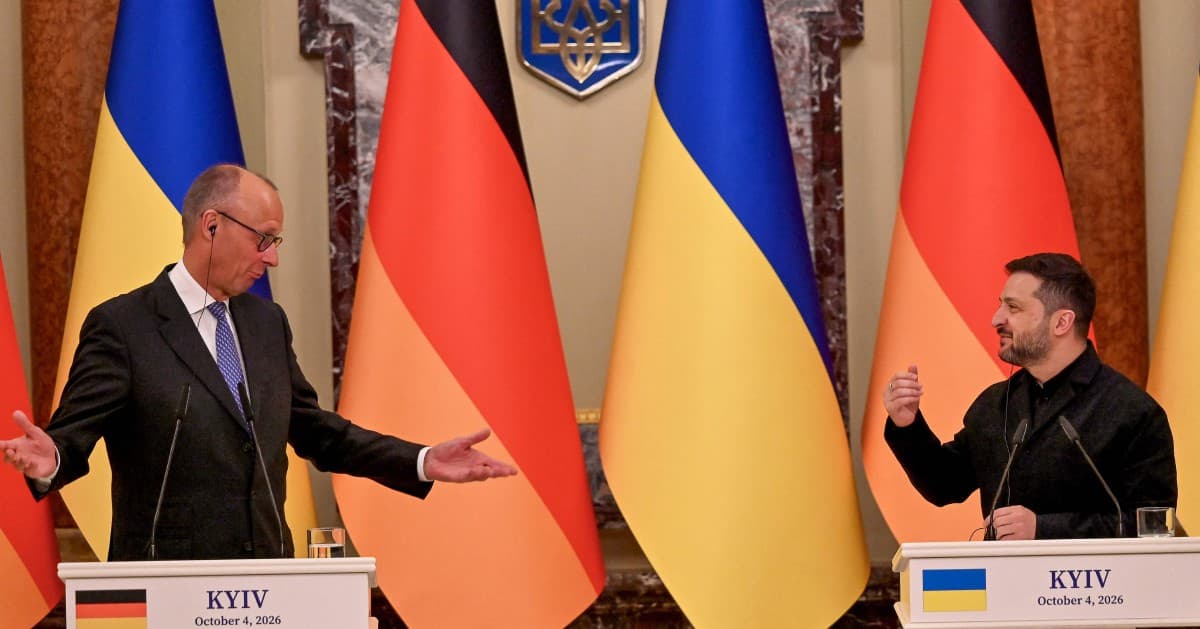
Zelenskyy Offers Trilateral Talks as Russia Escalates Strikes: Is Diplomacy Losing the Race?
Ukraine is saying yes to another round of diplomacy while the battlefield is moving in the opposite direction.
On October 4, President Volodymyr Zelenskyy said Kyiv was ready to join a US-backed trilateral meeting with Russia and the United States by the end of October. He said the meeting could take place in the United Arab Emirates or another location proposed by Washington.
At almost the same moment, Zelenskyy was describing what he called a new Russian “doctrine” of attacks aimed at civilian infrastructure and warning that Moscow was preparing to intensify the pressure on Ukrainian cities before winter.
That contradiction is the real story. The diplomatic track has reopened, but the military logic has not paused with it. Russia is increasing long-range attacks, Ukraine is preparing to strike Russian energy infrastructure in response, and both sides are entering another winter with little evidence that battlefield pressure and negotiating incentives are moving in the same direction.
Kyiv Is Ready. Moscow Has Not Given the Same Answer.
Zelenskyy announced on October 4 that the United States was proposing a technical-level trilateral meeting with Ukraine and Russia by the end of October.
He said Washington was in contact with both sides and that Ukraine had already accepted the proposed timeline. Kyiv was open to the UAE, which has hosted previous rounds of Russia-Ukraine-US talks, or to another venue selected by the Americans.
The format matters. This is being described as a technical-level meeting rather than a final peace summit. That lowers the political threshold for participation and gives Washington a mechanism to restart contacts without requiring either side to accept a full settlement framework in advance.
It also leaves the hardest question unresolved: whether Russia is prepared to accept the same process.
The Kremlin had previously said it did not rule out another trilateral meeting, but the public diplomatic position has remained conditional. Moscow has repeatedly argued that a temporary ceasefire without a broader settlement would simply give Ukraine time to rebuild military capacity.
The distinction between “talking” and “stopping the war” is therefore important. A technical meeting can happen while combat continues. A meaningful ceasefire requires both sides to accept restraints that neither currently appears ready to implement fully.
Why the October Timing Is Different
US mediation had slowed after Washington became directly involved in the war with Iran. Zelenskyy now says the American side is trying to revive the process by pushing for a technical meeting before the end of October.
The timing is unusually important because winter is approaching.
Ukraine has entered previous winters under sustained Russian attacks on electricity and heating infrastructure. Moscow has again signalled that Ukrainian energy facilities will remain a focus as temperatures fall. Ukraine, meanwhile, has warned that it will respond against Russian energy infrastructure rather than simply absorb the attacks.
That creates a race between diplomacy and military pressure.
If negotiations begin while both sides are intensifying attacks, the talks will have to operate inside an active campaign rather than during a genuine cooling-off period. The side that believes it can improve its position through further strikes has less incentive to make early concessions.
Zelenskyy’s “New Doctrine” Claim
The second half of Zelenskyy’s October 3-4 message was even more serious.
In an interview with Reuters, Zelenskyy said Ukrainian intelligence services had obtained documents showing that Vladimir Putin had approved a new Russian “doctrine” for attacks on a wider range of civilian targets before winter.
According to Zelenskyy, the documents permit attacks against infrastructure, logistics, roads, schools and hospitals. He said the intended effect was to pressure people to leave Kyiv and other Ukrainian cities.
That is a Ukrainian intelligence claim, and it should be treated as such. The public evidence available at the time did not independently establish the existence of a formal Russian document matching Zelenskyy’s description.
Russia also rejects the broader accusation that it deliberately targets civilians. Moscow has continued to describe its attacks as strikes against military facilities, defence industry targets and supporting infrastructure.
The analytical question is therefore less about whether the word “doctrine” can be independently confirmed and more about whether observable Russian targeting behaviour is changing.
The Target Pattern Is Changing
There are observable developments behind Zelenskyy’s warning.
Russian attacks in late September and early October hit energy, telecommunications, road and rail infrastructure. Russian strikes also hit Kyiv’s bridges across the Dnipro River, with the Northern Bridge attacked for a second time within days.
On October 2, a Russian strike on a residential area in Kharkiv killed at least two people and wounded 36, including three children, according to Ukrainian authorities reported by Al Jazeera.
On October 3, Russia also struck a Liberian-flagged vessel in the Odesa region. Ukraine’s Sea Ports Authority reported one death and three injuries, with the remaining crew evacuated.
Zelenskyy has separately identified data centres and mobile network facilities as targets. Those targets are different from simply attacking power plants. They sit inside the communications and digital systems that keep cities functioning during wartime.
That distinction matters.
Attacking an electrical substation can reduce power generation or transmission. Attacking telecommunications infrastructure can affect communications, commercial activity, emergency response and civilian movement. Attacking bridges can disrupt the movement of people, supplies and military equipment simultaneously.
If those targets are being selected systematically, the effect can extend beyond immediate physical damage. The objective becomes the degradation of the systems that allow a large city to continue functioning under wartime pressure.
But Russia's Position Is Different
Moscow has not described its strategy using Zelenskyy’s terminology.
Russian officials have instead continued to present their strikes as retaliation for Ukrainian attacks and as operations against military-related infrastructure. Reuters reported on October 4 that Russia said it would intensify strikes following Zelenskyy’s announcement that Ukraine would step up attacks on Russian oil refineries.
This creates a familiar escalation mechanism.
Russia strikes Ukrainian energy or supporting infrastructure. Ukraine responds against Russian energy infrastructure. Russia then uses the Ukrainian strikes as justification for another round of attacks.
Once that cycle becomes self-sustaining, diplomacy has to compete with retaliation logic every day.
October 7 Showed How Quickly the Gap Can Widen
The contradiction became harder to ignore as the week progressed.
On October 7, Russia launched a large missile and drone attack across Ukraine. By October 8, Ukrainian and international reporting put the civilian death toll from the attacks at more than 20, with a residential building in Pryluky suffering particularly heavy losses.
Russia said its strikes targeted military-related industrial facilities and ports. Ukrainian officials said residential and civilian infrastructure had been hit.
The October 7-8 attacks do not prove Zelenskyy’s claim about a formal “new doctrine.” They do show that the military campaign continued to intensify after the October 4 announcement about returning to negotiations.
That is the contradiction that matters for the diplomatic track.
Why Russia Can Talk and Fight at the Same Time
It is tempting to treat continued attacks as evidence that diplomacy is meaningless. The situation is more complicated.
Russia can have an interest in maintaining a channel with Washington while continuing military pressure on Ukraine. The two activities can serve different purposes.
The negotiating channel gives Moscow access to the United States and keeps the possibility of a settlement alive. Military pressure can be used to improve Russia’s position before any settlement is reached.
That does not mean Russia necessarily wants talks to fail. It means Moscow has little reason to stop using military leverage merely because discussions are being prepared.
Ukraine faces the same structural problem from the opposite side. Kyiv wants diplomacy because a negotiated ceasefire could reduce the pressure on its cities and infrastructure, but it also believes that continuing to build long-range strike capability gives it more leverage at the negotiating table.
Both sides therefore have incentives to enter talks without first stopping attacks.
India Is Quietly Moving Closer to the Diplomatic Track
India has a natural interest in this process because its diplomacy has increasingly touched practical issues created by the war.
Speaking at the Munich Security Conference in New Delhi on October 4, External Affairs Minister S. Jaishankar said India had moved beyond simply advocating for negotiations and had become more directly involved with both Russia and Ukraine.
He said Indian discussions had begun with the safety of shipping in the Black Sea and had expanded to grain exports, energy exports and “non-attack possibilities”.
That is a different role from formally brokering a peace agreement. India is building influence around specific problems where both sides have an immediate interest in reducing disruption.
The approach also fits the current diplomatic reality. A comprehensive settlement remains difficult, but limited agreements on shipping, energy infrastructure or civilian safety can be negotiated separately.
India’s value in this process comes partly from its ability to maintain working relations with Moscow while keeping diplomatic channels open with Kyiv and Western governments.
Why the Black Sea and Energy Issues Matter More Than They Appear
The war is increasingly being fought through infrastructure that links military operations to the civilian economy.
Black Sea shipping affects grain exports, commercial insurance and the movement of energy-related cargoes. Energy facilities affect heating, electricity and industrial production. Bridges and railways affect both military logistics and civilian mobility.
That makes limited agreements potentially more useful than another declaration of general support for peace.
An agreement protecting commercial vessels, for example, would not end the war. But it could reduce one part of the economic damage while creating a working mechanism between the two sides.
The same logic applies to an energy truce. A temporary halt in attacks against power infrastructure would not solve the territorial dispute, but it could prevent another winter of repeated blackouts from becoming a negotiating weapon.
India has already positioned itself around several of these practical issues.
The Military Logic Is Running in the Opposite Direction
Ukraine is preparing to intensify attacks on Russian oil refineries in response to Russian energy strikes.
That is a logical retaliation mechanism from Kyiv’s perspective. Russian attacks on Ukraine’s energy system impose economic and humanitarian costs. Strikes on Russian refineries can impose economic costs on Moscow and reduce the fuel available to support the war.
But retaliation also raises the risk that both sides will broaden their target lists.
That is why Zelenskyy’s statement that Ukraine would not respond by targeting civilian objects is analytically important. Kyiv is trying to define a distinction between attacks on energy infrastructure and attacks on civilian facilities.
Whether that distinction survives the next phase of the conflict will depend on how target selection evolves on both sides.
Russia’s Winter Strategy Could Decide the Diplomatic Window
The timing of the proposed talks is linked closely to winter.
Ukraine’s energy system has already been exposed to repeated Russian missile and drone attacks. The consequences are more severe when temperatures fall and electricity and heating demand rise.
Last winter, Russian attacks contributed to blackouts and disruption that lasted for days during periods when temperatures dropped toward minus 20 degrees Celsius.
If Russia believes another winter campaign can put enough pressure on Ukrainian cities to weaken Kyiv’s negotiating position, there may be limited incentive to halt that campaign before negotiations produce something concrete.
For Ukraine, the calculation is the reverse. Kyiv has an incentive to strengthen air defence, protect energy infrastructure and increase its own long-range strike capability before winter closes in.
The result is a narrow diplomatic window surrounded by military preparations.
Scenario Analysis
Base Scenario
The United States continues pushing for a technical-level trilateral meeting before the end of October. Ukraine remains ready to participate, and the UAE remains a possible venue. Russia keeps the channel open but demands that any eventual settlement address its broader political and territorial objectives.
Under this scenario, long-range attacks continue even as diplomats prepare for meetings. The talks initially focus on practical subjects such as energy infrastructure, Black Sea shipping and conditions for a wider ceasefire.
Alternative Scenario
Escalating strikes create enough pressure for Washington to push both sides toward a limited energy or infrastructure truce before a full trilateral meeting.
This would give the diplomatic process a concrete test. If the parties can actually stop attacks on selected categories of infrastructure, the larger negotiations become more credible. If they cannot, the talks risk becoming another channel for exchanging demands while the war continues unchanged.
High-Risk Scenario
Russia expands attacks on Ukrainian urban infrastructure while Ukraine significantly increases strikes on Russian oil facilities and other deep targets. Civilian casualties and infrastructure damage rise, making political compromise harder rather than easier.
In that environment, Washington could still hold talks, but the immediate purpose would shift from reaching a comprehensive peace to preventing uncontrolled escalation.
Intelligence Forecast
Over the next several weeks, the strongest indicator of diplomatic progress will not be a new statement from either president. It will be whether the proposed technical meeting gets a confirmed date, location and agenda.
A confirmed Russian acceptance would be the first concrete sign that Moscow wants to test the trilateral format rather than simply leave the option open in principle.
The second indicator will be the behaviour of the energy campaign. A temporary reduction in attacks against power infrastructure would suggest that diplomacy is beginning to influence battlefield decisions. Continued or intensified strikes would suggest the opposite.
The third indicator will be the geographic expansion of long-range attacks. More strikes on Ukrainian cities, bridges, telecommunications infrastructure and ports would strengthen the argument that the war is moving toward a broader infrastructure campaign.
For India, the most useful indicator will be whether its discussions on Black Sea shipping, grain, energy and non-attack arrangements produce a practical mechanism accepted by both sides.
Global Chanakya Assessment
The evidence supports a straightforward conclusion: diplomacy has reopened, but the conditions for a genuine ceasefire have not.
Zelenskyy’s October 4 offer is real and concrete. Ukraine has accepted the US proposal for a technical-level trilateral meeting before the end of October and is open to the UAE or another American-proposed venue.
But the military campaign has not been placed on hold. Russia continues long-range attacks, Ukraine is preparing stronger strikes on Russian energy infrastructure, and both sides are treating infrastructure as part of the pressure system surrounding the war.
The “new doctrine” is the part that requires the most caution. Zelenskyy says Ukrainian intelligence has documents showing a Putin-approved shift toward attacks intended to make Ukrainian cities harder to live in. That allegation deserves attention because observable targeting patterns are already reaching deeper into urban infrastructure. Yet the public evidence does not independently establish the existence, wording or scope of a formal Russian doctrine matching the Ukrainian description.
That distinction matters for any serious analysis. The targeting pattern can be assessed from observable events. The intention behind every strike cannot.
For the diplomatic process, the bigger question is therefore not whether Russia and Ukraine are willing to talk. Both are. The question is whether either side sees enough value in reducing military pressure to trade away part of the leverage it is trying to build before negotiations.
That is where the October talks will be tested.
India’s role could become more useful precisely because it is already engaging on smaller, practical issues. Shipping, energy infrastructure and non-attack arrangements provide possible entry points where an immediate technical agreement is easier to imagine than a comprehensive peace deal.
The contradiction between negotiations and escalation will remain until one of those channels begins changing behaviour on the ground.
Indicators to Monitor
- Russian acceptance or rejection of the proposed US-backed trilateral meeting.
- A confirmed date, venue and agenda for October talks.
- Russian and Ukrainian strikes against energy infrastructure during the negotiating period.
- Further Russian attacks on bridges, telecommunications facilities, data centres, ports and other urban infrastructure.
- Changes in the scale and range of Ukrainian strikes against Russian oil refineries and energy facilities.
- Any independent evidence supporting or challenging Zelenskyy’s description of a new Russian “doctrine”.
- Developments in Black Sea shipping and any new arrangements protecting commercial vessels.
- Indian diplomatic activity involving Russia, Ukraine and practical ceasefire mechanisms.
- New Russian or Ukrainian proposals for an energy or infrastructure truce.