
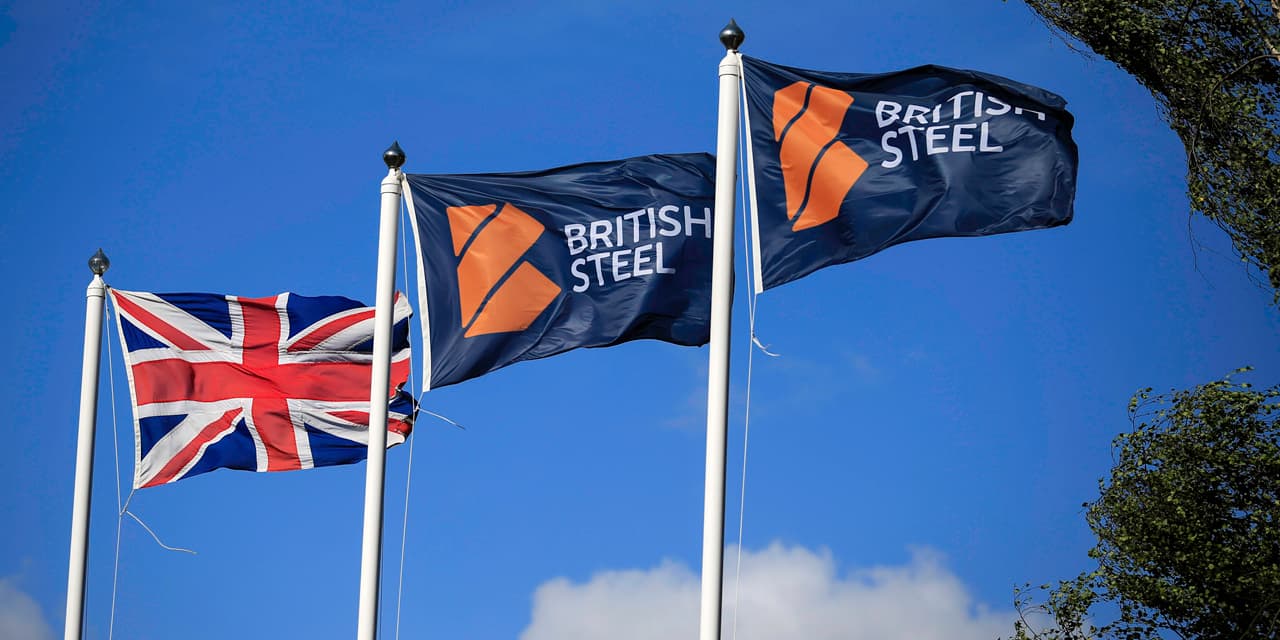
Executive Summary
On 16 July 2026, the United Kingdom government completed the transfer of British Steel into full public ownership, stripping the site's Chinese owner, Jingye Group, of a company it had controlled since 2020. The move closed a fifteen-month arc that began in April 2025, when Parliament was recalled for an emergency Saturday sitting to pass powers directing the company's operations and prevent the closure of Scunthorpe's blast furnaces, and culminated in the Steel Industry (Nationalisation) Act 2026 receiving Royal Assent on 15 July.
Read narrowly, this is a British industrial rescue story: a loss-making Chinese-owned steelworks, roughly 2,700 jobs, and a government unwilling to preside over the loss of the country's last domestic source of virgin steel. Read broadly, it is a data point in a much larger pattern. Within the same eighteen-month window, the European Union rebuilt its steel safeguard regime around sharply lower quotas and doubled tariffs, the United States pushed Section 232 duties to 50 percent for most trading partners, and India layered safeguard and anti-dumping duties onto Chinese steel flows. Four of the world's largest economies moved, almost in lockstep, to wall off a single industrial input from the same source of global oversupply.
The report that follows treats the Scunthorpe nationalisation as a case study in the return of economic nationalism: the reassertion, across advanced and emerging economies alike, that certain industrial capabilities are too strategically important to be left entirely to market forces or foreign ownership. It also flags a sharper irony sitting underneath the headline: the nationalisation lands barely six months after Prime Minister Keir Starmer travelled to Beijing seeking a diplomatic and commercial reset with President Xi Jinping. How London reconciles economic re-engagement with Beijing against economic security from Beijing will be one of the more consequential, and least discussed, threads to watch through the rest of 2026.
Strategic Background
Steel occupies an unusual place in industrial policy debates because it sits at the intersection of two logics that rarely align: commercial efficiency and strategic redundancy. Primary or "virgin" steelmaking, run through blast furnaces fed by iron ore and coking coal, is capital-intensive, energy-hungry and, in mature markets like Britain's, frequently uncompetitive against imports produced more cheaply elsewhere. Recycled steel made in electric arc furnaces (EAFs) is cleaner and cheaper to run but cannot yet replicate every grade required across defence, rail and heavy engineering applications. Governments that care about sovereign capability have increasingly concluded they cannot allow the commercially rational path, importing virgin-grade steel from wherever it is cheapest, to fully determine the outcome.
This is not a uniquely British realisation. The compounding shocks of the past several years, pandemic-era supply chain failures, Russia's invasion of Ukraine exposing the fragility of European industrial mobilisation capacity, and an intensifying US-China contest over technology and critical inputs, have pushed governments across the G7 and beyond toward treating a widening list of industries as matters of economic security rather than pure economics. Steel has joined semiconductors, critical minerals and, in some jurisdictions, shipbuilding on that list.
The deeper economic driver behind almost every recent steel-policy intervention, in London, Brussels, Washington and New Delhi alike, is Chinese overcapacity. Global steel overcapacity is projected by EU trade officials to reach roughly 721 million tonnes by 2027, more than five times the European Union's entire annual consumption. That surplus has to go somewhere, and it has spent the past decade landing in export markets at prices domestic producers everywhere struggle to match. Britain's steel crisis, in this sense, is a local symptom of a structural, global condition.
Historical Context
British Steel's ownership history reads like a compressed history of Britain's own ambivalence about industrial policy. The state-owned British Steel Corporation was privatised under the British Steel Act 1988, ending public ownership after a decade of Thatcher-era liberalisation. The privatised business was absorbed into the Anglo-Dutch group Corus in 1999, which was itself acquired by India's Tata Steel in 2007, folding Britain's steel industry into a much larger Indian industrial conglomerate's European operations.
In 2016, amid a wave of European steel-industry distress, Tata sold its long-products business, centred on Scunthorpe, to the turnaround investor Greybull Capital, which rebranded it British Steel. The business collapsed into insolvency in 2019 and was placed under the Official Receiver before Jingye Group, a private Chinese steelmaker ranked among China's hundred largest companies, acquired it in 2020 for £70 million, promising fresh investment.
Tata Steel's remaining UK operation at Port Talbot in Wales followed a markedly different path. Facing the same structural pressures, ageing blast furnaces and unsustainable losses, Tata negotiated a cooperative transition with successive UK governments, securing a £500 million grant toward a £1.25 billion investment in electric arc furnace steelmaking. The blast furnaces closed in 2024 with roughly 2,800 job losses, a painful outcome for Port Talbot, but one reached through a negotiated industrial strategy rather than emergency legislation. That contrast, a Chinese owner heading toward confrontation with the state, an Indian owner negotiating a managed transition, is one of the more analytically important and least remarked-upon threads in this story.
By 2024 and into 2025, Jingye said it was losing roughly £700,000 a day at Scunthorpe and moved to bring forward closure of the blast furnaces without agreeing a government-backed transition plan of the kind Tata had secured at Port Talbot. That divergence, more than any single ideological shift in London, is what precipitated the crisis.
Current Situation Assessment
The sequence of state intervention accelerated sharply across 2025 and 2026. In April 2025, with Jingye poised to halt fuel imports and let the blast furnaces go cold, Parliament was recalled for only the second Saturday sitting in decades, the first since the 2021 Afghanistan crisis, to pass the Steel Industry (Special Measures) Act 2025 in a single day. The Act gave ministers powers to direct British Steel's operations without changing legal ownership, and the government used it to keep the furnaces running while a longer-term solution was sought.
That intervention was not cheap. Parliamentary estimates put government support at around £484 million by mid-2026, while figures cited in the subsequent compensation dispute suggest the operating bill had reached roughly £377 million by the end of January 2026, was expected to exceed £600 million by June, and could, on less conservative projections, approach £1.5 billion by 2028.
In March 2026, the government published its UK Steel Strategy, formally committing to an electric-arc-furnace future for the domestic industry and introducing a tighter trade regime: reduced import quotas and a 50 percent tariff on steel imports outside those quotas, explicitly framed around protecting roughly 40,000 UK steel jobs that, on average, pay around 32 percent above local wages.
The nationalisation itself followed a conventional legislative path once the political decision was effectively made: the Steel Industry (Nationalisation) Bill was announced in the King's Speech on 13 May 2026, introduced the next day, completed its Commons stages by 9 June, and received Royal Assent on 15 July, becoming the Steel Industry (Nationalisation) Act 2026. Ownership transferred the following day. The Act itself is a general power, allowing government to take steel companies into public ownership where doing so serves the public interest, rather than a one-off nationalisation instrument, meaning the legal machinery used against Jingye now sits permanently on the statute book for any future case ministers judge to meet the same bar.
Beijing's response was immediate and pointed. Jingye described the compensation informally on offer as "virtually zero," opened formal consultations under the China-UK bilateral investment treaty, and said it would pursue legal remedies against UK officials and British Steel's leadership. China's Ministry of Commerce called the takeover a move that had damaged Jingye's legitimate interests and undermined Chinese investor confidence in Britain, while the Ministry of Foreign Affairs said Beijing would watch closely how London handled the dispute, explicitly tying the outcome to Chinese perceptions of the UK's credibility as an investment destination. London's position is that an independent valuer will assess whether, and how much, compensation is owed, while insisting Britain remains open to Chinese investment in general.
Power Center Analysis
Winners
The clearest near-term winner is the UK government itself, which secures direct control over a nationally symbolic asset and avoids what officials and parliamentarians repeatedly described as an unacceptable outcome: becoming the only G7 economy without any domestic capacity to make virgin steel from raw materials. Politically, the move also lets Labour claim a "protecting British industry" narrative at a moment when Reform UK has built real momentum around exactly that kind of economic-nationalist positioning, effectively pre-empting a line of attack from the populist right.
Scunthorpe's roughly 2,700 direct employees and the wider North Lincolnshire supply chain gain, at minimum, near-term job continuity. The UK's defence-industrial base gains a guaranteed domestic sourcing option just as the government's Strategic Defence Review and Defence Industrial Strategy are driving new, multi-year demand for domestically produced steel across naval, munitions and infrastructure programmes. Domestic steel producers more broadly benefit from the tightened 50 percent out-of-quota tariff regime, a form of protection now mirrored almost simultaneously in the European Union and, through different instruments, in India.
Tata Steel's UK operation emerges from this episode looking favourably positioned by comparison. Having already negotiated a cooperative, if painful, transition at Port Talbot backed by a government grant, Indian capital now reads, in British policy circles, as a comparatively trusted steward of critical industry, a reputational asset that could matter considerably as Western governments become more deliberate about distinguishing acceptable from unacceptable sources of foreign ownership in strategic sectors.
Losers
Jingye Group is the most direct loser, its six-year, £70 million investment ending in expropriation and, by its own account, negligible compensation, with a costly bilateral-investment-treaty dispute now ahead of it. More broadly, UK-China investment relations absorb a real cost: the nationalisation lands within months of Starmer's high-profile Beijing visit, complicating the UK's stated position that it need not choose between Washington and Beijing as its principal economic partners.
UK taxpayers carry an open-ended fiscal exposure already well past half a billion pounds, with no guaranteed private buyer or clear return horizon. Downstream manufacturers in construction, automotive and rail may face higher input costs as the new tariff walls take effect. And the rules-based, non-discriminatory trading system absorbs another blow: alongside the EU's safeguard overhaul, expanded US Section 232 tariffs and India's safeguard duties, Britain's move adds to a pattern in which national-security and industrial-security justifications are increasingly substituting for open, market-based trade norms. Steel exporters in Vietnam, Turkiye and Indonesia lose ground as several of the world's largest steel-importing markets close simultaneously, leaving fewer outlets for the very overcapacity that triggered these interventions in the first place.
Military and Security Implications
The defence rationale behind Scunthorpe's rescue rests on a narrower technical point than public debate sometimes suggests: not all defence-grade steel requires the blast-furnace route, but certain high-specification applications still do, and losing the only domestic source removed strategic optionality Britain's Ministry of Defence was unwilling to accept. That judgment is now embedded in policy. The 2025 Defence Industrial Strategy formally designated steel an "industrial security priority," ending a long-standing "competition by default" procurement approach and directing departments to actively consider UK-made steel, including through a revised Government Procurement Policy Note that extends the obligation to prime contractors and their subcontractors.
The Strategic Defence Review's broader rearmament programme, new munitions capacity, naval shipbuilding, and billions of pounds in additional defence infrastructure, creates sustained structural demand for domestically produced steel that reinforces, and to some extent justifies after the fact, the political decision to save Scunthorpe. This sits within a wider NATO-European anxiety, sharpened by Russia's war in Ukraine, about industrial mobilisation capacity: the ability to surge production of armour plate, artillery components and naval steel without depending on suppliers whose reliability in a crisis cannot be guaranteed.
The precedent dimension may prove more consequential than the immediate defence-supply logic. Britain has now nationalised a Chinese-owned asset explicitly on national-security and public-interest grounds, with permanent legislative machinery in place to do so again. Beijing will be watching closely for whether that logic extends to other Chinese-linked interests in UK critical infrastructure, ports, energy assets, and telecoms, where similar arguments about strategic vulnerability have already been made in narrower contexts.
Economic and Trade Impact
The UK Steel Strategy's protective architecture, reduced quotas and a 50 percent tariff on steel imported above them, illustrates the classic trade-off flagged repeatedly during the Nationalisation Bill's parliamentary debate: protecting primary producers raises costs for the metal-forming, automotive, aerospace and construction sectors that depend on steel as an input, at exactly the moment the government says it wants to strengthen the broader industrial base those sectors represent.
This is not happening in isolation. The European Union's own overhauled steel safeguard, fully in force from 1 July 2026, cuts tariff-free quotas by 47 percent to 18.3 million tonnes a year and doubles the out-of-quota tariff to 50 percent, alongside a new "melt and pour" traceability requirement aimed squarely at Chinese transhipment through third countries. The United States, having pushed Section 232 tariffs to 50 percent for most trading partners, carved out preferential treatment for the UK under the US-UK Economic Prosperity Deal, meaning Britain is simultaneously nationalising a domestic steelmaker and enjoying unusually favourable access to the US steel market, a genuinely unusual combination of statist industrial policy at home and privileged treatment from Washington abroad.
India's response follows the same underlying logic through different instruments: a tapering safeguard duty of up to 12 percent on flat steel products through 2028, a five-year anti-dumping duty on Chinese cold-rolled electrical steel, and industry pressure for further increases toward the 20 percent range. Indian steel equities, including Tata Steel and JSW Steel, have already rallied on the strength of this domestic protection. Taken together, the UK, the EU and India are erecting overlapping, largely independent trade barriers aimed substantially at the same underlying source, Chinese overcapacity, within a remarkably tight eighteen-month window. The compensation dispute with Jingye adds a further, more direct economic risk: a poorly managed outcome could chill the broader UK-China investment relationship at precisely the moment both governments have publicly committed to expanding it.
Diplomatic Positioning
The most striking element of this story's timing is diplomatic rather than industrial. In late January 2026, Starmer became the first British prime minister to visit China in eight years, seeking what Downing Street described as a "pragmatic" reset: visa-free travel for Britons, reduced Chinese tariffs on Scotch whisky, and billions of pounds in new trade and investment commitments, including a major pharmaceutical investment from AstraZeneca into China. Starmer told reporters travelling with him that Britain would not have to choose between Washington and Beijing.
Barely six months later, his government expropriated a Chinese-owned strategic asset. China's Ministry of Commerce responded by warning that the move had seriously damaged Chinese investor confidence in the UK, while the Ministry of Foreign Affairs said the issue had drawn wide attention in China and that how Britain handled it would directly shape Chinese perceptions of the UK's reliability as an investment destination. The juxtaposition does not necessarily reflect bad faith on London's part, the steel crisis had been building since well before the Beijing trip, but it does expose the practical limits of a hedging strategy that seeks deeper commercial ties with Beijing while simultaneously hardening treatment of Chinese capital in sectors judged strategically sensitive.
Washington forms the other side of this triangle. The Trump administration had reportedly cautioned London that deepening commercial ties with Beijing carried real risk, even as the US and UK expanded their own economic relationship, including an announced US investment push into Britain in the hundreds of billions of pounds. Washington's pressure on allies over China exposure has not been limited to Britain; it also surfaced sharply after Canada concluded its own trade arrangement with Beijing. Whether or not the two are formally connected, Beijing will read the UK's steel nationalisation partly through the lens of broader Western alignment behind US pressure on China-exposed capital.
Regional Fallout
European Union
Brussels' own steel safeguard overhaul, finalised on almost the identical timeline as Britain's nationalisation, suggests the UK is participating in a continental policy convergence rather than acting as an outlier. That removes some of the diplomatic exposure London might otherwise face for appearing unusually protectionist relative to its European neighbours.
United States
Preferential UK access under the Economic Prosperity Deal gives Britain an unusual dual position: newly interventionist domestically, yet privileged within an increasingly protectionist US steel regime that imposes far harsher terms on most other trading partners.
India and the Global South
India's layered safeguard and anti-dumping measures address the same structural problem, Chinese overcapacity, through tariff and trade-remedy instruments rather than nationalisation, but the underlying diagnosis is identical. For India, the episode carries a distinct set of risks and openings. On risk, markets closing simultaneously in Britain and Europe raise the likelihood that displaced Chinese and other surplus steel volumes seek outlets in South Asia, Africa, Latin America and Southeast Asia, intensifying exactly the import pressure India's own safeguard duties are designed to blunt, while India's downstream automotive, capital-goods and construction sectors absorb higher input costs from those same duties, echoing Britain's own protection-versus-efficiency dilemma.
On opportunity, Tata Steel's comparatively cooperative record at Port Talbot, set against Jingye's adversarial exit from Scunthorpe, positions Indian industrial capital favourably at a moment when Western governments are actively distinguishing between trusted and untrusted sources of foreign ownership in critical infrastructure. For Indian foreign policy, the episode strengthens New Delhi's case in WTO and G20 settings that its own steel trade defences sit within a broader, defensible international pattern rather than requiring special justification. For Indian defence planning, Britain's model of designating steel an "industrial security priority" and building procurement rules around it offers a template India's own defence-procurement establishment can study as it pursues self-reliance goals. And for Indian business, openings may emerge for engineering and electric-arc-furnace technology firms, and for Indian steelmakers with existing UK operations, to deepen their role in Britain's industrial transition, even as competition intensifies from displaced export volumes elsewhere.
China
Beijing faces a genuine strategic dilemma. Pressing hard for compensation and signalling "appropriate measures" risks accelerating the Western derisking from Chinese capital in critical sectors that Chinese officials say they want to avoid; responding too passively risks inviting further precedent-setting interventions against Chinese-owned assets elsewhere in Europe.
Global Strategic Consequences
Scunthorpe's nationalisation joins a growing catalogue of episodes in which Western governments treat basic industrial capability, steel, but increasingly also semiconductors, critical minerals and shipbuilding, as a matter of sovereign resilience rather than pure market efficiency. It also reinforces a pattern of selective rather than wholesale decoupling from China: commercial and capital ties continue to deepen in sectors like pharmaceuticals, consumer goods and financial flows, even as they harden sharply in sectors formally designated critical infrastructure. The practical result is a UK-China relationship that looks increasingly segmented rather than either fully open or fully closed.
For the multilateral trading system, the near-simultaneous accumulation of national-security-justified interventions, US Section 232 tariffs, the EU's safeguard overhaul, Britain's nationalisation, India's safeguard duties, erodes the practical force of World Trade Organization non-discrimination disciplines, even where each individual measure carries a defensible domestic rationale. For Beijing, a British precedent for expropriating Chinese-owned "critical" infrastructure, even with an acknowledgement that some compensation may ultimately be owed, will likely be read internally as evidence that Western reset diplomacy has hard limits once a sector is judged strategic, a lesson likely to shape how Chinese capital approaches future outbound investment decisions across Europe.
Risk Matrix
- Chinese retaliation against unrelated UK commercial interests (for example, quietly slow-walking the January 2026 investment and market-access commitments): medium likelihood, medium-to-high impact.
- Protracted, costly bilateral-investment-treaty arbitration: high likelihood, medium impact, concentrated in reputational and fiscal terms.
- Cost overruns pushing total exchequer exposure well beyond current estimates before a stable ownership model is reached: high likelihood, medium-to-high impact.
- Copycat scrutiny of other Chinese-linked UK assets in ports, energy or telecoms: low-to-medium likelihood in the near term, high impact if it materialises.
- Downstream manufacturing cost inflation from the tightened tariff regime feeding into wider UK competitiveness concerns: medium likelihood, medium impact.
- Political backlash if job-protection promises prove short-lived once the electric-arc-furnace transition proceeds, echoing the Port Talbot experience: medium likelihood, medium impact.
Scenario Analysis
The following scenarios are forward-looking constructs intended to bound the range of plausible outcomes; they are not predictions.
Base Scenario (High probability)
The government stabilises British Steel under public ownership and negotiates a phased transition toward electric-arc-furnace production broadly similar to the Port Talbot model. Jingye eventually receives a modest, negotiated settlement well below its claimed losses after prolonged arbitration. UK-China relations cool moderately but the broader engagement architecture built around the January 2026 reset survives in weakened form.
Bull Scenario (Low-to-medium probability)
The transition proceeds relatively smoothly, British Steel becomes a flagship of the government's industrial strategy, and fresh private investment, potentially from non-Chinese Asian or Gulf capital, enters UK steelmaking, reinforcing a broader manufacturing-renewal narrative ahead of the next general election.
Bear Scenario (Low-to-medium probability)
The compensation dispute escalates into a wider chilling of Chinese investment across UK infrastructure, arbitration produces a costly ruling against Britain, the electric-arc-furnace transition faces delays and cost overruns echoing past UK infrastructure projects, and the episode becomes a political liability rather than an asset for the government.
Intelligence Forecast (6-24 Months)
- The independent valuer's compensation assessment and Jingye's formal response to it.
- Whether Beijing moves beyond rhetoric toward concrete measures affecting UK exporters or investors.
- Progress or delay on electric-arc-furnace planning and financing at Scunthorpe.
- Whether other Chinese-linked UK assets in critical sectors face comparable scrutiny.
- How the EU's new steel safeguard regime, in force from July 2026, and India's evolving duty structure interact with UK and global trade flows.
- Whether the government publicly seeks a private partner or buyer for British Steel.
Final Strategic Takeaway
This is simultaneously a very local and a very global story. At one level, it is a specific, thoroughly documented dispute over one steelworks in Lincolnshire and one aggrieved Chinese owner. At another, it is a single data point in a much larger, synchronised retreat by the world's major economies from post-Cold-War market orthodoxy toward state-guided, security-conscious industrial policy. The measure of its long-term importance will not be the nationalisation itself but what it licenses next, both in Britain's own willingness to intervene elsewhere and in how other governments, and Beijing in particular, recalibrate their expectations of Western economies as investment destinations for strategically sensitive capital.
Global Chanakya Assessment
The most underreported angle in Western coverage of this story is not the nationalisation itself, which has been extensively documented, but the diplomatic incoherence it exposes. The Starmer government pursued economic re-engagement with Beijing and economic security from Beijing within the same six-month window, and has so far avoided serious political cost for the contradiction largely because the steel crisis was already in motion well before the Beijing trip, not because the underlying strategy is genuinely coherent. A contrarian read worth holding onto: markets and commentators may be over-reading this as evidence of a broader UK-China decoupling. The more probable trajectory is durable, sector-by-sector segmentation, continued and even deepening commercial ties in pharmaceuticals, consumer goods and financial flows, alongside hardening treatment of Chinese capital wherever a sector is labelled critical infrastructure, rather than any clean or comprehensive break.
A genuinely underwatched risk sits inside the bilateral-investment-treaty arbitration itself. That process is a template mechanism that other Chinese investors across Europe will study closely; a ruling favourable to Jingye could quietly reshape how future Chinese outbound investment into Western critical infrastructure is legally structured to minimise exactly this kind of exposure, with consequences well beyond the steel sector.
An underreported structural signal, largely absent from mainstream coverage, is the contrast between Jingye's adversarial exit from Scunthorpe and Tata Steel's cooperative, government-backed transition at Port Talbot. That contrast matters more than the nationalisation headline for understanding how Britain, and quite possibly other Western governments, will differentiate in practice between acceptable and unacceptable sources of foreign ownership in strategic industry, a distinction with direct and largely favourable implications for how Indian industrial capital is perceived across European critical infrastructure more broadly.
Steel has quietly rejoined the short list of materials, alongside semiconductors and critical minerals, that governments now treat as instruments of sovereignty rather than simple commodities.
Looking twelve to twenty-four months out, expect the "sovereign industries" list to widen further across G7 economies, plausibly extending to shipbuilding, battery manufacturing and specialty chemicals, each following a broadly similar sequence: an acute commercial crisis, emergency executive intervention, a published strategy document, permanent legislative footing, and, in the harder cases, nationalisation.
Indicators to Monitor
- Publication of the independent valuer's compensation assessment for Jingye, and Jingye's public response.
- Further statements or formal arbitration filings from China's Ministry of Commerce or Ministry of Foreign Affairs.
- Financing and planning announcements for an electric-arc-furnace transition at Scunthorpe.
- UK Treasury fiscal statements referencing cumulative steel-related exchequer costs.
- Implementation of the EU's new steel safeguard from 1 July 2026, including the melt-and-pour traceability rule from 1 October 2026.
- Further Indian Directorate General of Trade Remedies decisions on steel safeguard or anti-dumping duties.
- Any UK government scrutiny of other Chinese-linked assets in ports, energy or telecommunications.
- Additional US Section 232 product-scope expansions affecting steel and aluminium derivatives.
- Diplomatic visits or statements between London and Beijing following the nationalisation.
FAQ
Did the UK government take full ownership of British Steel, or only operational control?
Both, in sequence. The government took operational control under emergency powers in April 2025 without changing legal ownership. Full ownership transferred to the state on 16 July 2026, once the Steel Industry (Nationalisation) Act 2026 had received Royal Assent.
Why didn't the government simply allow the blast furnaces to close?
Officials judged that closure would have left the UK as the only G7 economy without any domestic capacity to produce virgin steel from raw materials, alongside the loss of roughly 2,700 direct jobs and wider supply-chain employment in North Lincolnshire, an outcome ministers considered both an economic and a national-security risk.
Will Jingye be compensated?
The UK government says an independent valuer will determine whether, and how much, compensation is payable. Jingye has called the informal offer to date "virtually zero" and has opened formal proceedings under the China-UK bilateral investment treaty.
Does this mean Britain is abandoning free trade?
Not wholesale. It reflects a narrower, increasingly common pattern, visible also in the European Union, the United States and India, of governments selectively fortifying specific sectors judged strategically critical while maintaining or expanding open trade and investment elsewhere.
How does this affect India?
India faces the same underlying pressure, Chinese steel overcapacity, and has responded through its own safeguard and anti-dumping duties rather than nationalisation. Tata Steel's cooperative transition at Port Talbot, in contrast to Jingye's experience at Scunthorpe, may also strengthen how Indian industrial capital is viewed across Western critical infrastructure going forward.