
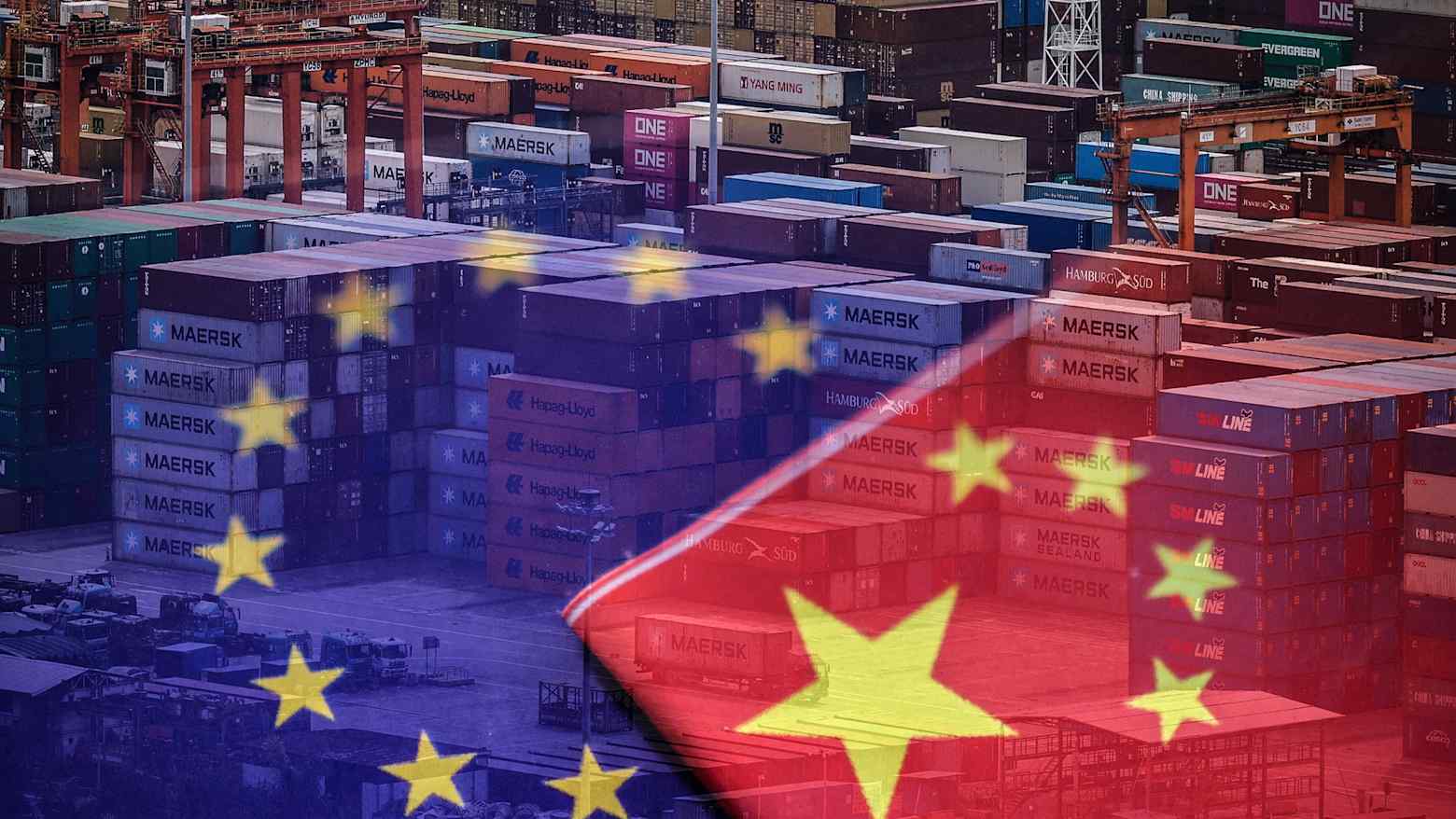
Brussels vs Beijing: Inside the EU's New Trade Defense Wall Against China
Executive Summary
In October 2025, the Dutch government invoked emergency national security powers to seize temporary control of Nexperia, a Chinese-owned semiconductor manufacturer operating on European soil. Beijing responded within days, halting export clearances for auto-grade microcontrollers and power semiconductors produced at Nexperia-affiliated fabs in China - a four-week hold that severed just-in-time delivery chains across the European automotive sector and delivered, in miniature, the exact lesson European policymakers had spent a year trying to internalize: that thirty years of deepening commercial integration with China had built a dependency Brussels could not simply tariff its way out of. The Nexperia episode was not an isolated flashpoint. It arrived amid the most intensive wave of EU trade defense activity against China in the bloc's history - thirty-three formal trade investigations launched in 2024, a similar number in 2025, and active anti-dumping cases now running at their highest level since 2019.
Yet the EU's own experience with its highest-profile trade defense measure, the 2024 countervailing duties on Chinese electric vehicles ranging up to 35.3 percent, delivered a sobering verdict on tariffs alone: Chinese manufacturers simply pivoted toward hybrid vehicles and restructured supply chains, and market penetration continued largely undisturbed. This failure has pushed Brussels toward a fundamentally different strategy through 2025 and 2026 - moving beyond reactive tariff imposition toward a genuinely comprehensive trade defense wall combining anti-coercion legislation, critical minerals stockpiling, procurement restrictions, and active industrial policy, even as China's calibrated, precisely targeted retaliation - rare earth export controls, agricultural anti-dumping cases against European pork and brandy, and the Nexperia semiconductor squeeze - demonstrates that Beijing has its own considerable leverage over the very European industries these defensive measures are meant to protect.
Strategic Background
The EU's escalating trade defense posture reflects the belated recognition of a structural vulnerability this publication's coverage of semiconductor sovereignty and rare earth mineral conflicts has extensively documented at the American level: decades of efficiency-maximizing economic integration with China built genuine and largely unpriced dependency risk into European industrial supply chains, a risk that China's April 2025 restriction of seven rare-earth elements and select high-performance magnets - widely read as retaliation for American tariff and export-control escalation rather than any EU-specific dispute - exposed with brutal clarity when the October 2025 expansion to cover EV drivetrains, wind-turbine generators, and defense sensors rippled directly into European automotive, renewables, and defense supply chains despite the EU's formal non-involvement in the underlying US-China confrontation.
Historical Context
The EU's China trade defense architecture traces its legal foundation to the bloc's standard World Trade Organization-consistent instruments - anti-dumping, anti-subsidy, and safeguard measures - first deployed at meaningful scale against Chinese electric vehicles when Brussels' anti-subsidy investigation, launched in response to Chinese EV manufacturers' subsidized cost advantage built through successive Five-Year Plans dating to the early 2000s, culminated in October 2024 provisional and subsequently definitive countervailing duties. The vote itself exposed the EU's internal fracture on China policy: five member states voted against the tariffs, including Germany, whose automotive sector's deep China market exposure created domestic political resistance that Beijing actively cultivated, pressuring key capitals ahead of the vote.
Current Situation Assessment
The EU's trade defense posture through 2025 and 2026 reveals a bloc that has concluded tariffs alone cannot address Chinese overcapacity and subsidized export competition, pivoting instead toward the more comprehensive architecture that France's Haut-Commissariat à la Stratégie et au Plan proposed in February 2026 - either a blanket 30 percent tariff on Chinese imports or an engineered 20 to 30 percent euro depreciation against the renminbi, a proposal whose radicalism itself signals mounting frustration with incremental measures. Brussels' Anti-Coercion Instrument, adopted in 2023 and never yet formally invoked, provides the bloc its most powerful available deterrent - authority to retaliate against economic coercion through tariffs, procurement restrictions, and financial-access measures - while China's own calibrated countermeasures, including anti-dumping cases against EU pork and brandy and a countervailing duty investigation into EU dairy, demonstrate Beijing's continued preference for precisely targeted rather than escalatory retaliation.
Power Center Analysis
The European Commission: Shifting from Reactive to Structural
Brussels' policy evolution - funding strategic stockpiling for seventeen critical minerals, expanding Critical Raw Materials Act domestic extraction targets, and deepening resource partnerships with Africa, Canada, and Australia examined in this publication's Battle for Africa coverage - reflects genuine institutional learning that trade defense without supply chain resilience simply invites the kind of Nexperia-style leverage China has already demonstrated.
China: Calibrated Rather Than Explosive Retaliation
Beijing's consistent pattern - targeted countermeasures sized to inflict genuine pain without triggering full retaliatory spiral, exemplified by the temporary rather than permanent nature of both the Nexperia semiconductor hold and the October 2025 rare earth expansion, suspended by early November - reflects a deliberate strategic choice to preserve overall EU-China commercial relations while demonstrating leverage precisely where it hurts most.
Germany: The Reluctant Defector
Germany's vote against EV tariffs, moving from prior abstention, illustrates the persistent internal EU fracture between member states whose automotive and industrial exposure to Chinese markets creates genuine economic incentive to resist confrontational trade policy, regardless of the broader bloc's strategic direction.
Military and Security Implications
The Nexperia crisis's exposure of defense sensor supply chain vulnerability through China's October 2025 rare earth expansion directly parallels this publication's coverage of rare earth weaponization against Western defense industrial bases, underscoring that EU trade defense increasingly operates as much a national security as a commercial policy domain.
Economic and Trade Impact
The EV tariff experience's core lesson - that Chinese producers simply shifted toward hybrids and adjusted supply chains rather than losing market share - validates the EU's pivot toward genuine industrial policy, including corporate fleet procurement rules potentially requiring sustainability and resilience factors that could reshape European vehicle purchasing incentives beyond what tariffs alone achieve.
Diplomatic Positioning
China's deliberate cultivation of internal EU division - pressuring individual capitals like Spain ahead of the EV tariff vote - illustrates Beijing's preferred strategy of exploiting the EU's consensus-based decision-making rather than confronting Brussels as a unified bloc.
Regional Fallout
The Netherlands' Nexperia intervention and its immediate Chinese semiconductor retaliation demonstrates how quickly a single member state's national security action can generate bloc-wide industrial consequences, testing EU solidarity mechanisms in real time.
Global Strategic Consequences
The EU's trajectory toward comprehensive trade defense - combining tariffs, critical minerals resilience, and untested Anti-Coercion Instrument deterrence - represents Europe's attempt to chart a middle path between full American-style decoupling and continued unmanaged China exposure, a model other middle powers navigating similar dependencies may increasingly study.
Risk Matrix
- Risk Level: High - China's calibrated retaliation escalates beyond current targeted measures if the EU deploys its untested Anti-Coercion Instrument, risking the kind of broader retaliatory spiral Beijing has so far deliberately avoided.
- Risk Level: High - Internal EU fracture, exemplified by Germany's tariff opposition, prevents the bloc from sustaining unified trade defense policy at the scale current strategic circumstances require.
- Risk Level: Medium - France's proposed blanket 30 percent tariff or currency depreciation measures prove politically unachievable given the consensus requirements and economic risks such radical measures carry.
- Risk Level: Low-Medium - The EU's critical minerals stockpiling and diversification investments successfully reduce Chinese leverage over European automotive, renewable, and defense supply chains within the coming several years.
Scenario Analysis
Base Scenario (High Probability): The EU continues its current trajectory of expanding trade investigations, targeted tariffs, and critical minerals resilience-building without invoking the Anti-Coercion Instrument, while China maintains calibrated rather than escalatory retaliation.
Bull Scenario (Low Probability): Coordinated EU industrial policy and supply chain diversification meaningfully reduces Chinese leverage, allowing Brussels to negotiate from a position of genuine strength.
Bear Scenario (Medium Probability): A Nexperia-style crisis recurs in a more strategically sensitive sector, triggering the kind of retaliatory spiral that exposes the EU's continued structural dependency despite years of de-risking rhetoric.
Intelligence Forecast (6-24 Months)
Watch further EU anti-dumping case volume, any Anti-Coercion Instrument invocation, France's blanket tariff proposal's political trajectory, and continued rare earth and semiconductor supply chain incidents.
Final Strategic Takeaway
Brussels has learned that tariffs alone cannot defend against subsidized Chinese overcapacity - but building genuine structural resilience takes years Europe may not have before the next Nexperia-style crisis arrives.
A trade wall built only of tariffs is a wall with no foundation - Europe is now, belatedly, pouring the concrete underneath.
Global Chanakya Assessment
Hidden driver: China's retaliation strategy is deliberately calibrated below the threshold that would trigger EU Anti-Coercion Instrument activation - a precision that itself reveals sophisticated understanding of European institutional triggers.
Contrarian view: The EV tariff's failure to slow Chinese market penetration suggests industrial policy, not trade defense, is Europe's more promising path - a lesson with direct relevance for India's own approach to Chinese import competition.
Indicators to Monitor
- EU trade investigation volume against China
- Anti-Coercion Instrument invocation status
- Critical Raw Materials Act stockpiling progress
- Further Nexperia-style semiconductor supply disruptions
- French blanket tariff proposal's political trajectory
Frequently Asked Questions
Did EU tariffs on Chinese EVs work?
Not effectively. Despite countervailing duties up to 35.3 percent, Chinese manufacturers shifted toward hybrid vehicles and adjusted supply chains, with market penetration continuing largely undisturbed.
What happened with Nexperia?
In October 2025, the Dutch government seized temporary control of Chinese-owned chipmaker Nexperia under national security powers; China responded by halting export clearances for Nexperia-affiliated auto-grade semiconductors, disrupting European automotive supply chains for four weeks.