
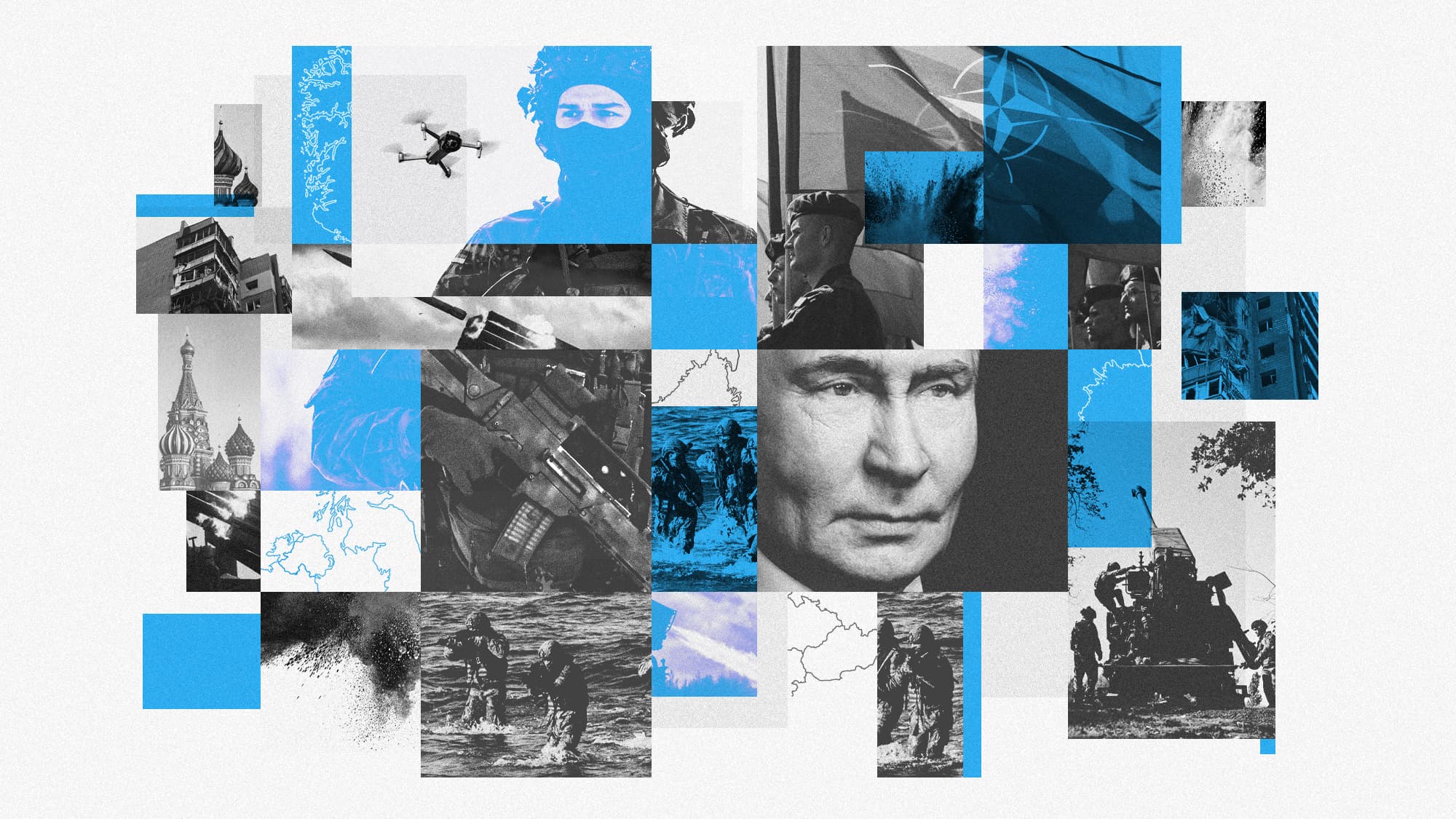
NATO vs Russia Military Comparison: Forces, Firepower and War Readiness
Executive Summary
A numerical comparison between NATO and Russia appears straightforward. The 32-member North Atlantic Alliance represents roughly one billion people, includes the United States and most of Europe’s largest economies, possesses three nuclear-armed members and collectively spends more than seven times Russia’s estimated annual military expenditure at market exchange rates.
On paper, NATO holds overwhelming advantages in combat aircraft, aerial refuelling, intelligence satellites, precision weapons, submarines, aircraft carriers, strategic transport and global logistics. The United States alone fields capabilities Russia cannot match across several domains.
Yet wars are not fought by spreadsheets. Aggregate inventories scattered across North America and Europe do not automatically become deployable formations on NATO’s eastern frontier. National political approval, transport infrastructure, ammunition availability, maintenance, command integration and mobilisation timelines determine whether economic superiority becomes battlefield power.
Russia is economically and technologically weaker than the combined alliance, but it is not preparing to fight NATO symmetrically across the globe. Moscow’s most plausible strategy would concentrate force within a limited theatre, exploit geographic proximity, disrupt reinforcement routes and use nuclear threats to constrain the alliance’s response.
Russia’s war against Ukraine has inflicted extraordinary losses on its land forces. Thousands of armoured vehicles have been destroyed or damaged. Large numbers of trained personnel and commanders have been killed or wounded. The Black Sea Fleet has suffered serious losses, and sanctions have complicated access to advanced components.
The same war has transformed Russia into a more dangerous military-industrial state. Factories operate expanded shifts. Missile, drone and ammunition output has risen. The armed forces have accumulated experience in electronic warfare, drone reconnaissance, dispersed command, camouflage, fortification, long-range strike and high-casualty mobilisation.
President Vladimir Putin ordered the authorised strength of the Russian armed forces to increase to nearly 2.39 million personnel, including 1.5 million active servicemembers. Authorised numbers do not equal trained and deployable strength, but they reveal the scale of Moscow’s ambition.
Russia’s military expenditure reached an estimated $190 billion in 2025, approximately 7.5 percent of gross domestic product according to the Stockholm International Peace Research Institute. Market-rate comparisons understate the domestic purchasing power of Russian spending because salaries, ammunition, fuel and locally produced equipment cost less inside Russia than comparable systems in Western economies.
NATO’s resource advantage remains immense. In 2025, all allies met or exceeded the previous benchmark of spending at least 2 percent of GDP on defence. European allies and Canada collectively invested more than $574 billion when measured in constant 2021 prices. Total alliance expenditure exceeded $1.4 trillion.
At the 2025 Hague Summit, allies committed to spending 5 percent of GDP annually on defence and security-related requirements by 2035. At least 3.5 percent is intended for core military needs, while up to 1.5 percent can support infrastructure, resilience, civil preparedness, networks, innovation and industrial capacity.
If fully implemented, the commitment will widen NATO’s advantage. It could produce larger ammunition stockpiles, hardened infrastructure, more deployable forces and stronger European capacity. If treated as an accounting exercise, it may generate impressive budgets without correcting readiness gaps.
The strategic balance can be summarised across five levels:
- Global conventional power: NATO holds a decisive advantage.
- Regional land war near Russia: The balance is far more contested, especially during the opening weeks.
- Air and maritime warfare: NATO possesses superior aggregate capability, provided bases and reinforcement routes remain operational.
- Industrial endurance: NATO has greater latent capacity, while Russia currently demonstrates stronger wartime mobilisation in selected categories.
- Nuclear escalation: Neither side can achieve meaningful victory without risking catastrophic destruction.
The most dangerous misconception is that NATO’s economic superiority makes Russian aggression irrational and therefore impossible. Putin’s government does not need to defeat the entire alliance. It could seek to seize limited territory, fracture allied decision-making, threaten nuclear escalation and present NATO leaders with a choice between accepting a fait accompli or widening the war.
The opposite misconception is that Russia’s battlefield adaptation makes it capable of conquering Europe. Russia has struggled for years to subdue Ukraine, a country with fewer resources than NATO and no independent nuclear deterrent. A united alliance entering a conventional war with full American participation would impose military pressure Russia could not sustainably match.
NATO is stronger than Russia. Russia may still be locally stronger than the NATO forces available at the place and time where Moscow chooses to create a crisis.
Deterrence depends on eliminating that difference. NATO must possess sufficient forward strength, rapid reinforcement, integrated air defence, long-range fires and political cohesion to deny Russia a short-war opportunity. Its goal is not to prepare for the conquest of Russia. It is to make aggression against allied territory visibly unwinnable from the first hour.
Background
The Cold War Military Balance
NATO was established in 1949 to deter Soviet expansion and bind North American power to the defence of Western Europe. Article 5 of the North Atlantic Treaty declared that an armed attack against one member would be considered an attack against all.
The Soviet-led Warsaw Pact maintained enormous conventional forces across Central and Eastern Europe. NATO relied on forward-deployed divisions, reinforcement from North America, tactical nuclear weapons and the strategic nuclear forces of the United States, Britain and France.
The alliance’s central problem was geographic. Soviet and Warsaw Pact forces could concentrate close to the inner-German border, while American reinforcements had to cross the Atlantic. NATO sought to deter a rapid offensive through a combination of conventional defence and nuclear escalation.
The Soviet Union’s collapse removed the immediate threat. The Warsaw Pact dissolved, Russian forces withdrew from much of Eastern Europe and NATO members reduced defence budgets. Large armoured formations disappeared. Ammunition stockpiles contracted. Mobilisation infrastructure deteriorated.
NATO shifted toward crisis-management operations in the Balkans, Afghanistan and Libya. European forces became smaller, professional and optimised for expeditionary deployments rather than industrial-scale territorial warfare.
Russia underwent its own collapse. Military salaries went unpaid, equipment deteriorated and the Chechen wars exposed severe operational weaknesses. Putin’s government later invested in reform, readiness, precision weapons and nuclear modernisation.
NATO Enlargement
Former Warsaw Pact members and Soviet republics joined NATO because they feared renewed Russian domination. Poland, the Czech Republic and Hungary entered in 1999. The Baltic states joined in 2004, placing Estonia, Latvia and Lithuania inside the alliance.
Moscow portrayed enlargement as a strategic encirclement. NATO argued that membership was a sovereign choice and that the alliance remained defensive. The disagreement became one of the defining disputes in post-Cold War European security.
Russia’s 2014 annexation of Crimea and intervention in eastern Ukraine ended any remaining assumption that Moscow accepted the territorial settlement created after the Soviet collapse. NATO responded with sanctions, rotational deployments and multinational battlegroups on its eastern flank.
Russia’s full-scale invasion of Ukraine in February 2022 transformed the alliance. Finland joined NATO in April 2023, adding a highly capable military and more than 1,300 kilometres of border with Russia. Sweden entered in March 2024, strengthening the defence of the Baltic Sea, Arctic approaches and Scandinavia.
NATO now has 32 members. The accession of Finland and Sweden was a strategic defeat for Moscow. Russia sought to prevent NATO’s expansion but instead pushed two historically non-aligned European states into the alliance.
Russia’s Military Reforms
Russia’s armed forces underwent major reforms after poor performance in the 2008 war against Georgia. Moscow reduced hollow formations, improved readiness, professionalised selected units and created brigade-based structures intended for rapid deployment.
Russia invested heavily in long-range precision weapons, air defence, electronic warfare, submarines and nuclear delivery systems. The 2015 intervention in Syria showcased air power, cruise missiles and expeditionary logistics.
The Syrian campaign also encouraged excessive confidence. Operations took place against opponents without advanced air power, layered air defence or long-range strike. Russia’s military leadership drew lessons that did not fully prepare it for a large conventional war against Ukraine.
The 2022 invasion revealed failures in planning, intelligence, logistics, command and combined-arms execution. Russian columns advanced without adequate protection or sustainment. Airborne assaults failed to deliver strategic collapse. Ukrainian resistance and Western support forced Moscow into a prolonged attritional war.
Russia adapted. It mobilised personnel, constructed defensive lines, expanded drone use and integrated reconnaissance with artillery. The military became less elegant but more experienced in the realities of high-intensity warfare.
The Ukraine War as a Strategic Laboratory
Ukraine has become the central reference point for any NATO-Russia comparison. It has demonstrated the continuing importance of artillery, mines, trenches and manpower while revealing the transformative effect of drones, satellite intelligence, electronic warfare and precision weapons.
Neither Russia nor Ukraine achieved sustained air superiority. Dense air defences forced aircraft to operate cautiously and increased reliance on stand-off weapons, glide bombs and unmanned systems.
Commercial technology became militarised at extraordinary speed. Small drones identified targets, corrected artillery fire, dropped explosives and attacked vehicles. First-person-view drones turned exposed movement into a lethal activity.
Electronic warfare disrupted navigation and communications. Both sides adapted frequencies, autonomous guidance and fibre-optic control systems. The innovation cycle compressed from years to weeks.
Russia’s missile and drone attacks targeted Ukraine’s energy infrastructure, ports and cities. Ukraine used Western missiles, domestically produced drones and covert action to strike Russian command centres, airfields, oil facilities and naval assets.
The war demonstrated that modern conflict is simultaneously industrial and digital. States require millions of shells and inexpensive drones alongside satellites, algorithms and precision missiles.
Current Situation
NATO’s Strategic Posture
NATO’s 2022 Strategic Concept identifies Russia as the most significant and direct threat to allied security. The alliance has shifted from reassurance toward forward defence.
Multinational battlegroups are deployed in Bulgaria, Estonia, Hungary, Latvia, Lithuania, Poland, Romania and Slovakia. Plans exist to expand selected battlegroups toward brigade strength. Germany is establishing a permanent armoured brigade in Lithuania, intended to reach full operational capability in 2027.
NATO has adopted regional defence plans covering the High North and Atlantic, Central Europe and the Mediterranean. These plans connect force requirements with specific operational scenarios and national capability targets.
The alliance’s New Force Model is designed to provide larger numbers of high-readiness forces, with approximately 300,000 troops envisaged at higher readiness levels. The value of this framework depends on whether units possess equipment, ammunition, transport and political authorisation for deployment.
Finland and Sweden improve the northern balance. Finland brings a large trained reserve, extensive artillery, hardened infrastructure and experience operating in Arctic conditions. Sweden provides advanced aircraft, submarines, naval forces and control of Gotland, a strategically located Baltic Sea island.
The Nordic region is no longer divided between NATO members and non-aligned states. Norway, Denmark, Finland and Sweden can coordinate defence across the Arctic, Baltic and North Atlantic approaches.
Russia’s Wartime Force
Russia’s military is larger on paper than it was before the invasion, though quality varies sharply. Contract soldiers, mobilised personnel, conscripts, volunteers and irregular formations coexist within a complex force.
Putin’s decree authorising 1.5 million active personnel reflects Russia’s effort to replace losses, sustain the Ukrainian front and create formations for other strategic directions. Recruitment relies heavily on financial incentives and regional quotas.
Russia has avoided another politically disruptive nationwide mobilisation on the scale of September 2022 by offering substantial signing bonuses and recruiting from economically disadvantaged regions. This model is expensive but has provided manpower without placing equal pressure on Moscow and St Petersburg.
Combat experience is now distributed widely across the Russian military. Officers and soldiers have learned to operate under drone observation, artillery threat and electronic attack. Experience has been purchased through severe casualties and does not erase deficiencies in training or leadership.
Russia continues to retrieve older tanks and armoured vehicles from storage. Refurbished Soviet-era systems supplement new production. This preserves mass but reduces average fleet quality as the best pre-war equipment is lost or consumed.
Russian air power retains modern Su-35, Su-34 and Su-30 aircraft, long-range bombers and large missile inventories. The Aerospace Forces have not achieved decisive air superiority over Ukraine, but they have improved their use of glide bombs and stand-off weapons.
Russia’s navy remains a potent nuclear and submarine force despite serious Black Sea losses. The Northern Fleet protects ballistic-missile submarines and operates advanced attack submarines. The Black Sea Fleet has been pushed away from portions of its traditional operating area by Ukrainian missiles and maritime drones.
Defence Spending
NATO’s financial advantage is overwhelming. Alliance spending exceeded $1.4 trillion in 2025. The United States remained the largest contributor, while European allies and Canada collectively spent more than $574 billion in constant 2021 prices.
Every ally met or exceeded the previous 2 percent benchmark in 2025. The distribution remains uneven because the largest economies contribute the greatest absolute sums while frontline states often spend the highest shares of GDP.
Poland has become one of the most ambitious military spenders, acquiring American Abrams tanks, South Korean K2 tanks and K9 artillery, F-35 aircraft, attack helicopters, air defence and rocket systems. The Baltic states and Nordic members have also expanded defence expenditure.
Germany’s Zeitenwende increased spending and created a €100 billion special fund, while later fiscal reforms opened greater borrowing space for security. Britain and France remain Europe’s leading nuclear and expeditionary powers.
Russia’s estimated $190 billion expenditure in 2025 is much smaller in dollar terms, but the figure represents approximately 7.5 percent of GDP and a far larger share of government expenditure than most NATO states commit.
Comparisons at market exchange rates exaggerate NATO’s advantage in domestically produced matériel. Russia pays personnel in roubles and produces many tanks, shells and missiles locally. Purchasing-power comparisons narrow the gap, though they do not remove NATO’s technological and economic superiority.
NATO’s 2035 commitment to spend 3.5 percent of GDP on core defence and up to 1.5 percent on security-related requirements could transform the balance. Europe’s combined economy is vastly larger than Russia’s. A sustained rearmament programme would eventually outproduce Moscow across most categories.
Military Personnel
NATO’s combined active-duty forces number several million personnel, with the United States, Turkey, Poland, France, Germany, Italy, Britain and other allies maintaining significant militaries. Reserve systems add millions more in varying states of readiness.
Aggregate personnel figures conceal critical differences. Many European militaries have struggled with recruitment, retention and understrength units. Reserve mobilisation systems range from Finland’s highly developed model to countries with limited recent experience.
Russia’s authorised 1.5 million active personnel should not be interpreted as 1.5 million deployable combat troops. The total includes command, support, training, naval, aerospace and strategic forces. Recruitment targets may not be fully achieved.
Russia nevertheless has a clear advantage in willingness to generate and expend manpower for the current war. Its political system can impose costs that would create greater controversy in most NATO democracies.
NATO’s advantage lies in population and economic depth. Its weakness is political mobilisation. The alliance can generate far larger forces if governments and societies accept the requirement, but mobilisation may begin only after a crisis.
Land Forces
Russia retains one of the world’s largest land-warfare establishments. Its ground forces possess tanks, infantry fighting vehicles, artillery, ballistic missiles, air defence, electronic warfare and engineering units designed for continental operations.
Losses in Ukraine have reduced the proportion of modern equipment. Many elite formations suffered severe attrition. Yet Russia continues to field mass through refurbishment, new production and organisational expansion.
Russian doctrine places heavy emphasis on artillery, long-range fires and integrated air defence. Iskander ballistic and cruise missiles can target airfields, headquarters and logistics nodes. Tornado and Smerch rocket systems provide area and precision effects. Lancet and other loitering munitions threaten artillery and vehicles.
NATO land forces vary widely. The United States fields advanced armoured brigades with strong logistics, aviation and intelligence. Poland is rapidly expanding heavy forces. Turkey maintains a large army. Finland brings artillery and reserves suited to territorial defence.
Britain, France and Germany possess high-quality formations but have faced readiness and scale limitations. Smaller allies contribute specialised units and territorial defence.
In a fully mobilised war, NATO could assemble a larger and more technologically advanced land force. During the opening phase of a Baltic crisis, Russia might achieve local superiority if NATO reinforcement is delayed.
The central land-warfare question is therefore not total tank numbers. It is whether allied brigades can arrive with ammunition, air defence, engineering support, fuel and command networks before Russia secures operational objectives.
Artillery and Ammunition
Russia holds a major advantage in current artillery consumption and production culture. Its forces have fired enormous quantities of shells in Ukraine, relying on domestic production, stored Soviet stocks and supplies from North Korea.
Estimates of exact annual production vary, but Russia has expanded output far beyond pre-war levels. Its economy and labour system have been reorganised to support sustained military demand.
NATO countries entered the war with limited ammunition stockpiles and production lines designed for peacetime orders. European governments pledged expansion, but new factories, explosives production and skilled labour require time.
The United States and Europe possess the capital and technology to surpass Russian output. The gap lies in urgency, contracting and industrial coordination. Companies will not build capacity without predictable long-term orders.
Artillery comparisons must also consider accuracy and targeting. NATO systems often deliver greater precision, range and sensor integration. Russia compensates through volume, drones and acceptance of high expenditure.
A major war would require both quality and quantity. Precision missiles cannot replace every artillery shell, and massed unguided fire cannot substitute for accurate deep strike.
Air Power
NATO’s strongest conventional advantage lies in aerospace power. The alliance operates thousands of combat aircraft, including F-35, F-22, Rafale, Eurofighter Typhoon, F-16, F-15, Gripen and other platforms.
The United States contributes stealth aircraft, strategic bombers, aerial refuelling, airborne early warning, electronic attack, suppression of enemy air defences and space-based intelligence. European members add advanced fighters, cruise missiles and specialised capabilities.
Russia fields capable aircraft and some highly advanced missiles. Its S-300 and S-400 families create formidable air-defence zones. Russian aircraft can employ long-range air-to-air missiles, anti-radiation weapons and glide bombs.
NATO would seek to degrade Russian air defences through stealth, electronic warfare, cyber operations, decoys and stand-off weapons. This would be difficult and costly. Russia’s integrated air-defence network is denser than any Western air force has faced in recent combat.
NATO’s numerical superiority would matter only if air bases remained usable. Russian missiles would target runways, fuel storage, aircraft shelters, command centres and ports. European dispersal and hardened infrastructure remain uneven.
American refuelling aircraft and intelligence platforms are powerful but vulnerable high-value assets. Russia would attempt to disrupt them through long-range missiles, cyberattack and attacks on supporting bases.
If NATO preserved command, basing and logistics, it would likely establish air superiority over time. It should not assume immediate freedom of action.
Air and Missile Defence
Russia possesses extensive ground-based air defence. S-400, S-300, Buk, Tor and Pantsir systems provide overlapping layers, though performance depends on crews, radar coverage, network integrity and ammunition.
Ukraine has destroyed or suppressed Russian systems, demonstrating that they are not invulnerable. Russia has also adapted through mobility, decoys and electronic protection.
NATO’s air defence is less dense across much of Europe because allies relied on aircraft and assumed limited missile threats after the Cold War. Patriot, SAMP/T, NASAMS, IRIS-T and other systems are expanding but remain insufficient to defend every military and civilian target.
The European Sky Shield Initiative seeks to improve procurement and integration. Poland, Germany, the Nordic states and frontline allies are investing heavily in layered defence.
Missile-defence economics create a shared problem. Russia can launch drones costing far less than advanced interceptors. NATO requires low-cost counter-drone systems, guns, electronic warfare, hardened facilities and rapid repair alongside expensive missile defences.
Naval Power
NATO possesses overwhelming aggregate naval superiority. The United States operates carrier strike groups, nuclear attack submarines, ballistic-missile submarines, amphibious forces and global logistics. Britain, France, Italy, Spain and Turkey add carriers or aviation-capable ships, submarines and surface combatants.
Norway, Germany, Sweden and other allies contribute advanced submarines optimised for northern and Baltic waters. NATO maritime patrol aircraft provide extensive anti-submarine capability.
Russia cannot contest NATO across the Atlantic and Mediterranean simultaneously. Its surface fleet is smaller, and several ships are ageing. The Black Sea Fleet’s losses exposed vulnerability to missiles and unmanned boats.
Russia remains dangerous beneath the surface. Its nuclear-powered submarines can threaten reinforcement routes, carrier groups and undersea infrastructure. The Northern Fleet protects Russia’s strategic submarine bastions and operates near the Greenland-Iceland-United Kingdom gap.
Russian long-range anti-ship missiles can threaten ports and naval formations. Mines, submarines and sabotage could complicate the movement of American forces across the Atlantic.
The naval contest would therefore involve protection of reinforcement rather than a simple fleet battle. NATO must secure ports, shipping, undersea cables and sea lanes while containing Russian submarines.
Drones and Electronic Warfare
Russia possesses greater recent experience operating drones and electronic warfare at industrial scale. Reconnaissance drones observe the front continuously. First-person-view systems attack vehicles and personnel. Lancet loitering munitions target artillery and air defence.
Russia has also imported Iranian-designed Shahed drones and developed domestic variants for long-range attacks. These weapons impose pressure on Ukrainian air defence and energy infrastructure.
NATO members possess more advanced unmanned technologies in many categories, but few have employed them at the intensity seen in Ukraine. Procurement systems often produce expensive platforms in small numbers.
The alliance must combine high-end intelligence drones with millions of inexpensive, replaceable systems. Software updates, autonomous navigation and electronic protection are as important as airframe production.
Russia’s electronic-warfare capability can jam navigation, communications and drone links. NATO’s dependence on data networks creates powerful advantages but also vulnerabilities. Forces must train to operate with degraded communications and disrupted satellite navigation.
Cyber and Space
NATO benefits from the United States’ satellite architecture, global communications, navigation and intelligence systems. Commercial companies add imagery, connectivity and data analysis.
Russia possesses cyber, electronic and counter-space capabilities designed to disrupt these advantages. It can target satellites, ground stations, undersea cables, telecommunications and civilian infrastructure.
A NATO-Russia war would likely begin in cyberspace and the electromagnetic spectrum before public confirmation of conventional attack. Railways, ports, banks, energy grids and government networks would become targets.
NATO’s distributed commercial and national systems provide resilience, but civil infrastructure is unevenly protected. Russia’s more centralised systems may be easier to control during war yet vulnerable to sophisticated penetration.
Nuclear Forces
Nuclear weapons make a direct NATO-Russia war fundamentally different from the conflict in Ukraine. Russia and the United States possess the world’s largest nuclear arsenals. Britain and France maintain independent nuclear forces.
Open-source estimates in 2025 placed Russia’s total inventory at roughly 5,400 nuclear warheads across deployed, stored and retired categories. The precise number changes as weapons are retired, dismantled or modernised.
The United States maintains a comparable strategic arsenal and deploys gravity bombs in Europe under NATO nuclear-sharing arrangements. Britain operates submarine-launched ballistic missiles. France maintains submarine and air-launched nuclear forces.
Russia’s doctrine allows nuclear use in circumstances where the state perceives severe conventional or strategic threats. Moscow has repeatedly used nuclear signalling during the Ukraine war.
NATO’s nuclear posture aims to deter aggression and coercion. Any nuclear use against the alliance would fundamentally alter the conflict, but NATO deliberately avoids detailing the exact form of response.
Neither side possesses a reliable path to nuclear victory. Missile defences cannot neutralise a large strategic strike. Command systems would operate under extreme uncertainty, creating danger of misinterpretation and accidental escalation.
Strategic Analysis
Why Aggregate Comparisons Mislead
Adding every NATO tank, aircraft and soldier creates a total that Russia cannot match. Yet NATO is a political and military alliance, not a unitary state. Forces remain under national control until governments authorise their use.
Some allied forces are committed to national territories or other missions. American forces must also consider the Indo-Pacific, Middle East and global responsibilities. Turkey’s strategic priorities differ from those of Estonia. Spain’s geography creates different requirements from Poland’s.
Russia has a unified command system and can concentrate resources rapidly. Its authoritarian government can conceal planning, suppress dissent and impose mobilisation costs.
NATO’s political process is slower but produces durable legitimacy when consensus exists. An unambiguous attack on allied territory would likely strengthen unity. A deniable, ambiguous or limited operation could create debate over attribution and response.
Geography and the Opening War
Russia’s most plausible conventional challenge lies on NATO’s eastern flank. The Baltic states are geographically exposed and possess limited strategic depth. They connect to the rest of allied territory through the Suwałki corridor between Poland and Lithuania.
Finland’s accession complicates Russian planning by extending the frontier and placing allied territory near the Kola Peninsula and St Petersburg. Sweden improves access to the Baltic and defence of reinforcement routes.
Kaliningrad contains missiles, air defence and military infrastructure capable of threatening Poland, Lithuania and the Baltic Sea. Belarus provides Russia with additional depth and access.
NATO’s objective is to prevent Russia from achieving a rapid territorial seizure. Forward forces must be strong enough to deny easy movement, preserve airfields and receive reinforcement.
The United States Factor
With full American participation, NATO possesses decisive advantages in air power, intelligence, logistics and nuclear deterrence. Without the United States, European NATO members would remain economically stronger than Russia but would face serious capability gaps.
Europe depends heavily on American strategic transport, aerial refuelling, satellite intelligence, missile defence, electronic warfare and long-range strike. European forces could defend themselves, but a rapid transition away from American support would be dangerous.
Donald Trump’s return to the White House intensified burden-sharing pressure. The Hague spending commitment reflects European recognition that American engagement cannot be treated as politically cost-free.
Russia will attempt to separate Washington from Europe. Deterrence therefore depends as much on political signalling as hardware.
Industrial Endurance
NATO’s combined industrial potential exceeds Russia’s by a vast margin. The alliance includes leading aerospace, electronics, shipbuilding and automotive economies.
Russia currently converts a greater share of available resources into immediate war production. Its procurement is less constrained by peacetime efficiency, environmental review or dispersed national requirements.
NATO’s defence industry remains fragmented. European states operate multiple tank, fighter, missile and artillery programmes. National workshare politics complicates common procurement.
The alliance must move from annual purchasing toward multi-year production commitments. Industrial capacity is a form of deterrence only when adversaries believe it can generate weapons before a war is decided.
Combat Experience
Russia’s armed forces possess recent experience in large-scale war. This includes tactical adaptation, battlefield engineering, casualty replacement and operation under persistent surveillance.
NATO forces have extensive professional experience from Afghanistan, Iraq, the Balkans and counterterrorism missions. These campaigns produced strong small-unit skills, joint air operations and expeditionary logistics but did not replicate the conditions of the Ukrainian front.
Ukraine’s forces hold the deepest relevant experience. NATO training and doctrine should absorb Ukrainian lessons without assuming every feature of that war will transfer directly to alliance defence.
Political Will
Russia’s greatest strategic hope is not defeating NATO’s combined military. It is convincing some allies that defending another member is too costly or escalatory.
NATO’s Article 5 is powerful because it transforms a local conflict into an alliance-wide calculation. Its credibility rests on visible forces, exercises, plans and public commitment.
Russia uses nuclear threats, disinformation, energy pressure and political influence to weaken cohesion. NATO must defend the political space in which military decisions are made.
Global Impact
Ukraine
Ukraine is degrading Russian military capacity while also revealing and accelerating Russian adaptation. Continued Western support affects the future NATO-Russia balance.
If Ukraine remains sovereign and capable, Russia must commit forces to a long frontier and cannot easily redirect its entire military toward NATO. If Moscow subordinates Ukraine, it gains territory, resources, infrastructure and a more advantageous position against Poland, Slovakia, Hungary and Romania.
Global Chanakya’s Ukraine, Russia, Vladimir Putin and Zelensky intelligence pages provide essential context for this balance.
China
China benefits when American attention and resources are concentrated in Europe. Beijing also studies Russian and Ukrainian operations for lessons relevant to Taiwan and high-technology war.
Russia depends increasingly on Chinese trade, electronics and diplomatic support. Beijing does not want Russian defeat, but it also avoids a formal obligation to fight NATO.
A simultaneous crisis in Europe and around Taiwan would stress American forces and allied ammunition stocks. NATO’s ability to defend Europe with a stronger European pillar directly affects the Indo-Pacific balance.
Global Chanakya’s China, Xi Jinping, Taiwan, QUAD, AUKUS and South China Sea pages should be linked to this two-theatre challenge.
India
India has longstanding defence ties with Russia and expanding strategic cooperation with the United States and Europe. A NATO-Russia conflict would place New Delhi under severe pressure.
Russian arms deliveries and spare parts could be disrupted. Energy markets would become volatile. India would seek strategic autonomy while resisting demands to align fully with either side.
A weakened Russia could become more dependent on China, an outcome contrary to Indian interests. New Delhi benefits from a stable multipolar balance in which Moscow retains strategic independence from Beijing.
The Middle East
A European war would divert American and European air defence, naval assets and munitions from the Middle East. Iran and regional armed groups could interpret the distraction as an opportunity.
Russia’s influence in Syria and relationships with Iran would interact with the European theatre. Energy producers in the Gulf would gain leverage as European demand increased.
The Global Economy
A direct NATO-Russia war would disrupt energy, grain, shipping, aviation and financial markets. The Baltic and Black seas could become combat zones. Cyberattacks could affect global banks and communications.
European infrastructure would face sabotage and missile threats. Insurance costs would rise. Trade routes would shift, and states would impose emergency controls on strategic goods.
The economic consequences would exceed those of the Ukraine war because NATO territory and Russian strategic assets would be directly involved.
Risk Assessment
Risk One: Baltic Fait Accompli
Russia could attempt a limited territorial seizure before NATO reinforcement arrives, betting that nuclear threats and political division would prevent reversal.
Probability: Low to medium.
Impact: Extreme.
Risk Two: Ukraine War Spillover
A missile strike, aircraft incident or attack on logistics inside NATO territory could trigger escalation.
Probability: Medium.
Impact: Very high.
Risk Three: Nuclear Escalation
Conventional attacks on command systems, early-warning radars or dual-capable forces could be interpreted as preparation for nuclear disarmament.
Probability: Low.
Impact: Catastrophic.
Risk Four: American Political Retrenchment
Reduced American commitment could create a temporary deterrence gap before Europe develops replacement capabilities.
Probability: Medium.
Impact: Very high.
Risk Five: Ammunition Exhaustion
A prolonged war could consume air-defence interceptors, precision missiles and artillery shells faster than NATO production replaces them.
Probability: Medium to high.
Impact: High.
Risk Six: Hybrid Attack Below Article 5
Russia may use cyberattacks, sabotage, migration pressure, maritime incidents and deniable violence to avoid triggering a unified response.
Probability: High.
Impact: Medium to high.
Risk Seven: Russian Miscalculation
Moscow could mistake alliance debate for an absence of resolve, as it underestimated Ukrainian resistance and Western support in 2022.
Probability: Medium.
Impact: Extreme.
Future Scenarios
Scenario Analysis One: Successful Deterrence
NATO implements the Hague commitment, expands ammunition production and deploys credible forces on the eastern flank. Europe assumes greater responsibility while the United States remains engaged.
Russia concludes that aggression cannot achieve rapid gains. Competition continues through espionage, cyberattack and political influence, but direct war is avoided.
Scenario Analysis Two: Limited Baltic War
Russia creates a crisis involving Baltic territory, supported by cyberattacks, sabotage and nuclear threats. NATO activates defence plans and reinforces Poland and the Baltic region.
The outcome depends on airfield survival, the Suwałki corridor, maritime access and the speed of American deployment. Even a limited conflict carries severe escalation risk.
Scenario Analysis Three: European NATO Without Immediate U.S. Support
Washington delays direct participation while providing intelligence and matériel. European allies must contain Russia with their own land, air and naval forces.
Europe possesses sufficient economic and military potential but faces shortages in strategic enablers. Poland, Germany, France, Britain and the Nordic states become central to the response.
Scenario Analysis Four: Russian Exhaustion
The Ukraine war, sanctions, demographics and equipment losses weaken Russia’s ability to sustain military expansion. Moscow retains nuclear power but reduces conventional ambitions.
NATO maintains deterrence while pursuing selective arms-control and risk-reduction measures. This outcome would not produce friendship, but it could reduce immediate war danger.
Scenario Analysis Five: Dual Crisis with China
Russia pressures NATO as China escalates around Taiwan. The United States must divide aircraft, submarines, air defence and political attention between theatres.
European readiness becomes decisive. If Europe can contain Russia, Washington retains greater freedom in the Indo-Pacific. If not, allied strategy faces severe strain.
Intelligence Forecast
Russia will remain NATO’s principal direct military threat through the early 2030s, regardless of the eventual outcome in Ukraine.
Moscow will rebuild land forces, prioritise missiles, drones, electronic warfare and air defence, and preserve a large nuclear arsenal. Quantity will recover faster than quality.
NATO defence expenditure will continue rising, but capability delivery will lag budgets because factories, personnel and infrastructure require time.
Poland, Finland, Sweden, Germany and the Baltic states will drive eastern-flank readiness. Britain and France will remain essential nuclear and expeditionary powers.
The United States will remain indispensable during the late 2020s, particularly for intelligence, air power, strategic transport and nuclear deterrence.
European ammunition and missile production will expand through multi-year contracts. Fragmentation and national industrial competition will slow standardisation.
Drones, counter-drone systems and electronic warfare will receive accelerated investment. NATO will increasingly treat inexpensive unmanned systems as consumable ammunition.
Russia will intensify hybrid operations against logistics, defence companies, undersea infrastructure and political institutions.
The Arctic and Baltic regions will become more militarised following Finnish and Swedish accession. Submarine activity and infrastructure protection will gain priority.
Nuclear signalling will remain central to Russian strategy. NATO will strengthen exercises, command resilience and nuclear consultation while avoiding unnecessary doctrinal instability.
A deliberate Russian attack on NATO remains less likely than continued war in Ukraine or hybrid pressure. The probability will rise if Moscow perceives declining American commitment, weak European readiness or political division.
Final Strategic Takeaway
NATO possesses the economic scale, technology, population and military resources to defeat Russia in a conventional contest. That conclusion is strategically relevant but operationally incomplete.
Russia does not need to match every allied aircraft or ship. It needs to create local superiority, move faster than NATO’s political process and convince alliance leaders that reversing aggression would risk nuclear war.
The Ukraine conflict has weakened Russia and hardened it. Moscow has lost equipment and experienced personnel while learning how to fight a prolonged industrial war. NATO has gained warning time and battlefield knowledge but has not yet completed the transformation from peacetime forces to credible territorial defence.
The alliance’s greatest advantages are American aerospace power, maritime dominance, advanced intelligence and vast economic capacity. Its greatest vulnerabilities are political fragmentation, limited European stockpiles, slow mobilisation and dependence on a small number of reinforcement routes.
Russia’s greatest advantages are geographic concentration, centralised decision-making, artillery mass, wartime production and tolerance for casualties. Its greatest vulnerabilities are a smaller economy, technological dependence, severe battlefield losses, weaker naval and aerospace depth, and the danger of fighting a coalition it cannot outproduce.
Nuclear weapons prevent either side from treating war as a normal contest. A conventional campaign could escalate through attacks on early-warning systems, command networks or dual-capable forces. Military superiority cannot remove that danger.
The purpose of NATO rearmament is therefore not to prepare an invasion of Russia. It is to deny Moscow any belief that limited aggression could remain limited, profitable or politically survivable.
The Hague spending commitment can make that deterrent credible if it produces brigades, interceptors, shells, hardened bases, protected infrastructure and industrial surge capacity. Percentages without readiness will not stop a war.
The final balance is clear. NATO is stronger. Russia is closer, mobilised and willing to test the meaning of that strength. Peace will depend on whether the alliance can place sufficient capability at the decisive geography before a crisis begins - and whether both sides preserve enough communication to prevent conventional rivalry from crossing the nuclear threshold.