
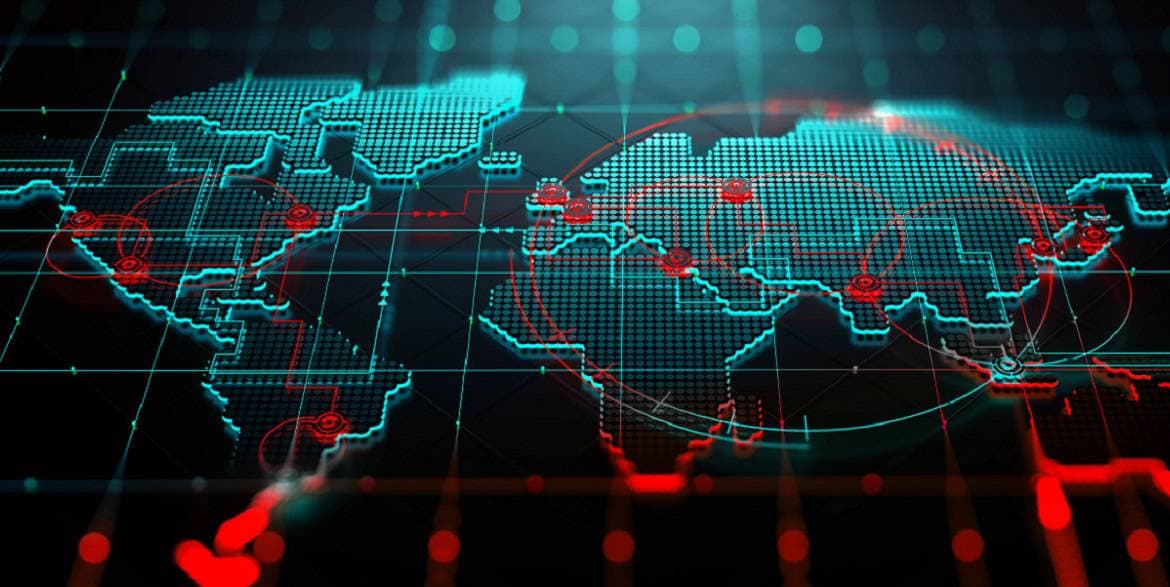
Weaponizing Culture: How Entertainment and Social Media Have Become the New Frontlines of Geopolitics
Executive Summary
The grammar of geopolitical power has been rewritten. Armies still march, navies still patrol contested straits, and missiles still define deterrence thresholds. But the decisive contests of the twenty-first century are increasingly being waged in an entirely different domain: the attention economy. Entertainment platforms, social media algorithms, streaming services, and artificial intelligence-generated content have ceased to be merely cultural phenomena. They are now instruments of statecraft, deployed with strategic intention by governments, intelligence services, and non-state actors seeking to shape perception, fracture alliances, mobilize populations, and erode adversaries from within.
This report examines how nations including China, Russia, the United States, India, and South Korea have either deliberately or structurally weaponized cultural output and digital platforms as extensions of their foreign policy architecture. It analyzes the mechanics of information warfare through entertainment, the algorithmic engineering of political reality, the rise of AI-generated deepfakes as a tool of conflict manipulation, and the emerging regulatory and strategic countermeasures that democratic governments are beginning to deploy. The analysis draws on real geopolitical events, platform behaviors, treaty frameworks, and intelligence assessments to present a doctrine-level understanding of cultural warfare as it stands in mid-2026.
The central finding of this report is unambiguous: soft power has been superseded by something more aggressive, more targeted, and more difficult to attribute. The world has entered an era of cultural kinetics, where narrative is weaponized, attention is colonized, and the population of an adversary nation becomes the battlefield.
Strategic Background
The concept of soft power, first articulated by the American political scientist Joseph Nye in the early 1990s, described a nation's capacity to attract and persuade rather than compel. Culture, values, and legitimate institutions were its instruments. Hollywood films, jazz music, and the prestige of American universities formed the scaffolding of Washington's global appeal during the Cold War. The Soviet Union countered with its own cultural arsenal, funding international arts festivals, publishing networks, and academic exchanges to project an alternative vision of modernity.
What has changed in the intervening decades is not the fundamental logic but the velocity, scale, and precision with which culture now operates as a strategic instrument. The digitization of the information environment has collapsed the distance between a content producer and a global audience. A single viral video can reshape public opinion faster than a formal diplomatic communique. A streaming algorithm can embed cultural values into the consciousness of millions of viewers without a single government press release. An AI-generated deepfake can destabilize a bilateral relationship in hours before any official body can issue a rebuttal.
Simultaneously, the barriers to entry for information operations have collapsed. State actors that once required expensive broadcasting infrastructure, printing presses, or intelligence networks to conduct influence operations can now execute sophisticated campaigns through a combination of bot networks, generative AI, and the organic amplification mechanics of commercial social media platforms. The democratization of influence tools has not, however, produced a level playing field. Authoritarian states, unconstrained by domestic accountability mechanisms or free press oversight, retain structural advantages in waging information warfare that democratic systems struggle to match without compromising their own foundational values.
The result is an asymmetric contest in which open societies are simultaneously the most attractive audiences for cultural manipulation and the least institutionally equipped to defend themselves against it. This paradox sits at the heart of every national security dilemma that Washington, Brussels, New Delhi, Tokyo, and Canberra now confront in the digital domain.
Historical Context
The weaponization of culture is not a new phenomenon, but its contemporary incarnation has no true historical precedent in terms of reach and speed. Across the Cold War, both the United States and the Soviet Union invested heavily in cultural diplomacy as a dimension of their grand strategic competition. The United States Information Agency, Radio Free Europe, Voice of America, and the Congress for Cultural Freedom were institutional expressions of Washington's understanding that minds, not just territories, needed to be contested. Moscow responded with the Comintern's cultural networks, the promotion of socialist realism abroad, and the calculated use of film festivals, theater companies, and academic exchanges to project Soviet prestige.
The Vietnam War era demonstrated the catastrophic consequences of losing the narrative war at home. Anti-war sentiment, amplified by television journalism bringing battlefield realities into American living rooms for the first time, eroded public support for a conflict that military commanders believed was winnable on the ground. The lesson absorbed by every major power in the decades that followed was stark: control of the information environment is as operationally significant as control of physical terrain.
The 1990s and 2000s saw the United States leverage its uncontested dominance in entertainment to cement what might be described as a form of cultural hegemony. Hollywood's global reach, the prestige of American universities, the appeal of Silicon Valley technology culture, and the soft authority of English as the internet's lingua franca created conditions in which American values and consumer preferences became the default reference point for global aspiration. This was not the product of a centralized strategy but of a structural alignment between commercial incentives, technological leadership, and political prestige.
China's strategic planners studied this alignment carefully, and what they concluded shaped the cultural warfare doctrine that Beijing has pursued with increasing sophistication from the mid-2000s onward. Xi Jinping's explicit articulation of the need to increase China's international discourse power, his investment in state media expansion through outlets like CGTN and Xinhua, and his government's systematic use of technology companies as instruments of influence projection all reflect a deliberate understanding of culture as a domain of strategic competition, not merely aesthetic expression.
Russia under Vladimir Putin drew different lessons but reached compatible conclusions. Moscow's information warfare doctrine, formalized in military thinking as part of the broader concept of hybrid warfare or what Russian theorists describe as non-linear war, places particular emphasis on the manipulation of perception, the exploitation of social divisions, and the erosion of trust in democratic institutions. The Internet Research Agency's documented operations during the 2016 United States presidential election, the targeted amplification of divisive social content on Facebook and Twitter, and the systematic production of disinformation around the conflict in Ukraine all represent the operational expression of a doctrine that predates social media but has found in digital platforms its most potent delivery mechanism.
Current Situation Assessment
As of mid-2026, the cultural warfare landscape has reached a level of complexity and intensity that no established diplomatic framework or international legal instrument was designed to address. Several concurrent developments have converged to produce what intelligence analysts increasingly describe as a permanent information conflict, a condition in which the distinction between peacetime cultural exchange and active information operations has effectively dissolved.
The TikTok saga encapsulates this condition with particular clarity. The platform, owned by China's ByteDance and operating under China's 2017 National Intelligence Law which legally compels Chinese companies to assist state intelligence gathering upon request, accumulated a user base of over 170 million monthly active users in the United States alone before regulatory action was finally pursued. Throughout 2025, the United States government's attempts to force a divestiture of the platform's American operations were repeatedly delayed by executive interventions from the Trump administration, producing a prolonged period of regulatory ambiguity that itself served as a demonstration of how difficult it is for democratic systems to act decisively against cultural instruments with embedded constituencies.
A deal for an American version of TikTok with reduced ByteDance ownership was eventually finalized in January 2026, but the episode revealed a structural vulnerability that transcends any single platform. The architecture of modern social media, with its engagement-optimizing algorithms, its transnational user bases, and its opacity to external audit, creates conditions that are inherently exploitable by actors who understand the system's incentive structures. China's domestic version of TikTok, known as Douyin, operates under a fundamentally different algorithmic logic. Content emphasizing science, technology, education, and patriotic themes is systematically promoted. The version exported to Western markets, multiple analysts and former platform engineers have documented, operates under an algorithm that amplifies emotionally divisive, intellectually numbing, and socially fragmenting content with disproportionate effect.
This dual-algorithm architecture is not incidental. It is the operational expression of a strategic judgment that a distracted, polarized, and epistemically disoriented Western public is a strategic asset for China in its long-term competition with the United States and its alliance system.
Simultaneously, the conflict in Ukraine has produced the most extensively documented case of social media as a parallel battlefield in the history of modern warfare. Both sides have deployed memetic warfare, viral video campaigns, influencer networks, and bot-assisted narrative amplification as components of their information operations. Russia's approach, consistent with its established doctrine, has focused on fragmenting Western public opinion, amplifying war fatigue, undermining the credibility of Ukrainian leadership, and spreading false narratives about the conflict's origins and progress through networks of Telegram channels, Facebook groups, and AI-assisted content farms. Ukraine's information operations have pursued the inverse objective with remarkable effectiveness, sustaining Western public and political support through a sophisticated campaign of documentation, emotional storytelling, and strategic transparency.
The Iran-United States-Israel military confrontation that erupted in early 2026 added a new dimension to this landscape. The conflict produced what analysts have described as a qualitative threshold in AI-generated disinformation warfare. Deepfake videos depicting events that never occurred, AI-generated images of fabricated atrocities, repurposed footage from unrelated conflicts relabeled as current operations, and synthetic audio impersonating senior officials all circulated at scale across major platforms, creating conditions in which the information environment around an active military conflict became as contested as the physical battlefield.
Power Center Analysis
China's Cultural Warfare Architecture
China's approach to cultural warfare is the most systematically developed of any major power and reflects decades of institutional investment. Beijing's strategy operates simultaneously across multiple vectors. The first is the global expansion of Chinese state media, including CGTN, Xinhua, China Daily, and the Global Times, which collectively reach audiences in over 140 countries and produce content in dozens of languages calibrated to local political sensitivities while advancing Kremlin-aligned narratives in specific markets and Beijing-preferred narratives in others.
The second vector is the Confucius Institute network, which at its peak operated in over 500 universities across more than 80 countries before a wave of closures in the United States, United Kingdom, Australia, and several European nations following intelligence assessments that the institutes were functioning as instruments of surveillance and political influence rather than benign cultural education. The closures themselves reflect an important development: democracies are beginning to develop institutional reflexes against overt cultural influence operations, even as subtler algorithmic and entertainment-based channels remain relatively unaddressed.
The third and most consequential vector is China's leverage over Hollywood. The economics of the Chinese film market, the world's second largest and at times the first, have generated systematic self-censorship among American studios anxious to preserve access. Scripts are modified to remove or reduce content unfavorable to China. Chinese military hardware and corporate brands are embedded in blockbuster productions in exchange for co-production agreements that unlock market access. Storylines that portray China or the Chinese Communist Party negatively are quietly excised from final cuts. The result is a condition in which the most globally influential entertainment industry in the world has been partially enlisted, through commercial incentives rather than direct coercion, in the service of Chinese soft power objectives.
The fourth vector is the emerging domain of AI-assisted content generation. Documents leaked from the Beijing-based technology firm GoLaxy in September 2025 revealed the existence of what internal materials described as a Smart Propaganda System: a network of AI-generated personas engineered to appear as authentic social media users across multiple platforms, capable of inserting pro-Beijing narratives into organic conversations, amplifying favorable content, and suppressing critical discourse through coordinated reporting campaigns. China has improved its ranking among soft power nations from seventeenth position in 2010 to second globally by 2025, a trajectory that cannot be explained by cultural attractiveness alone.
Russia's Information Warfare Doctrine
Russia's approach to cultural warfare is less institutionally elegant than China's but operationally more aggressive. Vladimir Putin's strategic communications doctrine draws on a long tradition of Soviet active measures, adapted for the digital age by the understanding that social media platforms' engagement mechanics are inherently amplifying for emotionally charged, divisive, and conspiratorial content.
Russia's information operations in Europe have focused on three primary objectives: amplifying anti-immigration sentiment to destabilize governing coalitions, promoting pro-Russian political movements and candidates through covert funding and narrative support, and eroding trust in NATO and European Union institutions by emphasizing their failures and contradictions. Through networks of Telegram channels, sympathetic alternative media outlets, and AI-driven bot networks on X and Facebook, Russian propagandists have inserted narratives into Western information environments with a sophistication that makes attribution difficult and rebuttal slow.
The European External Action Service's monitoring operations documented that during the summer of 2025, Russian information operations targeting Ukraine and its European allies focused heavily on undermining Ukrainian-Polish relations and portraying the European Union as an aggressive actor prolonging the conflict for its own interests. These narratives were disseminated not through identifiable Russian state media, which has largely been banned across European Union member states since 2022, but through networks of nominally independent channels that maintain plausible deniability while advancing unmistakable Kremlin talking points.
Russia has also developed expertise in what might be described as entertainment-adjacent influence: the funding and promotion of cultural products, documentary films, academic events, and alternative news platforms in target countries that create a broader ecosystem of narrative sympathy without the direct fingerprints of state sponsorship. This ecosystem approach is more durable than crude propaganda because it creates domestic constituencies for preferred narratives rather than simply broadcasting them.
The United States: Structural Power and Strategic Complacency
The United States occupies a paradoxical position in the cultural warfare landscape. American entertainment, technology, and media companies collectively represent the most powerful instrument of cultural influence in human history. Hollywood dominates global cinema. American technology platforms including YouTube, Meta's Instagram, and X collectively reach billions of users. American popular music, fashion, and consumer culture retain aspirational cachet across virtually every global market.
Yet Washington's strategic posture toward this structural dominance has been characterized by ambivalence bordering on complacency. The commercial logic of American entertainment and technology industries does not always align with national strategic interests. Silicon Valley's global platform ambitions have frequently conflicted with security agencies' concerns about data sovereignty. Hollywood's dependence on Chinese market access has produced systematic self-censorship that undermines the credibility of American cultural exports as authentic expressions of democratic values.
Under the Trump administration's second term, the United States has adopted a more explicitly confrontational posture toward Chinese and Russian information operations but has simultaneously weakened domestic content moderation infrastructure on major platforms, reduced funding for institutions like Voice of America and Radio Free Europe, and pursued a unilateralist diplomatic course that has strained the alliance relationships through which American cultural soft power is most effectively projected. This creates a condition of strategic incoherence: heightened awareness of the information warfare threat combined with policy choices that structurally degrade the United States' capacity to contest it effectively.
South Korea: The K-pop Model of Deliberate Cultural Power
South Korea represents the clearest contemporary example of a mid-sized power using entertainment and popular culture as a deliberate instrument of geopolitical influence. The Korean Wave, or Hallyu, is not an organic cultural phenomenon that Seoul subsequently adopted as a diplomatic asset. It is, to a significant degree, the product of deliberate state policy initiated in the aftermath of the 1997 Asian financial crisis, when the Kim Dae-jung government concluded that cultural exports could serve both economic and strategic national interests.
Seoul's consistent investment in cultural institutions, content industry support, Korean language promotion through the King Sejong Institute network, and the deployment of K-pop artists as official cultural ambassadors and public diplomats has produced measurable geopolitical returns. The number of self-identified Hallyu fans globally reached approximately 225 million by 2023, representing nearly a five-fold increase from 46 million in 2012. K-pop streams in the United States increased by 182 percent between 2018 and 2024. Netflix productions including Parasite and Squid Game have elevated Korean cinema and television to global prestige, creating cultural familiarity that supports South Korea's diplomatic objectives across Asia, the Americas, and Europe.
The strategic dimension of this cultural projection is visible in specific diplomatic deployments: BTS's speech at the United Nations General Assembly in 2021, co-organized by the Korean Ministry of Foreign Affairs and UNICEF, combined entertainment celebrity with environmental and social messaging in ways that no formal diplomatic communication could have achieved. EXO's performance at the 2018 PyeongChang Winter Olympics closing ceremony was a calculated act of cultural diplomacy timed to reinforce the peninsula's image of peaceful engagement during a period of acute security tension. The pattern is consistent and deliberate: K-pop idols function as non-state public diplomats whose global reach and cultural credibility provide South Korean foreign policy objectives with audiences and receptive conditions that traditional diplomatic channels cannot access.
India: Civilizational Soft Power and Emerging Digital Statecraft
India's cultural diplomacy under Narendra Modi represents a sophisticated attempt to leverage a civilizational heritage of extraordinary depth alongside contemporary entertainment influence to project strategic autonomy and global leadership. Assets including yoga, Ayurveda, Bollywood, classical arts, and the world's largest overseas diaspora at approximately 35 million people collectively constitute a soft power endowment that no other nation can precisely replicate.
Modi's government has institutionalized these assets within a coherent diplomatic framework. The United Nations' adoption of June 21 as International Yoga Day, supported by 177 nations, was a significant multilateral achievement that demonstrated India's capacity to build broad consensus around cultural propositions with genuine global appeal. The Indian Council for Cultural Relations, the Public Diplomacy Division of the Ministry of External Affairs, and digital initiatives including India's global news networks WION and DD India collectively constitute an emerging architecture of cultural projection that complements India's growing economic and military weight.
Bollywood's reach in the Middle East, Africa, and Southeast Asia creates conditions of cultural familiarity that support India's trade and diplomatic relationships across these regions. Approximately 25,000 African students were studying in Indian institutions during the 2024-25 academic year, and Africa accounts for over 21 percent of all medical tourism to India, relationships that are sustained and deepened by the cultural bridges that Indian cinema and popular culture have built over decades. India's emerging digital public infrastructure, including the Aadhaar identity system and the UPI payments platform now being studied and adopted by countries across the Global South, represents a new dimension of technological soft power that complements its entertainment and cultural assets.
Military and Security Implications
The militarization of cultural and information domains has produced a set of security implications that traditional defense doctrine is poorly equipped to address. The most immediate concerns center on the use of AI-generated synthetic media in active conflict zones.
The Iran-United States-Israel military confrontation of early 2026 provided the most extensive real-world demonstration of AI deepfake deployment in a live conflict environment. Over 110 unique deepfakes conveying pro-Iranian narratives were identified by the New York Times within the first two weeks of the conflict alone. Iranian information operations spread fabricated videos of Israeli landmarks under attack, repurposed combat footage from unrelated conflicts as evidence of Iranian military success, and generated synthetic audio and video impersonating American and Israeli officials making statements they never made. The scale of this disinformation production, made possible by the collapse in the cost and technical barrier of synthetic media generation, overwhelmed the detection and rebuttal capacity of both governmental and platform-based fact-checking mechanisms.
The security implications extend beyond the active conflict context. In July 2025, an AI-generated voice clone convincingly impersonating Secretary of State Marco Rubio was used to send messages to at least three foreign ministers, a United States senator, and a governor, demonstrating that deepfake technology has crossed the threshold from entertainment curiosity to active intelligence weapon capable of directly disrupting high-level diplomatic communications. Ireland's 2025 presidential election was targeted by a deepfake video falsely depicting the eventual winner withdrawing from the race, released days before polling, combining electoral interference with synthetic media in a manner that points directly to a future of pervasive democratic disruption.
NATO has already moved to restrict TikTok on alliance-issued devices, and a majority of allied nations have banned the platform from government networks. India moved decisively to ban TikTok entirely in 2020 following the Galwan Valley border clash with China, a decision that reflected a sophisticated understanding of the relationship between digital platform access and information security in a bilateral rivalry context. The directness of India's response, leveraging a genuine security incident as justification for platform-level restriction, represents a model that other democracies have observed with interest but replicated only in the more limited domain of government device restrictions.
The broader military implication is that information dominance, long considered a supporting capability for kinetic operations, has become a primary domain of competition in which outcomes can be decisive even in the absence of physical confrontation. The capacity to shape how an adversary's population, allied publics, and neutral audiences perceive a conflict, a leader, or a strategic choice is now recognized across all major military doctrines as a critical operational variable. What has not yet emerged is a corresponding institutional architecture within most democracies capable of contesting this domain with the speed, scale, and strategic coherence that state adversaries are able to deploy.
Economic and Trade Impact
The economic dimensions of cultural warfare are substantial and frequently underestimated. Soft power, when successfully projected, generates measurable economic returns: increased tourism, expanded trade relationships, elevated educational enrollment from target countries, and greater receptivity to investment from projecting nations. South Korea's experience provides the most precisely documented evidence of this relationship. Hallyu-driven cultural exports contribute directly to tourism revenue, Korean consumer goods sales, beauty industry expansion, and technology brand equity in markets where Korean cultural familiarity has been established.
The inverse relationship is equally significant. When cultural influence operations are identified and attributed, the economic consequences for the offending state can be severe. China's Confucius Institute network generated growing academic and political resistance across Western universities, with closures accelerating from 2019 onward as intelligence assessments made the case that economic and academic partnerships with Chinese institutions carried security costs that exceeded their educational benefits. Chinese technology companies including Huawei and ZTE were effectively excluded from core telecommunications infrastructure in the United States, United Kingdom, Australia, and increasingly across European Union member states, representing an enormous commercial loss driven substantially by concerns rooted in the information warfare and data sovereignty domains.
Hollywood's economic dependence on the Chinese film market, which at various points has represented the difference between a global box office success and a commercial failure for major studio productions, has produced systematic distortions in American cultural output with long-term strategic consequences. When the world's most influential entertainment industry modifies its creative output to avoid content that might displease Chinese regulators, it compromises the authenticity and credibility that constitute the actual source of American cultural soft power. Audiences globally, including within China, are sophisticated enough to recognize sanitized, commercially motivated content, and this recognition diminishes rather than reinforces the cultural influence that Hollywood represents for American strategic interests.
The streaming economy has partially disrupted this dynamic. Platforms including Netflix have created commercial incentives for the production and global distribution of non-American content, enabling South Korean, Indian, Spanish, Brazilian, and other national entertainment industries to access global audiences at scale for the first time. This democratization of global entertainment distribution creates both opportunities and challenges for cultural warfare analysis: it multiplies the number of actors capable of projecting cultural influence while simultaneously increasing the complexity of attributing intentionality to specific narrative patterns in globally distributed content.
Diplomatic Positioning
The diplomatic response to cultural warfare remains fragmented, inadequate, and institutionally unprepared. No binding international treaty governs information operations conducted through commercial social media platforms. The distinction between legitimate public diplomacy, commercially driven cultural export, and weaponized disinformation remains legally ambiguous and politically contested. Attribution of state responsibility for information operations conducted through intermediary networks, bot farms, and commercially contracted content creators raises complex questions of evidence and sovereignty that existing diplomatic frameworks cannot resolve.
The European Union has moved furthest toward a regulatory response through the Digital Services Act, which entered full enforcement against major platforms in 2024 and has produced significant financial penalties including a 120 million euro fine against X in late 2025 for transparency violations. The DSA framework requires platforms to conduct algorithmic risk assessments, maintain transparency registers for political advertising, and implement content moderation systems proportionate to their potential societal impact. Whether these regulatory instruments are sufficient to address state-sponsored information operations remains deeply uncertain, as the European Commission's own enforcement officials have acknowledged that platform compliance mechanisms remain insufficient for real-time crisis management when disinformation is being deployed at the velocity of active military conflict.
Bilaterally, the most significant diplomatic engagement around cultural warfare has occurred in the context of the China-United States strategic competition. Multiple rounds of high-level talks have addressed data security, platform ownership, and content governance without producing binding agreements. The fundamental difficulty is that the Chinese government's position that all restrictions on Chinese technology companies represent discriminatory economic nationalism makes it effectively impossible to negotiate content governance arrangements within a standard trade or diplomatic framework. The strategic logic of using commercial platforms as intelligence and influence instruments depends on the platforms appearing to be purely commercial entities; any formal diplomatic acknowledgment of their dual function would undermine the entire operational architecture.
India's diplomatic positioning on cultural warfare is notable for its pragmatic sophistication. New Delhi has banned specific Chinese applications on security grounds, restricted Chinese telecommunications infrastructure, pursued alternative digital partnership frameworks through the QUAD, and simultaneously maintained economic relationships with Beijing that reflect the complexity of managing a bilateral rivalry across multiple domains. India's cultural diplomacy, centered on civilizational heritage assets that do not require deception or algorithmic manipulation to generate genuine global appeal, represents a structurally different approach from either Chinese or Russian information warfare, one better suited to India's democratic system and its aspirations for recognized global leadership rather than covert influence.
Regional Fallout
The proliferation of cultural warfare capabilities and tactics has produced distinct regional dynamics across the principal theaters of strategic competition.
In the Indo-Pacific, the competition between Chinese and American cultural influence is most visibly expressed through the contest for digital platform dominance, educational institution prestige, and narrative leadership over the Taiwan question. Beijing's information operations targeting Taiwan are sophisticated and persistent, aiming to erode Taiwanese national identity, create fatalism about the ultimate outcome of cross-strait tensions, and build sympathy for reunification narratives within specific demographic segments. The Milk Tea Alliance, a pan-Asian digital solidarity movement connecting pro-democracy activists in Thailand, Taiwan, Hong Kong, and Myanmar through social media networks, represents a form of grassroots cultural resistance to Chinese information operations that has achieved genuine transnational resonance precisely because it is decentralized and therefore difficult to suppress or co-opt.
In South Asia, the Pahalgam terror attack in Kashmir in April 2025, which killed 26 civilians, was followed within hours by an information warfare campaign that Indian government fact-checking bodies identified as including seven major disinformation operations. Deepfake videos depicted senior military officials discussing false flag narratives. AI-generated images fabricated military engagements that had not occurred. The speed and sophistication of this post-attack information exploitation, exploiting communal and religious sensitivities to maximize social fragmentation, demonstrated that South Asia has become a primary theater for advanced information warfare techniques in which multiple state and non-state actors operate simultaneously.
In Europe, Russian information operations have succeeded in shifting political landscapes in several countries through sustained narrative campaigns that operated over years rather than weeks. The amplification of anti-immigration sentiment, the promotion of populist political movements skeptical of NATO commitments, and the systematic erosion of trust in established media institutions have collectively altered the political conditions under which European governments must manage their security relationships. The banning of Russian state media across the European Union has reduced the most visible channels but has not significantly impaired the more covert network-based approach through which Russian narratives continue to reach European audiences.
In the Middle East, Gulf states including Saudi Arabia and the United Arab Emirates have developed increasingly sophisticated cultural projection capabilities of their own, investing in international sports franchises, entertainment industry acquisitions, art institutions, and media platforms as instruments of national image-building and geopolitical influence. Saudi Arabia's hosting of major sporting events, the UAE's investment in film festivals and contemporary art infrastructure, and Qatar's ownership of the beIN Sports network represent a regional pattern of using entertainment and cultural prestige as substitutes for soft power that these states' human rights records make difficult to generate through values-based appeal.
Global Strategic Consequences
The elevation of cultural and information warfare to primary strategic domains has several profound consequences for the international order that deserve serious analytical attention.
The first consequence is the progressive erosion of the epistemic commons: the shared factual foundation on which democratic deliberation, alliance coordination, and diplomatic negotiation depend. When populations cannot reliably distinguish between authentic and synthetic media, when information environments are systematically shaped by adversarial algorithms, and when political leaders can credibly claim that any damaging video evidence against them is a deepfake, the foundations of informed democratic governance are materially weakened. This epistemic erosion is not an incidental side effect of cultural warfare but one of its primary strategic objectives, particularly for authoritarian powers whose comparative advantage over democratic systems lies precisely in their subjects' limited capacity for critical autonomous judgment.
The second consequence is the transformation of populations from passive recipients of cultural influence to active participants in geopolitical competition, often without awareness of this role. When a teenager in Ohio shares a TikTok video amplifying content that was algorithmically promoted by systems optimizing for divisiveness, when a European social media user unknowingly repeats a Russian disinformation narrative that was designed to fracture NATO solidarity, or when an American moviegoer watches a Hollywood blockbuster whose script was modified to avoid content that might displease Chinese censors, they are all participating in a geopolitical contest whose existence and architecture they have no reason to recognize.
The third consequence is the growing pressure on liberal democratic governance systems to adopt security measures that are in inherent tension with the values they claim to protect. Banning platforms, restricting algorithmic transparency requirements, mandating content moderation at a scale that requires editorial judgment, and restricting foreign ownership of media and technology companies all represent forms of state intervention in the information environment that authoritarian states undertake without constraint but that democratic governments must pursue against a background of constitutional protections, judicial review, and free press accountability. This structural disadvantage does not make restraint wise, but it does make the design of proportionate, effective responses genuinely difficult.
Risk Matrix
- Critical Risk: AI Deepfake Escalation in Active Conflicts. The demonstrated deployment of AI-generated synthetic media in the Iran-Israel-United States confrontation of 2026 establishes a precedent for information environment saturation during kinetic military operations. As generative AI capabilities continue to improve and democratize, the capacity to produce photorealistic synthetic media will be available to an expanding range of state and non-state actors. The risk that deepfake-driven disinformation will produce tactical military miscalculation, diplomatic incident, or escalation through manufactured provocation is significant and growing.
- High Risk: Platform Dependency and Single-Point Vulnerability. The concentrated ownership of global digital public infrastructure in a small number of primarily American corporations, all of which are subject to various forms of government pressure, investor preferences, and algorithmic incentives misaligned with democratic health, represents a systemic vulnerability. Changes in platform ownership, policy, or algorithmic design by a single company can have immediate and profound effects on the information environment of multiple democracies simultaneously.
- High Risk: Democratic Alliance Fragmentation via Information Operations. Russian and Chinese information operations targeting NATO member publics have demonstrably shifted political conditions in multiple European countries. The persistence of these operations over election cycles has gradually elevated political forces skeptical of alliance commitments, creating conditions in which formal treaty obligations may exist while the political will to honor them has been eroded.
- Significant Risk: Regulatory Lag Behind Technological Capability. The Digital Services Act, the proposed American data privacy frameworks, and equivalent regulations in development across multiple jurisdictions all operate at the speed of legislative deliberation. Generative AI capabilities are advancing at the speed of research investment and competitive commercial development. The gap between regulatory capacity and technological capability is widening, not narrowing.
- Emerging Risk: Non-State and Proxy Actor Proliferation. The collapse in the cost and technical barrier of information operations means that actors well below the state level, including terrorist organizations, criminal networks, commercial influence-for-hire firms, and ideological movements, now possess meaningful capacity to conduct sophisticated information operations. Attribution, deterrence, and response frameworks designed for state-level actors are poorly suited to this diffuse and rapidly expanding threat environment.
Scenario Analysis
Scenario One: The Taiwan Trigger. In the event of a significant escalation in the Taiwan Strait, Chinese information operations would immediately activate across all available platforms, deploying pre-positioned content, coordinated narrative campaigns, and AI-assisted media manipulation to shape global public opinion against military intervention by the United States and its allies. Simultaneously, Chinese leverage over Hollywood studios would be exercised to ensure that Western entertainment platforms amplify narratives favorable to Chinese positions or remain conspicuously silent. American and allied governments would face the challenge of mounting a coherent counter-narrative campaign in an information environment that years of Chinese influence operations have partially pre-conditioned against intervention. In this scenario, the information battlefield would be as decisive as the military one, and the outcome uncertain given documented vulnerabilities in Western public opinion management capacity.
Scenario Two: The Election Interference Cascade. As electoral cycles approach across major democracies, the convergence of AI deepfake capability with established information operations infrastructure creates conditions for the most sophisticated electoral interference campaign in democratic history. A synthetic video of a leading candidate at the right moment, distributed virally days before polling in a close election, could plausibly alter outcomes in multiple countries simultaneously. The Netherlands, Ireland, and other European nations have already experienced targeted synthetic media attacks on democratic processes. The precedents exist; the technological capability is now ubiquitous; the deterrence architecture is effectively non-existent.
Scenario Three: The Cultural Counter-Coalition. Democratic governments, academic institutions, and civil society organizations develop a coordinated framework for cultural resilience and counter-information operations that operates across the alliance system. This would involve shared intelligence on attribution of information operations, coordinated platform regulatory standards that cannot be arbitraged by moving operations between jurisdictions, investment in AI detection technology as a public good distributed across democratic media ecosystems, and the positive promotion of democratic cultural values through entertainment, education, and public diplomacy with the deliberateness and scale that adversary states apply to their influence campaigns. This scenario is achievable in principle but requires a level of alliance coordination and sustained political commitment that has not yet been demonstrated.
Intelligence Forecast: 6 to 24 Months
Over the six to twenty-four month horizon, several developments can be assessed with reasonable confidence based on established trajectories and structural incentives.
AI-generated content will constitute an increasing proportion of the total information environment within which democratic publics form political opinions and make electoral choices. The detection tools necessary to identify synthetic media reliably at the scale at which it is being produced remain significantly behind the production tools, and this gap is unlikely to close within the forecast period. Governments and platforms should be assessed as operating in a condition of persistent detection deficit throughout 2026 and 2027.
China's cultural influence operations will continue to expand in geographic reach and operational sophistication while simultaneously facing increasing regulatory resistance across democratic markets. The TikTok divestiture in the United States will likely be followed by equivalent regulatory actions in other markets, but the fundamental challenge of regulating algorithmic influence rather than platform ownership will remain unresolved. ByteDance and equivalent Chinese technology companies will adapt their operational structures to regulatory requirements while maintaining the strategic objectives that underlie their global platform ambitions.
India's cultural diplomacy will grow in strategic coherence and institutional depth under continued investment from the Modi government. The expansion of Indian streaming content on global platforms, the growing international profile of Indian technology companies, and the geopolitical significance of the Indian diaspora in key Western democracies will create new opportunities for New Delhi to leverage cultural assets in support of strategic objectives including access to advanced technology, preferred treatment in trade negotiations, and institutional recognition as a global power commensurate with its population and economic trajectory.
South Korea's Hallyu model will face competitive pressure from China's state-backed cultural export initiatives targeting the same global youth audiences, particularly across Southeast Asia and Africa where K-pop's penetration is growing but not yet consolidated. Beijing's use of streaming platforms, gaming ecosystems, and social media influencers to project Chinese cultural alternatives to Korean and Western entertainment represents a deliberate competitive challenge that Seoul's cultural policy community is beginning to recognize as strategically significant rather than merely commercially competitive.
Russia's information warfare operations targeting European democratic processes will intensify as multiple NATO member states approach electoral cycles. The operational infrastructure Moscow has developed, combining bot networks, sympathetic alternative media ecosystems, social media account networks, and AI-assisted content generation, is persistent and not contingent on any single platform or channel. Banning RT and Sputnik from European markets has reduced the most visible Russian state media footprint but has not materially degraded Moscow's capacity to shape political conditions within European democracies through its more covert operational channels.
The regulatory environment will evolve across all major jurisdictions but is unlikely to produce effective harmonized international standards within the forecast period. The United States and European Union will develop increasingly divergent regulatory approaches to platform governance, content moderation standards, and AI-generated media disclosure requirements, creating arbitrage opportunities for adversary information operations that can exploit jurisdictional inconsistencies. The absence of any binding international framework for information warfare attribution and accountability will persist, leaving individual states to manage their exposure through unilateral measures of varying effectiveness.
Final Strategic Takeaway
The central strategic judgment that emerges from this analysis is that the era in which culture and entertainment could be treated as separate from the hard architecture of national security is definitively over. Entertainment platforms are now intelligence assets or intelligence vulnerabilities, depending on who controls their algorithms. Social media feeds are now information battlefields across which influence campaigns are conducted with military precision and geopolitical intent. AI-generated synthetic media has crossed from technical curiosity to operational weapon. And the populations of democratic states have become the primary targets of adversary information operations, with the quality of their political judgment being the ultimate prize in a contest whose existence most of them do not recognize.
The nations that understand this shift most clearly and respond to it most strategically will hold decisive advantages in the competition for global influence over the coming decade. China and Russia have built their approaches around this understanding. South Korea has demonstrated that a mid-sized democracy can leverage cultural assets with strategic deliberateness and measurable geopolitical return. India is developing the institutional architecture to do the same at civilizational scale. The United States retains structural advantages in entertainment, technology, and educational prestige that no adversary can quickly replicate, but squanders those advantages through strategic incoherence, commercial self-censorship, and regulatory paralysis.
The decisive insight of cultural warfare doctrine is this: the battle for perception is not a preliminary to real conflict, it is real conflict. Influence that erodes the will to defend before a single shot is fired is more strategically efficient than military force that must be paid for in blood and treasure. This is not a novel observation; it traces its lineage through every major theorist of irregular and political warfare from Sun Tzu through Clausewitz to Gramsci and Nye. What is genuinely new is the scale, speed, precision, and technological sophistication with which this ancient strategic logic is now being operationalized. Democratic states that fail to recognize and respond to this reality with the urgency it demands are not merely losing a cultural competition. They are conceding the foundational conditions for their own sovereign decision-making.
The greatest victory in modern geopolitics is not the one achieved on the battlefield. It is the one achieved before the population of your adversary even understands that the contest has begun. Culture, entertainment, and social media are now the instruments through which this victory is sought. The nations that master this domain will define the twenty-first century. Those that do not will find that their military budgets bought security for territories whose populations had already been won for someone else.