
The New World Order in Formation: What BRICS Is, What It Has Become, and Why Every Major Power Is Watching
Executive Summary
BRICS began as an economist's acronym - a neat label for four fast-growing emerging markets that Goldman Sachs analyst Jim O'Neill grouped together in a 2001 research note. Two decades later, it has become something its original architects never imagined: the institutional skeleton of a rival world order. What started as Brazil, Russia, India, China, and South Africa convening for economic dialogue has transformed into a ten-member geopolitical bloc, with over forty nations formally applying or expressing interest in membership, a development bank with over thirty billion dollars in approved financing, and a sustained strategic conversation about replacing the US dollar as the primary currency of international trade.
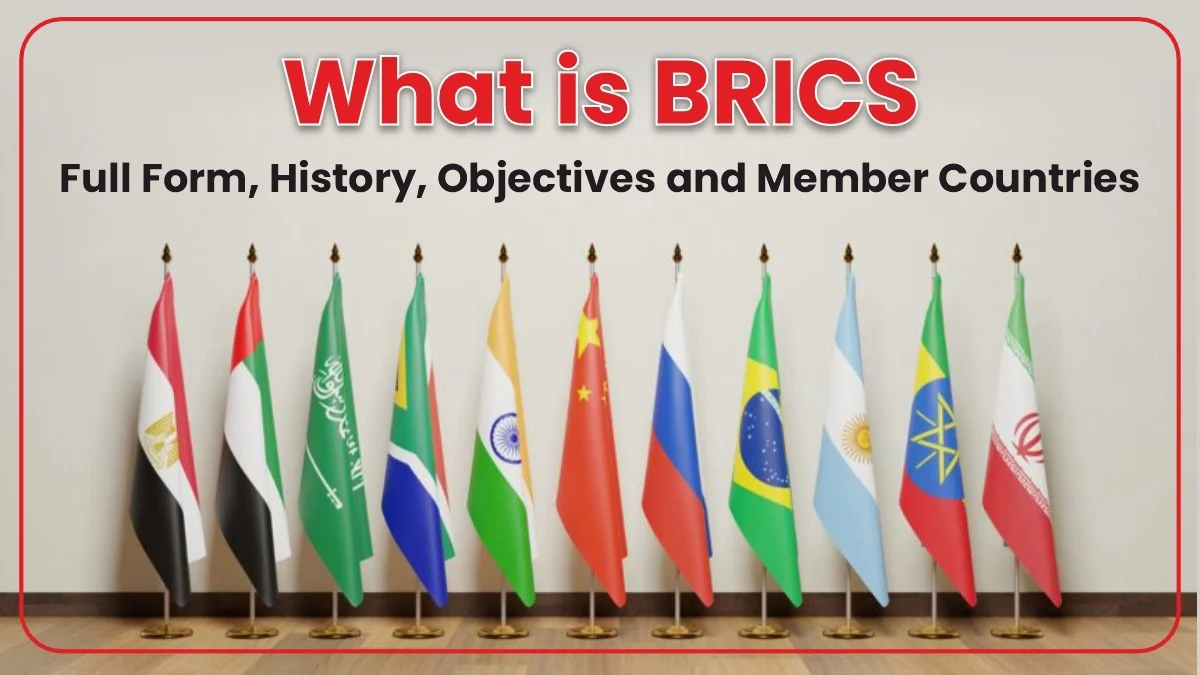
The expansion of BRICS at the Johannesburg Summit in August 2023 - admitting Saudi Arabia, the United Arab Emirates, Iran, Ethiopia, Egypt, and Argentina - was not a routine institutional enlargement. It was a geopolitical declaration. The decision to bring oil-producing monarchies, an adversarial Iranian theocracy, an African continental anchor state, and a South American debt-crisis economy into the same strategic tent signaled that BRICS had moved decisively beyond its original economic-growth framing into something far more consequential: a structured vehicle for great power and middle power competition with the liberal international order that has governed global affairs since 1945.
This report provides a doctrine-level assessment of BRICS - its origins, architecture, internal tensions, strategic logic, expansion dynamics, economic ambitions, and the profound implications it carries for global alliance systems, dollar dominance, multilateral institutions, and the trajectory of great power competition through the remainder of the twenty-first century. The central finding is this: BRICS is not a unified bloc with a coherent ideology, but it does not need to be. Its strategic utility lies precisely in its diversity - in its capacity to aggregate dissatisfaction with Western-led order without requiring agreement on an alternative. That capacity makes it a more durable and more dangerous challenge to existing structures than a rigidly ideological rival would be.
Strategic Background
To understand what BRICS has become, it is necessary to understand what it was designed to be and how that design has been progressively subverted - or, depending on one's perspective, elevated - by the strategic interests of its most powerful members.
The original BRIC framework - Brazil, Russia, India, China, without South Africa - was conceived in the context of the early 2000s global economy, in which the four nations collectively represented approximately twenty-three percent of global GDP and were growing at rates that appeared certain to reshape the global economic hierarchy within a generation. The grouping was analytical rather than political: O'Neill's thesis was about investment opportunity and economic trajectory, not about political solidarity or institutional challenge to Western dominance.
The translation of an analyst's category into a functioning multilateral forum began in 2006 with the first formal meeting of BRIC foreign ministers on the sidelines of the United Nations General Assembly. The first standalone BRIC Summit took place in Yekaterinburg, Russia, in June 2009 - notably in the immediate aftermath of the 2008 global financial crisis, which had severely damaged the credibility of Western financial institutions and regulatory frameworks. The timing was not coincidental. The crisis had exposed the fragility of the Washington Consensus model and created political space for the argument that the existing international financial architecture - the International Monetary Fund, the World Bank, the dollar-dominated trading system - served the interests of its architects more reliably than those of the emerging world.
South Africa joined in 2010, completing the BRICS acronym and giving the grouping its first African member, expanding the collective geographic and demographic footprint to include an anchor state for the continent that would become, by mid-century, home to the majority of global population growth. The addition was strategically calculated: it signaled that BRICS was not merely a club of the largest emerging economies but an aspiration to represent the broader Global South.
The 2014 Fortaleza Summit produced two institutional outcomes that marked BRICS's transition from diplomatic forum to proto-institutional challenger. The New Development Bank, established with fifty billion dollars in initial capital split equally among the five members, offered an alternative multilateral development finance institution to the World Bank - one in which no single Western power held veto authority or defined lending conditionality. The Contingent Reserve Arrangement, a one hundred billion dollar currency swap facility, provided a nascent alternative to IMF emergency lending - without the IMF's characteristic policy conditions that had generated deep political resentment across the developing world through decades of structural adjustment programs. These were not dramatic departures from the existing order, but they were consequential precedents: the first time BRICS members had collectively created institutional infrastructure rather than merely talking about the need for it.
Historical Context
The emergence of BRICS as a vehicle for challenging Western-led order draws on historical currents that long predate the acronym. The Non-Aligned Movement, established at the Bandung Conference of 1955 and formalized at Belgrade in 1961, represented the first systematic attempt by post-colonial states to carve out a position independent of both American and Soviet bloc alignment. The movement's founding figures - Jawaharlal Nehru of India, Gamal Abdel Nasser of Egypt, Josip Broz Tito of Yugoslavia, Kwame Nkrumah of Ghana, and Sukarno of Indonesia - articulated a vision of sovereign independence from great power diktat that resonates directly in contemporary BRICS discourse about multipolarity and non-interference.
The Group of 77, established in 1964 within the United Nations framework, pursued similar objectives through multilateral economic diplomacy - seeking to reform terms of trade, technology transfer, and development finance in ways that better served developing nation interests. The New International Economic Order proposed in 1974 was the most ambitious formulation of this agenda, calling for a restructuring of the global trading and financial system that would reduce developing nations' structural disadvantage. It failed comprehensively, not because its diagnosis of structural inequality was wrong but because the nations with the power to reform the system had no incentive to do so.
These historical antecedents matter for understanding BRICS because they illuminate a consistent pattern: the impulse to challenge Western-dominated international institutions is not new, has historically generated more rhetorical solidarity than institutional change, and has foundered on the internal diversity of interests among would-be reformers. What distinguishes the current BRICS moment from these earlier episodes is the presence, for the first time, of genuinely powerful states - particularly China and, to a lesser extent, Russia and India - capable of building and sustaining alternative institutions with real financial weight and political credibility. Previous challenges to Western-led order lacked this material foundation. The current one does not.
The 2008 global financial crisis, the 2003 Iraq War, the perceived Western hypocrisy during the Arab Spring, the conduct of NATO's Libya intervention in 2011, the expansion of Western sanctions as a diplomatic tool - all these episodes accumulated in the political consciousness of BRICS members and their sympathizers as evidence that the existing international order functioned primarily as a mechanism for projecting and protecting Western power rather than as a genuinely rules-based system of equal application. This accumulated grievance is BRICS's most durable source of political energy.
Current Situation Assessment
The 2023 Johannesburg expansion transformed BRICS from a five-member club into a ten-member bloc and, more significantly, from a predominantly Asian-Brazilian grouping into a genuinely intercontinental coalition that spans every major region of the Global South. The new BRICS-10 collectively represents approximately thirty-six percent of global GDP in purchasing power parity terms, forty-seven percent of global population, around forty-four percent of global crude oil production, and over forty percent of global agricultural output. These are not marginal figures. They represent a structural resource base that, if effectively coordinated, gives BRICS genuine systemic weight in global economic governance.
The expansion decisions were themselves revealing of BRICS's evolving strategic character. The inclusion of Saudi Arabia and the UAE brought the world's most significant hydrocarbon exporters into a framework that had previously been predominantly about manufacturing, services, and commodity consumption. The inclusion of Iran - despite Saudi Arabia's historic rivalry with Tehran - signaled that BRICS's common denominator is not shared values or strategic interests but shared dissatisfaction with Western-dominated international institutions and a shared interest in creating alternatives. That Saudi Arabia and Iran can coexist within the same institutional framework - even a loose one - reflects both the depth of that shared dissatisfaction and the diplomatic dexterity of Chinese mediation, which brokered the Saudi-Iran rapprochement of 2023 that made simultaneous BRICS membership politically feasible.
Argentina's inclusion, followed by its effective withdrawal after the election of Javier Milei and his government's decision to decline BRICS membership in December 2023, illustrated the bloc's internal tensions and the degree to which domestic political change can rapidly alter a nation's strategic orientation. The Argentina episode demonstrated that BRICS membership is not yet a self-reinforcing political commitment - it remains contingent on domestic political constellations that can shift with electoral cycles.
The BRICS-Plus dialogue format, which allows non-member states to participate in summits and working groups without full membership, has become a significant platform for signaling geopolitical alignment. Over forty nations have expressed varying degrees of interest in BRICS affiliation, including major economies such as Indonesia, Turkey, Nigeria, Kazakhstan, and Vietnam. The sheer scale of this interest reflects a broader global sentiment that the existing international institutional architecture is insufficiently representative of the developing world's interests and power, and that an alternative framework - even an imperfect one - is preferable to continued subordination within a Western-designed system.
Power Center Analysis
China: The Dominant Architect
China is unambiguously the most powerful actor within BRICS and the force most responsible for its institutional evolution. Xi Jinping's government has invested systematically in BRICS as a vehicle for three distinct strategic objectives. First, it provides a multilateral cover for Chinese geopolitical assertiveness - by framing Chinese positions within a collective BRICS narrative of multipolarity and Global South solidarity, Beijing gains a degree of legitimacy and coalition support that unilateral Chinese positions would not command. Second, BRICS provides an institutional platform for advancing de-dollarization - a goal that serves China's interest in reducing its vulnerability to US financial sanctions of the kind that have been applied to Russia since 2022 and that Beijing must anticipate could be applied to China in a Taiwan crisis scenario. Third, BRICS expansion allows China to deepen its relationships with energy-producing states across the Middle East and Africa while embedding those relationships within a multilateral framework that reduces the perception of Chinese bilateral dominance.
China's economic weight within BRICS is overwhelming. Chinese GDP in purchasing power parity terms accounts for the majority of the bloc's combined economic output. Chinese trade with other BRICS members dwarfs intra-BRICS trade excluding China. The New Development Bank, while designed with equal capital contributions, operates in an environment in which Chinese financial capacity and Chinese infrastructure expertise give Beijing disproportionate influence over lending priorities and project selection. This structural dominance creates a fundamental tension within BRICS that Beijing must manage carefully: other members, particularly India, are acutely conscious of the risk that BRICS becomes a platform for Chinese hegemony rather than genuine multipolarity.
Russia: The Sanctioned Revisionist
Russia's relationship with BRICS has been transformed by the Ukraine war. Prior to February 2022, Russia was a significant but not dominant BRICS member, contributing primarily through energy exports and its permanent UN Security Council seat. Since the imposition of comprehensive Western sanctions, BRICS has become an existential lifeline for Russian economic survival. The ability to continue trading in non-dollar currencies, to access BRICS markets for commodities that Western buyers have restricted, and to maintain diplomatic legitimacy through BRICS membership rather than international isolation has been essential to Russia's ability to sustain its war economy.
Vladimir Putin's government has consequently become the most ideologically committed advocate for BRICS institutional development - particularly for the creation of a BRICS currency or payment system that would provide an alternative to SWIFT and reduce exposure to dollar-based sanctions. Moscow's enthusiasm for radical BRICS institutional expansion reflects a calculation that any weakening of Western financial system dominance directly benefits Russia's ability to operate economically despite comprehensive sanctions. Russia's 2024 BRICS chairmanship, and its hosting of the Kazan Summit in October 2024, allowed it to shape the agenda during a critical period of institutional development and to demonstrate to the world that it remained a significant diplomatic actor despite Western isolation efforts.
India: The Strategic Balancer
India's position within BRICS is the most complex and the most strategically interesting of any member. Narendra Modi's government maintains BRICS membership as a component of India's broader strategic autonomy doctrine - a refusal to allow alignment with any single great power or bloc to constrain Indian foreign policy options. India participates in BRICS while simultaneously being a core member of the QUAD alongside the United States, Japan, and Australia - a grouping explicitly conceived as a counterweight to Chinese power in the Indo-Pacific. India has resisted Chinese-led BRICS initiatives on de-dollarization, has been cautious about New Development Bank governance reforms that would increase Chinese influence, and has consistently declined to endorse BRICS positions that could be read as implicitly supportive of Russian policy in Ukraine.
India's BRICS participation serves several distinct Indian interests simultaneously. It maintains New Delhi's credibility as a Global South voice and preserves relationships with nations - including Russia and several African states - that are important to Indian interests regardless of their relationship with the West. It provides a platform from which India can advocate for reform of international institutions - particularly the UN Security Council, where India has long sought a permanent seat - from within a coalition that gives those demands more weight than purely bilateral Indian advocacy. And it keeps India at the table in conversations about the future of international economic governance rather than ceding that space entirely to Chinese and Russian leadership.
The India-China dynamic within BRICS is the grouping's central structural tension. The two nations share a contested border that has seen active military standoffs in the Galwan Valley in 2020 and continues to generate periodic friction. India's economic trajectory makes it a direct competitor to Chinese manufacturing dominance in global supply chains. Modi's government is not going to allow BRICS to become a vehicle for Chinese hegemony, and Beijing is sophisticated enough to understand that retaining Indian participation requires accommodating Indian sensitivities about bloc governance. This mutual constraint is, paradoxically, one of BRICS's sources of institutional moderation - it prevents the bloc from moving too far too fast toward positions that would force India to exit.
Brazil: The Reluctant Anchor
Brazil's engagement with BRICS has oscillated with its domestic politics more than any other founding member. Under Luiz Inácio Lula da Silva, who returned to the presidency in January 2023, Brazil has re-engaged with BRICS as a platform for asserting Brazilian leadership in South America and the broader Global South, for advancing trade diversification away from US-dominated markets, and for advocating reformed international financial architecture. Lula's government has been particularly active on BRICS currency discussions, with the Brazilian president making high-profile public statements about reducing dollar dependence in international trade. However, Brazil's structural economic dependence on commodity exports to China and the US, its deep integration with the dollar-denominated global financial system, and the domestic political constraints on radical foreign policy departures all moderate the practical implications of Brazilian BRICS rhetoric.
South Africa: The African Gateway
South Africa's BRICS membership is valuable primarily for its symbolic and geographic significance rather than its economic weight. As the continent's most industrialized economy and the most institutionally developed democracy among African BRICS members, South Africa provides the grouping with African Union credibility and a platform for claiming continental representation. Its hosting of the 2023 Johannesburg Summit - at which the expansion decisions were made - gave Pretoria a moment of significant diplomatic relevance that its declining economic trajectory and internal governance challenges might not otherwise have generated. South Africa's interest in BRICS is primarily developmental: access to New Development Bank financing for infrastructure, energy transition, and industrial development programs that conventional Western-dominated development finance institutions have been slower to provide on competitive terms.
Military and Security Implications
BRICS is not a military alliance and has explicitly resisted becoming one. There is no BRICS collective defense commitment, no joint military command structure, no integrated intelligence sharing arrangement. The diversity of its membership - which includes India and China, two nuclear powers with an unresolved border dispute, and both Russia and several nations with significant security relationships with the United States - makes a coherent military dimension structurally impossible in the near term.
However, the military and security implications of BRICS expansion are real and consequential, operating through several distinct mechanisms. The most significant is the gradual normalization of defense technology and arms transfer relationships that operate outside Western export control frameworks. Russia remains a major arms supplier to India, despite Western pressure to diversify away from Russian equipment following the Ukraine invasion. China is expanding its defense industrial relationships with multiple BRICS members and partner states across Africa and the Middle East. The emergence of BRICS as a diplomatic framework provides political cover for these relationships - framing them not as destabilizing transfers but as legitimate components of South-South cooperation and strategic autonomy.
The inclusion of Iran in BRICS-10 carries particular military significance. Iran's ballistic missile capability, its drone technology - demonstrated to devastating effect through Houthi proxy operations in the Red Sea and in direct Israeli-Iranian exchanges - and its nuclear program all acquire new diplomatic context when Iran sits within a framework that includes China and Russia as permanent UN Security Council members. Western efforts to maintain international pressure on Iran's nuclear activities become structurally more complicated when Iran has institutional relationships with the two veto-wielding powers most capable of blocking Security Council action.
The BRICS framework has also become a platform for articulating alternative security narratives - particularly the concept of indivisible security, the Russian and Chinese argument that security arrangements in one region cannot be designed in ways that create insecurity for others. This concept, which Moscow has deployed to frame NATO expansion as a legitimate casus belli, has found more sympathetic audiences within BRICS than in Western-dominated multilateral forums, gradually shifting the normative landscape in which security debates occur.
Economic and Trade Impact
The economic dimensions of BRICS are where its most transformative potential - and its most significant internal contradictions - are most visible.
The de-dollarization agenda is BRICS's most discussed and most contested economic initiative. The practical case for reducing dollar dependence is strongest for nations that face or fear US financial sanctions - principally Russia and, with increasing urgency, China. For other BRICS members, the calculation is more nuanced. India conducts the majority of its international trade in dollars and has deep institutional integration with dollar-denominated financial systems. Brazil's commodity exports to China are priced in dollars. South Africa's financial sector is deeply connected to the international dollar-based banking system. The rhetorical commitment to de-dollarization that BRICS leaders have expressed at various summits runs well ahead of the practical institutional arrangements that would make meaningful de-dollarization operationally feasible.
The most credible near-term de-dollarization mechanism is the expansion of bilateral local currency trade agreements between BRICS members. India and Russia have significantly expanded rupee-ruble trade following Western sanctions on Russia, though the resulting accumulation of rupee balances in Russian accounts - which Russia has struggled to convert into usable purchasing power - illustrates the practical difficulties of moving away from dollar intermediation without a functional multilateral alternative. China has pursued renminbi internationalization aggressively through the digital yuan project, bilateral currency swap agreements with over forty central banks, and the gradual expansion of renminbi settlement in commodity markets. Progress is measurable but the renminbi's share of global foreign exchange reserves and trade settlement remains far below the dollar's despite years of Chinese promotion.
The New Development Bank represents BRICS's most concrete institutional alternative to Western-dominated development finance. With total approved financing exceeding thirty billion dollars across over one hundred projects, it is a functioning institution with real capital and a genuine project portfolio. However, its lending scale is modest relative to the World Bank's annual commitments, its credit ratings are affected by its Russian membership following Western sanctions, and it faces governance challenges in maintaining operational independence from its largest shareholders' political priorities. The NDB's potential is real but has not yet been matched by the institutional capacity or financial scale required to serve as a genuine alternative for the financing needs of developing nations.
The energy dimension of BRICS-10 is strategically significant in ways that extend beyond conventional energy market analysis. The inclusion of Saudi Arabia, the UAE, and Iran - collectively representing an extraordinary share of global proven oil and gas reserves - within a framework that also includes China, the world's largest energy importer, creates the structural basis for commodity pricing and settlement arrangements that could progressively reduce the dollar's dominance in oil markets. The petrodollar system - in which oil is priced and settled in dollars, compelling oil-importing nations to accumulate dollar reserves - has been a foundational pillar of American financial system dominance since the 1970s arrangements between Washington and Riyadh. Any movement by major Gulf producers toward accepting non-dollar settlement for significant volumes of oil exports would have systemic consequences for the dollar's global reserve currency status that go far beyond the immediate transaction value.
Diplomatic Positioning
BRICS has become one of the primary diplomatic platforms through which the concept of multipolarity is operationalized. The bloc's diplomatic positioning is characterized by several consistent themes that recur across summit declarations and member state foreign policy communications.
The insistence on the primacy of UN Charter principles - sovereignty, territorial integrity, non-interference in internal affairs - functions simultaneously as a universal normative claim and as a specific shield against Western criticism of member state conduct. When Russia invokes non-interference principles to deflect criticism of its Ukraine conduct, or China invokes sovereignty to resist international scrutiny of its Xinjiang policies or Taiwan posture, these invocations carry more weight when articulated within a multilateral framework that includes half the world's population.
The call for reformed international institutions is a consistent BRICS diplomatic theme that commands genuine Global South sympathy. The demand for greater developing nation representation in International Monetary Fund and World Bank governance, for reform of the UN Security Council to include permanent seats for Africa, Asia, and Latin America, and for more equitable international trade rules resonates deeply in regions that experience current institutional arrangements as systematically biased toward the interests of the wealthy nations that designed them. BRICS provides a platform for amplifying these demands with a coalition weight that individual developing nation voices cannot command.
The diplomatic agility of BRICS members - particularly India - in refusing to frame the grouping as an anti-Western alliance while simultaneously pursuing institutional objectives that challenge Western dominance is a sophisticated political achievement. By maintaining the language of reform rather than replacement, of multipolarity rather than bipolarity, BRICS leadership avoids forcing fence-sitting nations to make binary alignment choices and maximizes the coalition of nations willing to participate in or affiliate with BRICS processes.
Regional Fallout
Africa
Africa is the region in which BRICS's expansion most directly reshapes the geopolitical landscape. The inclusion of Ethiopia, Egypt, and South Africa as members, combined with intensive Russian and Chinese engagement across the continent, positions BRICS as a competitor to Western-led development and security frameworks in Africa's most consequential states. For African governments frustrated by Western conditionality on development finance, by Western criticism of governance practices, and by Western security partnerships that have failed to contain the Sahel's jihadist insurgencies, BRICS offers an alternative institutional framework that asks fewer political questions about domestic governance while offering access to Chinese infrastructure finance and Russian security partnerships.
The African Union's engagement with BRICS - culminating in the AU's admission as a G20 member in 2023 - reflects the continent's determination to be present in every major international forum rather than to make exclusive alignments. African states are not, in the aggregate, choosing between BRICS and the West - they are pragmatically extracting value from both while retaining strategic autonomy. This posture is sophisticated and sustainable for as long as both Western and BRICS partners compete for African engagement rather than demanding exclusive alignment.
Middle East
The Middle East's relationship with BRICS has been transformed by the inclusion of Saudi Arabia, the UAE, and Iran. Gulf states' BRICS engagement reflects a fundamental recalibration of their security assumptions following the perceived American strategic withdrawal signaled by the 2021 Afghanistan exit, the limitations of the American security umbrella exposed during the 2019 Abqaiq oil facility attack, and the broader reorientation of American strategic attention toward the Indo-Pacific and China competition. Saudi Arabia and the UAE are not abandoning their American security relationships - they cannot, given the depth of those defense partnerships and the absence of any alternative provider of comparable capability - but they are systematically diversifying their strategic relationships to reduce dependence on any single external patron.
Israel finds itself in an increasingly complex position as BRICS expands to include more states with hostile or ambivalent relationships with Tel Aviv. Iran's BRICS membership, in particular, complicates the normative framework within which Israeli-Iranian conflict occurs, giving Tehran a degree of multilateral institutional cover that constrains the diplomatic costs it faces for its support of armed proxies across the region.
Latin America
Latin America's relationship with BRICS is genuinely bifurcated. Brazil's active BRICS engagement contrasts with Argentina's rejection of membership under Milei and with the deep US security and economic relationships that most Latin American nations maintain. The region's left-leaning governments - Venezuela, Bolivia, Nicaragua, Cuba - are enthusiastic about BRICS as a vehicle for reducing US influence, but their economic fragility limits their practical contribution to the bloc's institutional weight. The more consequential Latin American BRICS story is Brazil - whether Lula's government can sustain the political commitment to BRICS engagement through domestic economic pressures and whether Brazil's institutional weight can be translated into genuine influence over bloc agenda-setting rather than merely rhetorical solidarity.
Global Strategic Consequences
The strategic consequences of BRICS's evolution from economic category to geopolitical challenger operate at every level of the international system.
At the institutional level, BRICS is accelerating the fragmentation of the post-1945 multilateral order into competing institutional ecosystems. The World Bank faces competition from the New Development Bank and the Asian Infrastructure Investment Bank. The IMF faces potential competition from the Contingent Reserve Arrangement and bilateral swap line networks. The dollar-based trading system faces gradual erosion through bilateral local currency arrangements. None of these alternatives is yet capable of displacing the incumbent institutions - but they create options, reduce dependency, and shift the normative landscape in which international economic governance occurs.
At the normative level, BRICS is contributing to the delegitimization of Western universalism - the project of promoting liberal democratic governance, human rights standards, and rule of law as universal values applicable to all states. The BRICS framework's consistent affirmation of sovereignty and non-interference as paramount principles provides normative shelter for authoritarian governance models and directly challenges the Western liberal project of embedding governance conditionality in international development and security relationships.
At the power-balancing level, BRICS does not yet represent a coherent counterweight to US-led alliance systems. The internal diversity - the India-China rivalry, the Russia-China asymmetry, the profound differences in political systems and strategic interests among members - prevents the kind of coordinated strategic action that would be necessary to directly challenge American military and economic primacy. What BRICS does instead is reduce the costs of non-alignment with the West, create alternative institutional pathways for nations that wish to avoid Western conditionality, and gradually erode the assumption that the Western-led international order is the only viable framework for international engagement.
For NATO and the European Union, BRICS's expansion poses a challenge that is more diffuse than a direct military threat but potentially more durable. The erosion of dollar system dominance, the fragmentation of multilateral institutions, the reduction of Western leverage over developing nation governance - these trends, if sustained, will progressively constrain Western powers' ability to project influence through the combination of economic dominance, institutional control, and normative leadership that has underpinned Western power since 1945.
Risk Matrix
- Critical Risk - India-China Rupture Within BRICS: A significant escalation of the India-China border dispute, or a broader deterioration of bilateral relations driven by economic competition or geopolitical rivalry, could force India toward a choice between BRICS membership and its QUAD alignment. An Indian exit from BRICS - or a significant downgrading of Indian engagement - would dramatically reduce the bloc's credibility as a genuine multiregional coalition and would hand Western governments a significant propaganda victory in the contest over Global South alignment.
- High Risk - De-dollarization Overreach: If BRICS leaders push de-dollarization initiatives faster than the technical, institutional, and political foundations can support, the resulting failures - currency volatility, trade settlement breakdowns, reserve currency inadequacy - could damage BRICS credibility and reinforce the incumbent dollar system's resilience. The gap between BRICS de-dollarization rhetoric and operational feasibility is currently large, and premature institutional commitments could turn political aspiration into institutional embarrassment.
- High Risk - New Development Bank Governance Crisis: Western credit rating agencies' treatment of the NDB following Russia's invasion of Ukraine - downgrading or withdrawing ratings due to Russian membership - created an institutional vulnerability that constrains the NDB's ability to borrow in international capital markets at competitive rates. If this constraint is not resolved, the NDB's operational capacity will be permanently limited relative to its ambitions.
- Moderate-High Risk - Internal Value Conflicts Paralyzing Consensus: The inclusion of democracies, autocracies, theocracies, and military governments within a single framework creates persistent tension over any normative agenda the bloc might pursue. Attempts to develop collective positions on governance, human rights, or political legitimacy will generate internal conflicts that expose the bloc's incoherence and limit its ability to project a credible alternative international vision.
- Moderate Risk - Great Power Divergence on Taiwan: A Chinese military operation against Taiwan would place every BRICS member in an extraordinarily difficult position. India, South Africa, and Brazil would face intense Western pressure to condemn Chinese action. Russia would presumably support Beijing. The resulting internal fracture could be more damaging to BRICS cohesion than any other conceivable single event.
Scenario Analysis
Scenario One - Institutional Consolidation
In this scenario, BRICS successfully manages its internal tensions through continued emphasis on lowest-common-denominator consensus, builds the NDB into a genuinely significant development finance institution, and makes incremental but measurable progress on bilateral local currency trade arrangements. BRICS does not develop a common currency or a SWIFT alternative, but it does create a resilient institutional ecosystem that gives member states genuine alternatives to Western-dominated institutions for specific functions. This scenario represents the most likely medium-term trajectory and is consistent with the pattern of incremental institutionalization observed since 2014.
Scenario Two - Accelerated Fragmentation of the International Order
In this scenario, a Taiwan crisis or a major escalation of Western sanctions against China accelerates the bifurcation of the international economic system along geopolitical lines. China's massive financial resources are deployed to rapidly scale BRICS institutional capacity - the NDB, a SWIFT alternative, commodity pricing in renminbi - in ways that create a genuinely parallel international financial architecture. BRICS expands further, incorporating Indonesia, Turkey, and additional African states, reaching a membership representing over sixty percent of global population. This scenario is plausible but requires a triggering event of sufficient severity to overcome the institutional inertia and internal resistance that have moderated BRICS's pace of development.
Scenario Three - BRICS Divergence and Partial Disintegration
In this scenario, the India-China rivalry intensifies to a point where Indian BRICS engagement becomes untenable, and India formally or effectively withdraws. Brazil's domestic politics shift back toward the center-right, producing another government skeptical of anti-Western positioning. The internal coherence of BRICS collapses into a China-Russia core surrounded by loosely affiliated states with limited institutional commitment. This scenario would represent a significant setback for the multipolar project but would not eliminate BRICS's institutional legacy - the NDB would continue to function, bilateral local currency arrangements would persist, and the normative challenge to Western institutional dominance would endure even without the full BRICS framework.
Intelligence Forecast: 6-24 Months
Over the six-to-twelve-month horizon, BRICS dynamics will be shaped primarily by the evolving trajectory of the Russia-Ukraine war, the pace of US-China strategic competition, and the domestic political environments of the major member states. Russia's 2024 BRICS chairmanship has already produced a series of working group outputs on payment system alternatives, local currency settlement mechanisms, and expanded economic cooperation frameworks that will be carried forward under Brazil's 2025 chairmanship. Brazil under Lula will continue to emphasize climate finance, Global South development, and reformed international institutional governance as BRICS agenda priorities - a framing that serves Brazilian interests while maintaining the coalition's internal coherence across its diverse membership.
The most consequential near-term question for BRICS institutional development is whether the New Development Bank can restore its international credit rating standing and operational capacity following the constraints imposed by Russian membership in the post-Ukraine sanctions environment. NDB leadership under former Brazilian president Dilma Rousseff has been actively working to demonstrate institutional independence from its Russian shareholder - including suspending new Russian lending following the invasion - but Western credit agencies have been slow to restore the bank's standing. Resolution of this institutional status question will determine whether the NDB can scale its financing ambitions meaningfully over the next two years.
Over the twelve-to-twenty-four-month horizon, the defining BRICS dynamic will be the management of the China-India relationship within the bloc. If the two nations make progress on their border dispute normalization - a process that saw some diplomatic movement in 2024 with agreements on military disengagement at key friction points - Indian BRICS engagement may deepen and the bloc's internal coherence may improve. If border tensions re-escalate, Indian participation will become more constrained and performative. The outcome of this bilateral dynamic will more significantly shape BRICS's strategic trajectory than any summit declaration or institutional design decision.
The de-dollarization agenda will make measurable but modest progress over this horizon. Bilateral local currency trade arrangements between BRICS members will expand. The renminbi's share of global trade settlement will continue to grow incrementally. The dollar's dominance in global reserve holdings will erode gradually - from approximately fifty-eight percent in 2024 to perhaps fifty-four or fifty-five percent by 2026. These are meaningful trends but they do not represent a near-term challenge to dollar system primacy. The more significant question is whether a geopolitical triggering event - a Taiwan crisis, a major expansion of anti-China sanctions - accelerates this gradual trend into a structural rupture.
The BRICS membership queue will remain substantial, with Indonesia, Turkey, Nigeria, and several additional African states likely to be discussed in the context of further expansion. The pace and criteria of expansion will be contested internally - China prefers rapid expansion that maximizes the coalition's scale, while India and Brazil prefer more selective expansion that preserves institutional coherence and manageability. The resolution of this internal debate will shape the BRICS of the late 2020s more than any single summit outcome.
Final Strategic Takeaway
BRICS matters not because it is a coherent power bloc capable of coordinated action against Western interests - it is not, and may never be. It matters because it is the most credible institutional expression of the multipolar aspiration that a significant majority of the world's nations and population now share. It provides a diplomatic framework within which dissatisfaction with Western-led order can be organized, amplified, and gradually institutionalized without requiring ideological uniformity or strategic alignment.
The Western strategic error would be to dismiss BRICS because of its internal contradictions or to benchmark it against the coherence of NATO and find it wanting. BRICS operates on a different logic and serves a different function. Its utility is not military coordination or political solidarity - it is the gradual construction of alternatives: alternative development finance, alternative trade settlement, alternative diplomatic platforms, alternative normative frameworks. These alternatives do not need to match the incumbent system's scale or efficiency to matter strategically. They need only to be viable enough to reduce the costs of non-Western alignment and to erode the assumption of Western institutional indispensability.
For India, the strategic calculus is to remain at the BRICS table precisely because the table is being set for a future in which India's interests will be better served by shaping multipolar institutions than by subordinating itself to any single great power's framework - whether American or Chinese. For China, BRICS is a long-term vehicle for constructing the institutional infrastructure of a Sino-centric world order under the cover of collective Global South advocacy. For Russia, BRICS is a survival mechanism and a validation of its continued great power status despite Western sanctions. These different purposes can coexist within a single institutional framework for as long as the shared interest in challenging Western dominance outweighs the competing interests among its most powerful members.
The world in which BRICS operates is not the world of 1945, when American economic and military dominance was so overwhelming that a US-designed international order was both inevitable and widely accepted. It is not even the world of 1991, when the end of the Cold War appeared to validate Western liberal universalism as the permanent template for international governance. It is a world in which multiple centers of power exist, in which the legitimacy of Western-led institutions is genuinely contested across the majority of the world's population, and in which the question is not whether the international order will be reformed but how, by whom, and on whose terms. BRICS has positioned itself as a primary vehicle for answering that question in ways that reduce Western control over the answer. That is why it matters - not as a threat to be deterred but as a structural reality to be engaged, understood, and where possible, shaped before the architecture it is building becomes irreversible.