
Kashmir Geopolitical Timeline: From Partition to the Post-Pahalgam Order
Executive Summary
No territorial dispute on earth has shaped the strategic destiny of two nuclear-armed nations, drawn in a third great power, and survived eight decades of war, diplomacy, insurgency, and constitutional upheaval quite like Kashmir. What began in 1947 as a hurried, contested accession decision by a princely state's Hindu ruler over a Muslim-majority population has metastasized into the organizing grievance of the India-Pakistan relationship, the unresolved trigger behind three formal wars, a proxy insurgency that has claimed tens of thousands of lives, and - as of 2025 - the first sustained military confrontation between two nuclear powers to feature large-scale drone warfare and beyond-visual-range aerial combat.
The timeline matters because Kashmir in 2026 cannot be understood through any single snapshot. It requires tracing a continuous arc: from the 1947-48 first war and UN-mandated ceasefire line, through the 1965 and 1971 wars and the 1972 Shimla Agreement's bilateral-resolution framework, into the 1989 outbreak of Pakistan-backed insurgency, the 1999 Kargil War, the 2019 abrogation of Article 370 that ended Jammu and Kashmir's seven-decade constitutional autonomy, and finally to the April 2025 Pahalgam massacre and the Operation Sindoor conflict it triggered - a sequence that has now produced, for the first time in the dispute's history, India's suspension of the Indus Waters Treaty and Pakistan's reciprocal suspension of the Shimla Agreement itself, the very framework that has governed bilateral Kashmir diplomacy since 1972.
What makes 2026 a genuinely distinctive moment in this long arc is the coexistence of two seemingly contradictory realities. Kashmir has never been more economically integrated into India - record tourism, a new rail link connecting the valley to the national network, billions in registered industrial investment, and the highest election turnout in 35 years. And Kashmir has never been more securitized, more politically alienated, or more clearly demonstrated, through Pahalgam, that the underlying militant and geopolitical threat the 2019 constitutional changes promised to resolve remains stubbornly, lethally unresolved.
Background: The Founding Dispute, 1947-1972
The Kashmir dispute's origins lie in the chaotic, violent partition of British India in August 1947, when more than 560 princely states faced a choice of acceding to either the newly independent India or Pakistan. Jammu and Kashmir presented a uniquely combustible case: a Muslim-majority population ruled by a Hindu monarch, Maharaja Hari Singh, who initially hoped to remain independent of both successor states. The Australian Institute of International Affairs' historical documentation confirms that Pakistan's impatience with this ambiguity led to its support for an invasion by Pashtun tribal militias in October 1947, prompting Hari Singh to sign the Instrument of Accession to India in exchange for military assistance - a legal accession India has consistently maintained as definitive, and Pakistan has consistently disputed as coerced and incomplete.
The resulting first India-Pakistan war ended with UN mediation establishing a ceasefire line in 1949, dividing the region into Indian-administered Jammu and Kashmir and Pakistan-administered Azad Kashmir and Gilgit-Baltistan - a division that, despite subsequent wars and renaming, has remained the territory's basic administrative geography for nearly eight decades. Pakistan's continued occupation of roughly one-third of the broader Kashmir region, combined with its consistent invocation of UN Security Council resolutions calling for a plebiscite that has never occurred, established the dispute's enduring diplomatic architecture: India's insistence on the legal finality of accession against Pakistan's insistence on unresolved self-determination, a deadlock that subsequent decades of war and diplomacy never genuinely broke.
The 1965 and 1971 wars, the latter resulting in Pakistan's dismemberment and Bangladesh's independence, set the stage for the 1972 Shimla Agreement - the foundational diplomatic framework that converted the original ceasefire line into the Line of Control and committed both nations to resolving "all outstanding issues," including Kashmir, through bilateral means without third-party mediation. This bilateral-resolution principle would become the central, recurring point of friction in virtually every subsequent India-Pakistan crisis, including the 2025 confrontation examined later in this timeline, as Pakistan has persistently sought to internationalize the dispute while India has consistently invoked Shimla to resist external involvement.
Current Situation: The Modern Timeline From Insurgency to Pahalgam
1989-2019: Three Decades of Proxy Conflict
The dispute's character shifted fundamentally in 1989, when an armed insurgency erupted in the Kashmir Valley, fueled by genuine local political grievances regarding electoral manipulation and democratic deficit, but rapidly co-opted and substantially sustained through Pakistani state support - what India has consistently characterized as cross-border terrorism and Pakistan has historically framed as legitimate support for Kashmiri self-determination. The Australian Institute of International Affairs' data illustrates the human cost with stark clarity: annual conflict-related fatalities peaked dramatically before beginning a long, uneven decline, falling from 4,011 deaths in 2001 to 127 by 2024 - a reduction reflecting both sustained Indian counterinsurgency operations and broader shifts in the conflict's tactical character.
This three-decade period featured its own significant punctuation marks: the failed 2001 Agra Summit between Prime Minister Atal Bihari Vajpayee and President Pervez Musharraf, which came close to a framework agreement before collapsing over final details; the 1999 Kargil War, in which Pakistani forces infiltrated across the Line of Control into Indian-administered territory before being repelled in a conflict that ended in status quo ante bellum; and the 2008 establishment of Cross-LOC barter trade, a modest but symbolically significant confidence-building measure that India would unilaterally suspend in 2019 alongside the broader constitutional changes that defined that pivotal year.
August 2019: The Abrogation of Article 370
The single most consequential constitutional and geopolitical event in Kashmir's modern history arrived on August 5, 2019, when the Indian government under Prime Minister Narendra Modi revoked Article 370 of the Indian Constitution - the provision that had granted Jammu and Kashmir special autonomous status since the document's original drafting, allowing the state its own constitution, flag, and authority over internal administration beyond defense, communications, and foreign policy. Wikipedia's detailed documentation confirms the abrogation was accompanied by an unprecedented communications blackout across the Kashmir Valley, lasting five months, alongside the deployment of thousands of additional security forces and the detention of senior Kashmiri politicians, including a former chief minister.
The accompanying Jammu and Kashmir Reorganisation Act divided the former state into two union territories - Jammu and Kashmir, and Ladakh - placing both under more direct central government control through a Lieutenant Governor rather than the elected state government structure that had previously governed, however imperfectly, the region's internal affairs. The Indian government's stated justification centered on enabling full constitutional integration, extending national programs including reservation policies, the right to education, and the right to information that Article 370's special provisions had previously limited. India's Supreme Court subsequently upheld the revocation's constitutional validity, though the academic and legal debate over whether the manner of abrogation - conducted under heavy militarization and without the Kashmiri Constituent Assembly recommendation that Article 370 itself required for repeal - violated both the article's own provisions and the broader Instrument of Accession framework remains genuinely unresolved among constitutional scholars.
Pakistan's response included the suspension of bilateral trade and downgrading of diplomatic relations, alongside renewed, ultimately unsuccessful efforts to internationalize the dispute through the UN Security Council and other multilateral forums. The Friday Times' February 2026 analysis confirms Pakistan's stated intention to pursue the matter before the International Court of Justice and International Criminal Court has produced no meaningful legal progress, constrained substantially by Pakistan's own non-membership in the ICC's Rome Statute framework - illustrating the persistent gap between Pakistan's diplomatic rhetoric on Kashmir and its practical capacity to alter the territorial status quo through international legal mechanisms.
2019-2024: Three Phases of Post-Abrogation Violence
The Combating Terrorism Center at West Point's detailed chronological analysis identifies three distinct phases characterizing militant violence in the post-abrogation period. The first phase, spanning 2019-2020, saw an initial sharp decline in attacks, driven substantially by the security lockdown and communications restrictions accompanying the constitutional changes themselves. The second phase, 2021-2023, featured what security analysts term "hybrid militancy" - a shift toward targeted killings of civilians, including migrant workers and religious minorities, alongside sustained intimidation campaigns designed to discourage the kind of demographic and economic integration the abrogation's supporters hoped to achieve.
The third phase, 2024-2025, marked what West Point's analysis characterizes as a "lethal escalation" featuring high-profile, increasingly audacious assaults alongside intensified counterterrorism operations and renewed cross-border tensions - a trajectory that culminated in the April 2025 Pahalgam massacre. Notably, this escalation occurred despite, and according to defence analyst Manoj Joshi's pointed assessment for The Federal, partly because of, the genuine democratic milestone the 2024 Jammu and Kashmir Assembly elections represented: a 58.46% turnout, the highest in 35 years, that the Australian Institute of International Affairs characterizes as a symbolic referendum on the region's new constitutional status, yet one that Joshi notes was followed by renewed attacks once the popular government took office - a troubling pattern suggesting militant groups specifically targeted the credibility of normalized democratic governance.
April 2025: The Pahalgam Massacre
The defining recent inflection point in Kashmir's geopolitical timeline occurred on April 22, 2025, when militants attacked tourists in the Baisaran Valley near Pahalgam, killing 26 people in what West Point's analysis identifies as a deliberately sectarian assault - victims were overwhelmingly Hindu, and survivor accounts alongside National Investigation Agency findings confirmed the attack's intended message was to terrorize religious minorities and deter non-local migration into the valley, representing what the analysis bluntly characterizes as a sectarian jihadi project rather than a conventional separatist insurgency operation.
India's investigation, presented to a parliamentary committee in May 2025, identified communication links between the attackers and Pakistan-based masterminds, specifically implicating Jaish-e-Mohammed's Bahawalpur stronghold and Lashkar-e-Taiba's Muridke base - long-recognized command hubs for cross-border militancy that would subsequently become primary targets of India's Operation Sindoor military response, documented extensively in parallel Global Chanakya analysis of India-Pakistan conflict risk. West Point's research additionally documents a chilling intelligence detail: Lashkar-e-Taiba deputy chief Saifullah Kasuri had posted a video in February 2025, months before the attack, warning that "Kashmir will become the land of the pure by February 2, 2026" - a statement Indian intelligence agencies subsequently connected to the broader operational planning behind the Pahalgam massacre.
The Treaty Suspension Cascade
The most structurally significant diplomatic consequence of the Pahalgam attack, beyond the military confrontation itself, involves the unprecedented suspension of two foundational bilateral agreements that had survived every previous India-Pakistan crisis since their respective signings. The Friday Times' February 2026 documentation confirms that India suspended the 1960 Indus Waters Treaty on April 23, 2025 - one day after the Pahalgam attack - explicitly citing Pakistan's alleged involvement, while Pakistan responded by suspending the 1972 Shimla Agreement on April 24, 2025.
This mutual suspension represents a genuinely unprecedented escalation in the dispute's institutional history. The Indus Waters Treaty had survived three previous India-Pakistan wars and numerous lesser crises specifically because both nations recognized its function as essential humanitarian infrastructure governing water access for hundreds of millions of people across the shared river basin - its suspension, even if not immediately translated into actual water flow restrictions, represents India's willingness to weaponize an agreement previously considered sacrosanct even amid active conflict. Pakistan's reciprocal Shimla suspension, meanwhile, strikes directly at the bilateral-resolution framework that has structured Kashmir diplomacy for over five decades, potentially opening space for the kind of international mediation both the 2025 conflict's aftermath and Pakistan's stated long-term preference have demonstrated genuine appetite for.
Kashmir in 2026: Controlled Calm Atop Unresolved Grievance
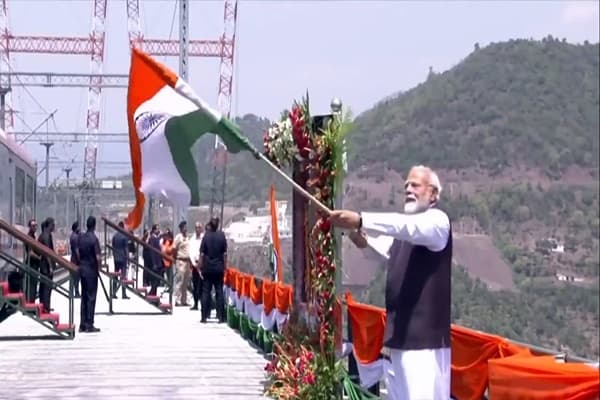
Greater Kashmir's January 2026 assessment captures the region's current paradoxical condition with genuine analytical precision: Jammu and Kashmir stands at a critical juncture between what the analysis terms "Economic Federalism" and "Political Limbo." The economic dimension shows genuine, measurable momentum - the Udhampur-Srinagar-Baramulla Rail Link, bringing Vande Bharat trains and weather-independent connectivity to the valley for the first time, anchors 2026's development agenda, supporting a tourism sector targeting more than 20 million visitors after reaching 15.8 million in 2025 despite security setbacks, alongside more than ₹1.63 lakh crore (approximately $19 billion) in registered industrial investment proposals that the region's startup policy hopes will translate into 2,000 recognized startups by year's end.
Yet this economic momentum coexists with genuine, deepening political alienation that the same analysis documents unflinchingly. The 2024 Assembly elections' record turnout has given way to what Greater Kashmir terms growing cynicism, with widespread local perception that the elected National Conference government, led by Chief Minister Omar Abdullah, functions as merely a "glorified municipality" - voters chose a chief minister, but genuine governing authority remains concentrated with the centrally-appointed Lieutenant Governor. Manoj Joshi's blunt assessment for The Federal reinforces this picture: Kashmiris remain unhappy with both Article 370's abrogation and the state's demotion to union territory status, and genuine political reconciliation - as distinct from reduced militant violence - has simply not occurred.
Security agencies estimate approximately 150 foreign militants continue operating in the high-altitude forests of Kupwara, Rajouri, and Poonch districts, according to Greater Kashmir's documentation, illustrating that despite Operation Sindoor's stated objective of dismantling cross-border terrorist infrastructure, the underlying threat persists in modified, geographically adapted form rather than genuine elimination.
Strategic Analysis: Why the Timeline Keeps Repeating
The Self-Determination Deadlock
The structural reality underlying Kashmir's recurring crisis pattern, evident across this entire seven-decade timeline, is the fundamental incompatibility between India's legal-finality framing and Pakistan's self-determination framing - a deadlock that successive wars, diplomatic frameworks, and constitutional changes have repeatedly failed to resolve because each side's core position remains, at the level of stated national policy, entirely unchanged from 1947. India's 2019 abrogation of Article 370 represented an attempt to resolve this deadlock through unilateral constitutional integration rather than negotiated settlement - converting Kashmir's special, contested status into ordinary Indian territorial administration, betting that genuine economic development and democratic participation would eventually neutralize the underlying political grievance regardless of its formal resolution.
The evidence assembled across this timeline's most recent chapter suggests this bet has achieved only partial success. Economic integration has genuinely advanced, and the 2024 election turnout demonstrated real democratic engagement. But the Pahalgam massacre's deliberate sectarian targeting, its demonstrated cross-border command linkages, and the persistent operational presence of foreign militants in remote border districts collectively indicate that constitutional and economic integration alone has not resolved the underlying security threat - a threat that, as West Point's phased analysis demonstrates, has consistently adapted its tactical methods rather than genuinely diminishing in strategic intent.
Pakistan's Diplomatic Leverage Despite Internal Weakness
Manoj Joshi's analysis for The Federal identifies a genuinely important strategic nuance often missed in simpler framings of Pakistan's Kashmir policy: Islamabad's diplomatic position has measurably strengthened even amid significant internal political instability, including former Prime Minister Imran Khan's continued imprisonment. Pakistan's improving relationships with the United States, documented extensively in parallel Global Chanakya analysis of India-Pakistan conflict risk, alongside its diplomatic engagement with Iran and China and its temporary UN Security Council presidency, collectively provide what Joshi terms diplomatic cover that helps Islamabad navigate international pressure regarding Kashmir-linked terrorism allegations more effectively than its genuine internal governance challenges might otherwise suggest possible.
The China Dimension
The Sage Publications academic analysis correctly characterizes Kashmir as a "triangularly contested region" involving China alongside India and Pakistan - a dimension that receives less consistent international attention than the India-Pakistan rivalry but that carries genuine, ongoing strategic significance. China's administration of the Aksai Chin region, seized during the 1962 Sino-Indian War and documented extensively in parallel Global Chanakya analysis of India-China border tensions, combined with the China-Pakistan Economic Corridor's routing through Gilgit-Baltistan - territory India formally claims as part of Jammu and Kashmir - creates a persistent three-way territorial complexity that the Friday Times' analysis notes India has consistently opposed, even as Pakistan has interpreted UN Security Council Resolution 2344 as providing implicit international backing for the corridor's continued development.
Global Impact: Why Kashmir's Timeline Matters Beyond South Asia
The Nuclear Risk Dimension
Kashmir's enduring significance as the primary trigger mechanism for India-Pakistan military confrontation carries inherent global stakes given both nations' nuclear weapons capability - a reality the 2025 Operation Sindoor conflict brought into unusually sharp focus through its unprecedented scale and the genuine international alarm it generated, documented extensively in parallel Global Chanakya analysis. Every escalation in Kashmir's recurring crisis pattern carries inherent risk of triggering exactly the kind of conventional-to-nuclear escalation pathway that global nuclear risk assessment communities have long identified as among the world's most dangerous unresolved flashpoints.
The Water Security Precedent
India's unprecedented suspension of the Indus Waters Treaty establishes a genuinely consequential global precedent regarding the weaponization of shared water resources during bilateral conflict - a development with implications extending well beyond South Asia to any region where transboundary water agreements have historically been treated as protected from broader political confrontation. Whether this precedent holds, with India eventually restoring full treaty implementation, or whether it represents a permanent shift toward treating water infrastructure as a legitimate instrument of coercive statecraft, will shape how other nations with contested transboundary water resources approach their own bilateral agreements going forward.
Risk Assessment
The Statehood Restoration Risk
Greater Kashmir's analysis identifies genuine, accumulating risk from the continued non-restoration of full statehood despite explicit 2024 election manifesto commitments - a delay generating what the analysis terms deep suspicion across the broader Pir-Panjal range regarding potential permanent union territory status or further regional bifurcation, risks that could meaningfully undermine the democratic legitimacy gains the 2024 elections achieved if the perceived gap between electoral participation and genuine governing authority continues widening.
The Treaty Suspension Permanence Risk
The continued suspension of both the Indus Waters Treaty and the Shimla Agreement, absent clear pathways toward restoration, creates genuine structural risk that the diplomatic and legal architecture governing India-Pakistan Kashmir relations could fragment further, removing institutional guardrails that, however imperfectly, have historically constrained the dispute's most dangerous escalation pathways.
Future Scenarios
Scenario Analysis: Kashmir's Trajectory Through 2028
Scenario One: Continued Controlled Stabilization (Probability: 40%)
Economic integration continues advancing through infrastructure projects and tourism growth, statehood restoration eventually proceeds in some modified form addressing the most acute political alienation, and security operations successfully constrain, without fully eliminating, residual militant presence, producing a sustained period of managed stability without genuine political reconciliation.
Scenario Two: Persistent Cyclical Crisis (Probability: 40%)
The most probable trajectory, consistent with this timeline's recurring pattern, involves continued periodic militant attacks triggering renewed India-Pakistan military confrontation at intervals comparable to or exceeding the historical pattern, with economic development and political alienation continuing to coexist without either fully resolving the underlying dispute.
Scenario Three: Renewed Major Crisis Escalation (Probability: 20%)
A significant new attack, potentially fulfilling the kind of operational planning West Point's research identified in pre-Pahalgam militant communications, triggers a renewed major India-Pakistan confrontation exceeding Operation Sindoor's scope, potentially testing the treaty suspension framework's practical implications in ways neither the Indus Waters Treaty suspension nor the Shimla Agreement suspension have yet fully revealed.
Intelligence Forecast
- Kashmir's economic integration trajectory will likely continue advancing through 2026, with the USBRL rail link and continued tourism growth providing genuine, measurable development momentum independent of the unresolved political dimension.
- Statehood restoration will likely remain unresolved through 2026, sustaining the political alienation Greater Kashmir's analysis documents, absent a significant central government policy shift.
- The Indus Waters Treaty suspension will likely persist without full restoration, establishing continued precedent for water resource weaponization absent broader India-Pakistan diplomatic breakthrough.
- Residual militant presence in border districts will likely continue, sustaining the security threat environment despite Operation Sindoor's stated counterterrorism objectives, consistent with the historical pattern of tactical adaptation rather than elimination.
- Pakistan will likely continue leveraging its improved international diplomatic standing, documented extensively in parallel Global Chanakya analysis, to sustain pressure for Kashmir's internationalization despite India's continued bilateral-resolution insistence.
Final Strategic Takeaway
The Kashmir geopolitical timeline, traced from 1947's contested accession through 2026's controlled calm, reveals a dispute whose fundamental character has proven remarkably resistant to resolution through any single instrument - not war, which produced only territorial stalemate across three formal conflicts; not bilateral diplomacy, which the Shimla framework's own recent suspension demonstrates has failed to achieve lasting settlement; and not unilateral constitutional integration, which Article 370's abrogation represented as perhaps the most decisive attempt in the dispute's history to resolve Kashmir's status through domestic legal transformation rather than negotiated international settlement.
What this seven-decade pattern suggests for understanding Kashmir's likely future trajectory is sobering but analytically necessary: the region's economic development, however genuine and measurable, has consistently proceeded in parallel with, rather than as a substitute for, the underlying political and security dispute's persistence. Record tourism numbers and record election turnout coexist with continued foreign militant presence and continued cross-border attack planning precisely because these are not, in fact, contradictory indicators of a single underlying trajectory - they represent the genuine duality of a region where infrastructure and commerce can advance substantially even as the fundamental question of political legitimacy and self-determination that has animated the dispute since 1947 remains as unresolved as ever.
The Pahalgam massacre and its Operation Sindoor aftermath represent, in this longer timeline's context, not an aberration but the latest iteration of a pattern this analysis has traced across eight decades: a major attack, attributed to Pakistan-based militant infrastructure, triggering Indian military response, international diplomatic pressure for de-escalation, and an eventual return to uneasy calm that resolves none of the underlying grievances driving the cycle's next iteration. Whether the unprecedented treaty suspensions accompanying the 2025 crisis represent a genuine structural break from this historical pattern, or simply its most recent and severe expression, will become clearer only as the next chapter of this timeline, inevitably, unfolds.
Global Chanakya Intelligence Assessment: Kashmir's history demonstrates that economic development and political resolution are not the same achievement, however much policy rhetoric on all sides conflates them. Until that distinction is genuinely addressed - through political reconciliation rather than infrastructure alone - the region's timeline will continue producing the same recurring crisis pattern that has defined it since 1947, regardless of how many rail lines reach Srinagar or how many tourists visit Gulmarg.