
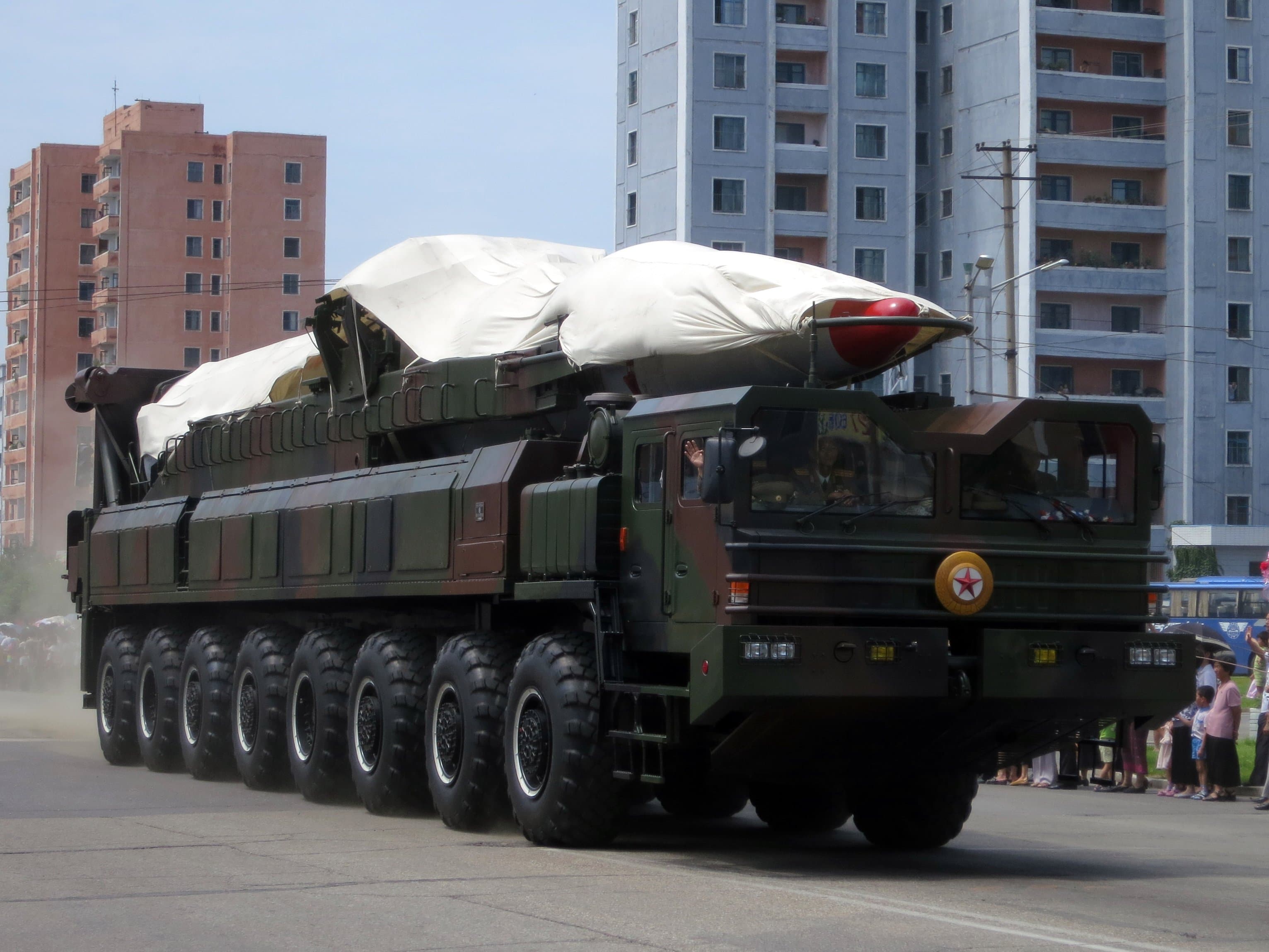
The Hermit Kingdom Goes Nuclear: Inside North Korea's Most Dangerous Strategic Gamble and What It Means for Global Security
Executive Summary
Kim Jong-un has achieved what his father and grandfather spent decades pursuing and never fully realized: a nuclear weapons arsenal with genuine strategic depth, diversified delivery systems spanning tactical battlefield weapons to intercontinental ballistic missiles capable of reaching the continental United States, and a geopolitical environment transformed by Russia's dependence on North Korean military supplies that has fundamentally altered the great power management framework that previously sustained meaningful international pressure on Pyongyang's programme. What was once managed as a proliferation problem to be contained through sanctions, diplomacy, and Chinese pressure has become a strategic reality to be deterred, a nuclear-armed state whose capabilities have matured beyond any near-term elimination prospect and whose leadership has demonstrated both the technical competence and the strategic determination to continue expansion regardless of economic cost or international censure.
North Korea's nuclear expansion strategy, accelerated dramatically under Kim Jong-un's leadership since 2011 and reaching a qualitative threshold in 2017 with the test of what Pyongyang claimed was a thermonuclear device alongside successful ICBM tests that demonstrated intercontinental range, represents the most consequential proliferation development of the post-Cold War era. It has shattered the denuclearization consensus that guided international policy toward Pyongyang for three decades, established a precedent that determined pursuit of nuclear weapons despite comprehensive sanctions can ultimately succeed, and created strategic facts that have fundamentally altered the security calculations of South Korea, Japan, and the United States in ways whose full implications continue unfolding. The subsequent deepening of the Russia-North Korea military relationship, including North Korean troop deployments alongside Russian forces in Ukraine and the provision of artillery ammunition and missiles that have been critical to sustaining Russian war-fighting capacity, has transformed Pyongyang from an isolated pariah state into an active participant in the most consequential military conflict in Europe since 1945, with strategic relationships and diplomatic cover that have comprehensively eliminated the isolation framework that denuclearization policy had historically depended upon.
This report provides a doctrine-level assessment of North Korea's nuclear expansion strategy: the specific programme elements and their technical characteristics, the strategic doctrine governing nuclear weapons employment that Kim Jong-un's government has articulated with increasing clarity, the military implications for Korean Peninsula security and broader Indo-Pacific deterrence architecture, the specific transformation that the Russia-North Korea relationship has imposed on the strategic management framework, and the profound implications for nuclear non-proliferation norms globally. The central finding is that North Korea's nuclear programme has crossed a threshold of maturity and strategic embeddedness that makes elimination through any currently available policy instrument implausible, transforming the policy question from how to denuclearize North Korea to how to deter and manage a nuclear-armed North Korea across a multi-decade strategic horizon while limiting the proliferation cascades that Pyongyang's success may inspire across multiple regions.
Strategic Background
North Korea's pursuit of nuclear weapons has been a defining objective of the Kim family regime since at least the 1970s, when the Democratic People's Republic of Korea began developing the nuclear infrastructure that would eventually support weapons development, but the programme's contemporary strategic character - its technical maturity, its doctrinal sophistication, its integration into North Korean security and political strategy, and its transformation of the regional security environment - is fundamentally the product of Kim Jong-un's decade and a half of leadership that has prioritized nuclear weapons development above all other national objectives, including economic development and population welfare.
The strategic logic driving North Korean nuclear weapons development rests on several interlocking assessments that have proven remarkably consistent across three generations of Kim family leadership despite the very different personalities and governing styles of Kim Il-sung, Kim Jong-il, and Kim Jong-un. The foundational assessment is that the United States represents an existential threat to the Kim regime's survival that no conventional military capability, however large, can adequately deter, because American conventional military superiority is sufficiently overwhelming that any major conventional conflict on the Korean Peninsula would inevitably result in the North Korean regime's destruction regardless of initial North Korean military performance. Nuclear weapons are therefore not merely a military capability enhancement but an existential survival guarantee, the single instrument that makes the Kim regime's destruction through American or allied military action intolerably costly because the consequence of miscalculation is not merely military defeat but nuclear retaliation against American cities, American allies' cities, and American forces that converts regime survival insurance into a deterrent whose credibility ultimately rests on the adversary's rational calculation that the cost of conflict initiation exceeds any conceivable benefit.
This strategic logic was powerfully reinforced by what North Korean leadership characterizes as the lessons of Libya and Iraq, where leaders who had abandoned or failed to develop nuclear weapons programmes subsequently suffered regime destruction at the hands of American military power or American-supported opposition forces. Muammar Gaddafi's 2003 decision to abandon Libya's nascent nuclear programme in exchange for international normalization, followed by his killing during the 2011 NATO-supported Libyan civil war, is cited explicitly in North Korean state communications as the definitive proof that abandoning nuclear weapons in exchange for diplomatic promises provides zero security guarantee and that only the possession of deployed nuclear weapons capable of inflicting unacceptable retaliatory damage provides genuine regime survival assurance that no American administration can override through conventional military action.
Historical Context
North Korea's nuclear weapons history traces through several distinct phases whose understanding provides essential context for assessing the programme's current character and the policy failures that have produced the strategic reality now confronting the international community.
The programme's origins in Soviet-assisted nuclear research beginning in the 1950s and the construction of the Yongbyon Nuclear Scientific Research Centre, which has served as the programme's primary technical hub for seven decades, established the foundational infrastructure that subsequent developments have built upon. North Korea's accession to the Nuclear Non-Proliferation Treaty in 1985, under Soviet pressure, briefly created the appearance of international non-proliferation commitment that the 1994 Agreed Framework framework between the Clinton administration and Pyongyang attempted to formalize into a genuine programme freeze in exchange for diplomatic normalization, energy assistance, and the construction of proliferation-resistant light-water reactors that were ultimately never completed.
The Agreed Framework's collapse in 2002, following American intelligence assessments that North Korea had been pursuing a covert uranium enrichment programme in violation of the agreement's terms, inaugurated the most consequential phase of North Korean nuclear escalation. The subsequent withdrawal from the NPT in January 2003, the restart of the Yongbyon plutonium production reactor, and the beginning of a diplomatic process, the Six-Party Talks involving the United States, China, Russia, Japan, South Korea, and North Korea, that produced multiple agreements subsequently violated by Pyongyang, collectively established the pattern of North Korean nuclear advancement interspersed with diplomatic engagement that has characterized the programme's trajectory through the present.
North Korea conducted its first nuclear test in October 2006 at Punggye-ri, a relatively low-yield explosion that nonetheless established the fundamental fact of North Korean nuclear weapons capability. Subsequent tests in 2009, 2013, two tests in 2016, and the September 2017 test that Pyongyang claimed was a thermonuclear device with a yield of potentially 250 kilotons reflected a systematic programme of yield improvement and warhead design advancement that tracked the trajectory from crude fission devices toward more sophisticated thermonuclear capability. The 2017 tests, conducted within months of the Hwasong-14 and Hwasong-15 ICBM tests that first demonstrated intercontinental range, represented the programme's most consequential year of advancement, establishing both the nuclear explosive yield and the delivery vehicle range that combined to create a credible nuclear deterrent against the continental United States for the first time.
The brief Trump-Kim diplomatic period of 2018 and 2019, encompassing the Singapore Summit of June 2018 and the Hanoi Summit of February 2019, represented the most direct American-North Korean leadership engagement in the programme's history but ultimately produced no verifiable programme limitations, as the Hanoi Summit's collapse over disagreements regarding the scope of sanctions relief that would accompany specific programme limitations demonstrated that the gap between American denuclearization requirements and North Korean sanctions relief demands was too large to bridge through summitry alone, regardless of the personal chemistry between the two leaders. Kim Jong-un subsequently declared that North Korea would no longer be bound by the testing moratorium it had voluntarily maintained since November 2017 and resumed missile testing on an accelerated schedule that has produced the most comprehensive series of missile system developments in the programme's history.
Current Situation Assessment
North Korea's nuclear programme in 2026 represents a strategic reality whose characteristics have moved substantially beyond the programme that denuclearization-focused policy frameworks were designed to address, having achieved technical maturity across multiple weapon categories and delivery system types that collectively provide the regime with nuclear capability along every relevant strategic axis.
The warhead programme, while subject to intelligence assessment uncertainty given the programme's extreme secrecy, is assessed by most Western intelligence agencies to encompass between forty and sixty nuclear devices, with some assessments ranging higher depending on assumptions regarding fissile material production rates at Yongbyon and the separately identified uranium enrichment facility at Kangson. The September 2017 test's apparent yield, consistent with a two-stage thermonuclear design if North Korean claims are accurate, suggests that the programme has advanced beyond simple fission devices toward more sophisticated warhead designs whose yield-to-weight ratios are compatible with warhead miniaturization for delivery on ballistic missiles. The specific parameters of North Korean warhead miniaturization remain subject to intelligence debate, but the consistent pattern of missile development that incorporates progressively more capable reentry vehicles suggests that miniaturization capability has been achieved to a degree sufficient for operational deployment on the programme's most capable delivery systems.
The ballistic missile programme has demonstrated the broadest and most consequential development of any component of the overall nuclear capability, spanning the complete range from short-range battlefield missiles through medium-range systems capable of targeting the entirety of Japan and South Korea to intercontinental ballistic missiles capable of reaching the continental United States. The Hwasong-17 ICBM, publicly displayed and tested on multiple occasions since 2022, represents the most capable delivery system in the publicly demonstrated North Korean arsenal, with a potential range sufficient to reach any target in the continental United States on a standard trajectory or to deliver a heavier payload on a reduced range trajectory. The development of the Hwasong-18 solid-fuelled ICBM, first tested in 2023, represents a particularly significant capability advancement, as solid-fuelled missiles can be launched more rapidly than liquid-fuelled systems requiring fuelling at the launch site, substantially reducing the warning time for American and allied missile defence systems and complicating the launch-on-warning detection and response cycle that missile defence planning depends upon.
The tactical nuclear weapons dimension of Kim Jong-un's programme, explicitly announced and partially demonstrated through the introduction of the KN-23 and KN-24 short-range ballistic missiles designed with characteristics suggesting nuclear delivery optimization, represents a qualitative expansion beyond strategic deterrence toward battlefield nuclear employment capability that creates profoundly destabilizing implications for Korean Peninsula contingency planning. The explicit articulation in North Korea's September 2022 nuclear doctrine law of conditions under which nuclear weapons employment is authorized, including in response to non-nuclear attacks on North Korean leadership or strategic infrastructure, represents the most consequential doctrinal statement in the programme's history, creating formal authorization conditions whose breadth and ambiguity significantly complicate allied conventional military planning for any Korean Peninsula contingency that could be interpreted as meeting these authorization thresholds.
The Russia-North Korea relationship's transformation since 2022 has fundamentally altered the strategic management context within which North Korean nuclear development occurs. North Korean artillery ammunition and missile provision to Russia, assessed by American and allied intelligence agencies to have included millions of artillery shells and significant ballistic missile quantities that have been directly employed in Russian strikes against Ukrainian targets, has created a bilateral relationship of mutual strategic dependence that provides Pyongyang with both economic compensation for military supply, including food, energy, and technology transfers that partially alleviate North Korean economic constraints, and the most significant diplomatic protection from international pressure that the regime has ever enjoyed, given Russia's Security Council veto authority and its demonstrated willingness to block any additional international sanctions measures targeting North Korean programme expansion.
Power Center Analysis
Kim Jong-un: The Nuclear Strategist
Kim Jong-un's approach to nuclear weapons development reflects a strategic sophistication that Western analysts underestimated in the early years of his leadership but that has become impossible to ignore given the consistent pattern of programme advancement, doctrinal articulation, and diplomatic management that has characterized his decade and a half in power. His approach is defined by several consistent strategic principles that illuminate both his specific programme decisions and the overall strategic architecture he is constructing.
Kim's fundamental commitment to nuclear weapons as an irreversible strategic choice, reflected in North Korea's 2012 constitutional amendment embedding nuclear weapons in the state's foundational law and in the multiple legislative and doctrinal steps that have progressively entrenched the programme against the possibility of a future leader deciding to trade it away for diplomatic benefits, reflects a strategic calculation that the Kim regime's nuclear weapons must be structurally insulated from any future diplomatic process that might offer incentives for abandonment. This irreversibility commitment is itself a strategic communication to both adversaries and potential successors: the nuclear programme is not a bargaining chip that any American administration can credibly expect to purchase through sanctions relief, and any North Korean leadership successor who might contemplate a different approach would face constitutional and institutional barriers designed to make abandonment structurally impossible.
Kim's deliberate development of tactical nuclear capability alongside strategic deterrence reflects a sophisticated understanding of escalation management that distinguishes his approach from his predecessors. By creating battlefield nuclear employment options, Kim is attempting to construct a nuclear posture that deters not merely American nuclear retaliation for North Korean nuclear first use but also American conventional military action that might otherwise be undertaken on the assumption that North Korea's nuclear weapons would only be employed in response to existential regime-threatening attack. If American military planners must account for the possibility of North Korean tactical nuclear weapons employment in response to conventional military action below the regime-threatening threshold, the entire scope of American military options on the Korean Peninsula is fundamentally constrained in ways that serve Kim's deterrence objectives.
China: The Reluctant Enabler
China's relationship with North Korea regarding the nuclear programme reflects one of the most consistent and consequential strategic paradoxes in contemporary international relations: Beijing is simultaneously the North Korean regime's most important economic lifeline, providing the majority of North Korean trade and energy supply that prevents economic collapse, and the power most frequently identified by Western policymakers as holding the key to meaningful pressure on Pyongyang's programme, while simultaneously being unwilling to apply the kind of economic coercion that would genuinely threaten the Kim regime's survival because China's most fundamental strategic interest regarding North Korea is preventing the regime's collapse and the resulting Korean reunification under American alliance auspices that Beijing regards as more threatening than a nuclear-armed North Korea that it can partially manage through economic leverage.
Xi Jinping's government has maintained this fundamental strategic calculation consistently despite periodic expressions of concern about North Korean nuclear development and intermittent participation in UN Security Council sanctions resolutions, particularly those following the 2017 nuclear and ICBM tests that represented a genuinely qualitative advancement in the threat environment. Chinese compliance with even the sanctions measures it has voted for has been inconsistent and selective, with Chinese trade with North Korea having recovered substantially from its post-2017 nadir as Chinese economic pressure calculations have shifted given the broader deterioration of US-China relations that has progressively reduced Beijing's strategic incentive to cooperate with Washington on North Korea policy at the price of any relationship cost.
Russia: The New Strategic Partner
Russia's transformation from a reluctant participant in multilateral pressure on North Korea, reflecting Moscow's own interest in preventing a nuclear weapons proliferation precedent that could inspire other states, into an active military cooperation partner that has provided Pyongyang with its most significant diplomatic protection and economic compensation since the Soviet Union's collapse, represents the most consequential external strategic relationship change affecting North Korean nuclear expansion in the programme's history. Vladimir Putin's government's decision to accept North Korean military supply, including the deployment of North Korean military personnel to Russian territory for combat operations alongside Russian forces, has created a bilateral relationship depth that provides North Korea with strategic benefits that no sanctions regime can easily offset.
The specific Russian benefits that North Korea has received in exchange for military supply, while not fully publicly confirmed, are assessed by Western intelligence agencies to include food and energy commodities that partially alleviate North Korean economic constraints, military technology transfers potentially including satellite technology, submarine development assistance, and various conventional weapons systems whose specific nature remains subject to intelligence debate, and the diplomatic protection of Russia's Security Council veto that has made any additional UN Security Council measures targeting North Korean programme advancement structurally impossible regardless of international consensus regarding the urgency of the proliferation challenge that North Korean nuclear expansion represents.
The United States: The Constrained Deterrer
American policy toward North Korea's nuclear programme has cycled through multiple frameworks, from the Agreed Framework's engagement approach through the Bush administration's Proliferation Security Initiative and Six-Party Talks to the Obama administration's strategic patience that critics characterized as strategic neglect to the Trump administration's maximum pressure followed by personal diplomacy that produced historic summitry without verifiable programme limitations. The Biden administration returned to calibrated engagement without significant diplomatic breakthrough, and the Trump administration's second term has brought renewed uncertainty regarding the specific approach to North Korea policy that will define American strategy through the remainder of the forecast period.
The fundamental American strategic challenge regarding North Korean nuclear expansion is the absence of any clearly effective policy instrument for compelling programme limitations against a regime that has demonstrated willingness to accept extraordinary economic costs rather than abandon its nuclear programme and that now enjoys the diplomatic protection of both Chinese and Russian Security Council veto authority alongside the direct economic and military benefits of its Russian military supply relationship. The policy options available, ranging from tightened sanctions whose effectiveness is severely limited by Chinese and Russian non-compliance, through diplomatic engagement that has repeatedly failed to produce verifiable programme limitations, to military action whose risks of North Korean nuclear retaliation make it an extremely constrained option regardless of the administration's rhetorical posture, collectively represent a policy toolkit whose adequacy for the strategic challenge North Korean nuclear maturity represents is genuinely questionable.
Military and Security Implications
The military and security implications of North Korean nuclear expansion operate through several distinct dimensions that collectively represent the most significant transformation of the Korean Peninsula and broader Northeast Asian security environment since the 1953 armistice.
The Korean Peninsula conventional military balance has been fundamentally transformed by North Korean nuclear capability in ways that extend far beyond the nuclear weapons themselves to reshape the entire spectrum of military contingency planning. American and South Korean military planning that previously assumed the ability to conduct decisive conventional military operations against North Korea in the event of conflict, including the operational objective of regime replacement and Korean unification that had historically underpinned Korean Peninsula contingency planning, must now incorporate the reality that North Korean nuclear weapons create credible retaliation options against South Korean cities, American military bases throughout the region, and potentially American territory itself, fundamentally constraining the scope and character of the conventional military options that American and South Korean commanders can responsibly plan to execute.
The specific doctrinal articulation in North Korea's 2022 nuclear law of conditions authorizing preemptive nuclear weapons employment, including in response to perceived imminent conventional military attacks that threaten the leadership, creates what American military planners describe as a nuclear use ladder whose lower rungs encompass scenarios that would previously have been managed through conventional military operations. This preemptive employment doctrine creates acute crisis management challenges in any Korean Peninsula contingency, as military actions designed to degrade North Korean nuclear command and control infrastructure, or even large-scale conventional military operations that North Korean leadership might interpret as regime-threatening, could trigger the very nuclear weapons employment they are intended to prevent.
The tactical nuclear capability dimension introduces a further layer of military planning complexity. American and South Korean planning for conventional military operations on the Korean Peninsula, including the various crisis response options that both governments maintain operational plans for, must now account for North Korean tactical nuclear weapons employment scenarios whose specific thresholds for use are defined ambiguously enough that any significant conventional military operation creates uncertainty regarding whether the employment authorization conditions articulated in North Korean doctrine might be met. This uncertainty imposes a profound planning constraint on American and allied conventional military options whose political and strategic consequences extend far beyond the specific Korean Peninsula context to the broader credibility of extended deterrence commitments throughout the Indo-Pacific.
Japan's security situation has been fundamentally altered by North Korean ICBM development in ways that extend the programme's strategic implications well beyond the Korean Peninsula's immediate security dynamics. Japanese territory, including the American military facilities concentrated in Okinawa and throughout the Japanese archipelago that are central to American Indo-Pacific military operations, falls well within the range of North Korean medium-range and intermediate-range ballistic missiles that have been tested on trajectories overflying Japanese territory on multiple occasions. Japan's development of counterstrike capability, extensively analyzed in prior intelligence reporting regarding NATO's future and Indo-Pacific strategy, has been substantially driven by the recognition that passive ballistic missile defence alone may be insufficient to protect Japanese territory and American forces in Japan against the volume and diversity of North Korean missile threats that a full-scale North Korean missile barrage could generate.
Economic and Trade Impact
The economic dimensions of North Korean nuclear expansion operate through several distinct channels whose combined effect represents a significant and underappreciated economic security dimension of the proliferation challenge.
The most immediate economic dimension is the North Korean domestic economy's relationship to the nuclear programme's resource demands. North Korea's GDP remains among the world's smallest, making the investment in nuclear weapons, ballistic missiles, and the associated scientific and industrial infrastructure that the programme requires a genuinely extraordinary proportion of national economic output, comparable to no other nuclear weapons state's programme-to-GDP ratio. The economic cost of this investment, combined with the comprehensive sanctions regime and the chronic agricultural and industrial mismanagement that have produced periodic famine conditions and persistent food insecurity for the North Korean population, represents a sustained domestic economic emergency that the Kim regime has demonstrated willingness to impose on its population indefinitely rather than compromise nuclear programme development.
The Russia-North Korea economic relationship, discussed above in the context of military supply compensation, provides Pyongyang with partially offsetting economic benefits that reduce the sanctions regime's impact without eliminating it. The specific compensation that North Korea receives for military supply, assessed to include significant food and energy commodity transfers alongside various technology and economic cooperation benefits, provides meaningful relief from the most acute economic constraints while maintaining the fundamental structural dependency on China and Russia that makes North Korean economic sovereignty illusory regardless of the nuclear programme's strategic achievements.
The broader economic security implications of North Korean nuclear maturity extend to the South Korean and Japanese economies, where the strategic uncertainty and periodic crisis episodes generated by North Korean missile tests, nuclear signaling, and military provocations impose economic costs through business investment uncertainty, insurance risk premiums, and the defence spending commitments that credible deterrence of North Korean military action requires. South Korean and Japanese defence spending increases, while driven by multiple factors including Chinese military expansion, have been significantly influenced by North Korean capability development and represent sustained economic resource commitments whose opportunity cost in terms of alternative investment priorities represents a genuine and ongoing economic burden attributable to North Korean nuclear expansion.
Diplomatic Positioning
The diplomatic architecture surrounding North Korean nuclear expansion has been fundamentally transformed by the Russia-North Korea military relationship's development in ways that have eliminated the multilateral pressure framework that previously provided the structural foundation for every diplomatic approach to the nuclear problem.
The UN Security Council sanctions regime against North Korea, built through a series of resolutions adopted following each major nuclear and ballistic missile test between 2006 and 2017 that progressively tightened restrictions on North Korean trade, financial transactions, and weapons development-related imports, has been rendered substantially ineffective by the combination of Chinese selective compliance and Russian active obstruction following Moscow's strategic pivot toward Pyongyang. The 2022 Russian veto of a proposed additional UN sanctions resolution following North Korean ICBM tests represented the first Russian veto of a North Korea-related Security Council measure in the programme's history and signaled that the multilateral sanctions framework that had at least nominally isolated Pyongyang could no longer be sustained through Security Council mechanisms given Russian strategic interests in maintaining the North Korean military supply relationship.
Diplomatic engagement prospects with North Korea have been severely constrained by the combination of Kim Jong-un's explicit irreversibility commitment regarding nuclear weapons and the improved strategic position that the Russia relationship and Chinese diplomatic protection provide. North Korean willingness to engage diplomatically with either the United States or South Korea has been minimal since the 2019 Hanoi Summit's collapse, with Pyongyang setting maximalist preconditions for engagement that include sanctions removal without reciprocal programme limitations and formal American recognition of North Korean nuclear status as a starting point for any negotiations rather than as a potential outcome of a successful diplomatic process.
South Korea's diplomatic approach under President Yoon Suk-yeol, who adopted a notably more hawkish posture toward North Korea than his predecessor Moon Jae-in's engagement-oriented Sunshine Policy descendant, moved toward closer trilateral coordination with the United States and Japan, including the Camp David Trilateral Summit of August 2023 that produced the most comprehensive framework for US-Japan-South Korea security cooperation in the alliance's history, alongside explicit discussion of enhanced nuclear deterrence arrangements including the Washington Declaration's provisions for greater South Korean visibility into American nuclear planning. Domestic political change following Yoon's December 2024 martial law declaration and subsequent removal from office has created uncertainty regarding South Korean North Korea policy continuity that represents a significant variable in the diplomatic management framework going forward.
Regional Fallout
South Korea: Nuclear Option Calculations
South Korea's strategic response to North Korean nuclear maturity has become one of the most consequential and most carefully watched policy developments in Northeast Asian security, given the growing body of South Korean public opinion polling and elite strategic discussion that explicitly favours South Korean independent nuclear weapons development as the only credible response to a permanently nuclear-armed North Korea that the United States extended deterrence commitment cannot fully substitute for. Polling conducted across multiple years has shown majority or near-majority South Korean public support for indigenous nuclear weapons development, reflecting a genuine popular assessment that American extended deterrence commitments, while officially maintained, cannot be assumed to override American risk aversion in scenarios where American cities face North Korean nuclear retaliation in exchange for honouring South Korean defence commitments.
South Korean nuclear weapons development, while currently prohibited by the Nuclear Non-Proliferation Treaty to which Seoul is a signatory and by the 1992 Joint Declaration on the Denuclearization of the Korean Peninsula, would represent the most consequential proliferation development since North Korea itself, potentially triggering a regional proliferation cascade in which Japan also reconsiders its nuclear weapons status and creating a Northeast Asian nuclear landscape of extraordinary complexity and instability. The diplomatic, alliance management, and non-proliferation governance implications of South Korean nuclear weapons development would extend globally, potentially undermining the NPT framework's credibility in ways that would encourage additional threshold states to reconsider their own non-nuclear commitments.
Japan: The Security Transformation
Japan's strategic transformation, extensively analyzed in prior intelligence reporting regarding NATO's future and Indo-Pacific strategy, has been substantially driven by North Korean nuclear and ballistic missile development alongside Chinese military expansion, with the December 2022 National Security Strategy revision, the commitment to doubled defence spending, and the acquisition of counterstrike capability all reflecting Japanese recognition that passive defence alone is insufficient deterrence against the combination of North Korean missile threats and potential Chinese coercive military action that Japan's security environment now encompasses. Japan's acquisition of Tomahawk cruise missiles capable of striking North Korean missile launch sites represents the most direct expression of the shift toward active deterrence that North Korean nuclear capability has driven in Japanese strategic thinking.
The Broader Proliferation Cascade Risk
North Korea's demonstrated success in pursuing nuclear weapons despite comprehensive international sanctions and sustained great power pressure creates a proliferation precedent whose implications extend well beyond the immediate Northeast Asian security context. States across multiple regions that face security environments they assess as requiring nuclear weapons for genuine regime survival assurance can point to North Korea's success as evidence that determined pursuit, even at extraordinary economic cost and under maximum international pressure, can ultimately achieve nuclear capability that the international community then must manage rather than reverse. Iran's continued nuclear programme development, discussed extensively in prior intelligence reporting regarding the Russia-China-Iran axis, is the most immediate proliferation context where North Korean precedent provides encouragement, but the broader demonstration effect regarding the ultimate ineffectiveness of international pressure in preventing determined nuclear weapons development applies across multiple potential proliferation contexts globally.
Global Strategic Consequences
North Korean nuclear maturity carries global strategic consequences that extend across every dimension of international order analyzed throughout this intelligence series and that collectively represent a genuine civilizational challenge to the non-proliferation architecture that has prevented nuclear weapons spread since the NPT's entry into force in 1970.
The most fundamental global consequence is the demonstrated failure of the comprehensive non-proliferation management approach that the international community applied to North Korea for three decades, combining economic sanctions, diplomatic isolation, and great power pressure through the Six-Party Talks framework, to prevent nuclear weapons maturity in a state that possessed sufficient strategic determination and sufficient external support, primarily from China and more recently from Russia, to sustain programme development despite its costs. This demonstrated failure provides sobering evidence for every subsequent proliferation management challenge regarding the limits of the policy instruments available when the target state's leadership regards nuclear weapons acquisition as an existential survival priority that no economic cost or diplomatic pressure can override.
The specific transformation of the Russia-North Korea relationship into active military partnership represents a global consequence that extends beyond North Korean nuclear development to the broader architecture of international security management, as the demonstration that military supply to a belligerent in an active European conflict can transform a previously isolated pariah state into a diplomatically protected partner with enhanced strategic capabilities creates incentives for other states to consider similar transactional relationships that trade military supply for diplomatic protection and economic benefits that no sanctions regime can easily offset.
Risk Matrix
- Critical Risk - North Korean Nuclear Employment in Escalating Crisis: The most catastrophic near-term risk is the actual employment of North Korean nuclear weapons in a Korean Peninsula crisis that escalates beyond the threshold that Kim Jong-un's nuclear doctrine identifies as authorizing preemptive or retaliatory nuclear use, whether through deliberate first use, miscalculated preemption, or the specific crisis dynamics where conventional military operations trigger nuclear employment authorization conditions that Kim's regime has explicitly articulated. Any North Korean nuclear weapons employment would represent the first nuclear weapons use in combat since 1945 with consequences for nuclear deterrence theory, international security architecture, and immediate regional stability that cannot be fully anticipated.
- Critical Risk - South Korean Nuclear Weapons Decision: South Korean domestic political consensus for independent nuclear weapons development, if it reaches the point of governmental policy adoption, would represent the most consequential proliferation development since North Korea itself, triggering a regional proliferation cascade, fundamentally transforming the US alliance relationship, and creating Northeast Asian nuclear dynamics of unprecedented complexity that would challenge every assumption underlying the existing deterrence architecture.
- High Risk - Technology Transfer to Additional Proliferators: North Korea's established history of ballistic missile technology export to multiple states, including Iran, Syria, and various non-state actors, alongside the programme's demonstrated technical achievements and the regime's acute need for foreign currency revenue, creates persistent and growing risk of nuclear weapons relevant technology transfer to additional states or potentially non-state actors, representing a proliferation pathway that is significantly more concerning than North Korea's own direct nuclear employment threat in terms of potential for uncontrolled escalation.
- High Risk - Miscalculation During Korean Peninsula Conventional Military Crisis: The interaction between North Korean tactical nuclear doctrine and the conventional military crisis management challenges of the Korean Peninsula creates persistent risk of nuclear weapons employment through miscalculation, in which conventional military operations conducted by American and South Korean forces in a crisis or conflict scenario are interpreted by North Korean leadership as meeting the employment authorization thresholds that its nuclear doctrine defines, triggering nuclear weapons use against targets that the conventional operation was not designed to create nuclear employment conditions against.
- Moderate-High Risk - ICBM Technical Maturation Completing Credible Threat: While North Korean ICBM capability is established in terms of demonstrated range, the specific technical elements of credible intercontinental nuclear threat, including sufficiently robust reentry vehicles, reliable guidance systems, and demonstrated survivable launch platforms including road-mobile and submarine-launched systems, continue maturing in ways that will progressively reduce the window during which American missile defence systems could provide meaningful protection against North Korean ICBM attacks on the continental United States.
Scenario Analysis
Scenario One - Managed Nuclear Deterrence and Programme Continuation
In this scenario, North Korea continues expanding its nuclear arsenal and delivery system capabilities without triggering direct military conflict, while the United States, South Korea, and Japan develop and implement enhanced deterrence architectures, including the provisions established through the Washington Declaration, the Camp David Trilateral Framework, and expanded intelligence sharing and extended deterrence consultation mechanisms, that provide sufficient reassurance to South Korean and Japanese allies to forestall independent nuclear weapons development decisions. North Korea periodically conducts nuclear and missile tests that generate international condemnation without triggering the military response that would create crisis escalation, maintains its Russia military supply relationship, and gradually improves its arsenal quality and quantity toward a mature nuclear force of sixty to one hundred or more weapons with diversified and increasingly survivable delivery systems. This scenario of managed deterrence represents the most probable near-term trajectory but involves accepting a permanent nuclear-armed North Korea and the sustained proliferation precedent that acceptance implies.
Scenario Two - South Korean Nuclear Decision and Alliance Transformation
In this scenario, sustained North Korean nuclear expansion, potentially combined with a specific crisis episode that damages confidence in American extended deterrence credibility or a domestic South Korean political shift that brings to power leadership explicitly committed to indigenous nuclear development, produces a South Korean decision to pursue nuclear weapons. The consequences of this decision would cascade through the American alliance relationship, NPT architecture, Japanese strategic calculations, Chinese regional security assessments, and North Korean deterrence calculations in ways that would fundamentally transform the Northeast Asian security environment. American responses might range from tolerating a South Korean nuclear capability under conditions analogous to the Israeli nuclear ambiguity model, to actively constraining South Korean programme development through combination of alliance commitments and pressure, to the disruptive scenario in which South Korean nuclear development fractures the US-South Korea alliance in ways that Chinese and North Korean strategic planners would seek to exploit.
Scenario Three - Crisis Escalation and Nuclear Employment
In this scenario, a Korean Peninsula crisis, triggered by a North Korean military provocation, an American or South Korean military accident, a North Korean leadership succession crisis, or the specific dynamics of a conflict whose proximate cause may be entirely unrelated to Korean Peninsula tensions but whose escalation dynamics draw in North Korean nuclear posturing, produces conditions in which North Korean nuclear weapons employment becomes a real possibility. Crisis management mechanisms between Washington and Pyongyang, whose fragility reflects the near-complete absence of established communication channels and mutual trust between the two governments, fail to contain the escalation before nuclear weapons employment authorization thresholds are crossed. The consequences of actual North Korean nuclear weapons employment, whatever the specific target and yield, would represent a global security rupture of civilizational scale, ending the post-Hiroshima nuclear weapons non-use tradition and potentially triggering the kind of escalatory response dynamics that nuclear deterrence theory holds should prevent this scenario from ever materializing but that cannot be guaranteed under all possible crisis conditions.
Intelligence Forecast: 6-24 Months
Over the six-to-twelve-month horizon, North Korean programme developments will be shaped by the continuation of Kim Jong-un's systematic arsenal expansion programme, including further ballistic missile tests across multiple range categories that advance specific technical capabilities, the potential resumption of nuclear testing at Punggye-ri where satellite imagery has indicated continued tunnel construction suggesting test site readiness that has been maintained since the September 2017 test, and the ongoing development of tactical nuclear delivery systems whose field deployment and military integration will progressively transform the operational reality for Korean Peninsula contingency planning.
The Russia-North Korea relationship will continue deepening, with North Korean military supply to Russia likely continuing or expanding given both sides' demonstrated mutual interest in the relationship's continuation. The specific technology transfers that Russia provides in return, while not fully assessable from open sources, will contribute to North Korean programme advancement across multiple potentially sensitive areas including rocket motor technology, satellite capability, and possibly submarine development, each of which would enhance North Korean nuclear delivery capability in different dimensions.
South Korean domestic politics, following the turbulence of the December 2024 martial law crisis and subsequent political reorganization, will require careful monitoring for indications of shifting elite and public opinion regarding nuclear weapons policy, as any movement toward formal governmental consideration of independent nuclear development would represent a policy shift requiring the most urgent allied diplomatic attention given the cascading consequences that South Korean nuclear development would trigger across the regional security architecture.
Over the twelve-to-twenty-four-month horizon, the most consequential potential development concerns whether North Korea conducts a nuclear test, the first since September 2017, which would provide technical validation of warhead design improvements including potential thermonuclear capability confirmation and miniaturization advancement that has been a persistent intelligence assessment uncertainty. A resumed North Korean nuclear test, while not unexpected given the eight-year gap since the last test and the continued programme advancement that typically accompanies testing cycles, would generate the most significant international crisis related to North Korean nuclear development since the 2017 test series and would place immediate pressure on American, South Korean, and Japanese governments to demonstrate deterrence credibility responses that the specific domestic political circumstances of each government in this period would significantly shape.
Final Strategic Takeaway
North Korea's nuclear expansion strategy has succeeded in transforming an aspiration that three generations of Kim family leadership pursued over seven decades into a strategic reality that the international community must now manage rather than prevent. The denuclearization goal that has been the stated objective of American policy since the programme's early detection, and the diplomatic and economic pressure that multiple administrations have applied toward that objective, has not merely failed to achieve its objective but has been comprehensively overtaken by a nuclear programme that has achieved the technical maturity, doctrinal articulation, and strategic embeddedness that makes its elimination through any currently available policy instrument implausible across any near-term planning horizon.
This strategic reality demands a fundamental recalibration of the analytical and policy frameworks through which the North Korean nuclear challenge is understood and managed. Policies premised on the achievability of North Korean denuclearization, whether through sufficiently stringent sanctions, sufficiently attractive diplomatic inducements, or sufficiently credible military threat, no longer reflect the strategic reality that Kim Jong-un's programme has created. The policy question is no longer how to denuclearize North Korea but how to deter a nuclear-armed North Korea reliably enough to prevent nuclear weapons employment across a multi-decade horizon while managing the proliferation precedent that North Korean success creates and preventing the South Korean and Japanese proliferation cascades that unaddressed North Korean nuclear maturity risks triggering.
Answering this question requires accepting several uncomfortable strategic realities simultaneously: that North Korean nuclear weapons are a permanent feature of the Northeast Asian security environment that must be deterred rather than eliminated, that credible deterrence requires extended deterrence architecture of sufficient robustness and specificity to reassure South Korean and Japanese allies against the temptation of independent nuclear development, that Chinese and Russian management of the North Korean relationship provides Pyongyang with diplomatic protection and economic sustainability that limits the effectiveness of any external pressure strategy, and that the precedent that North Korean nuclear success creates for the broader non-proliferation architecture requires strengthened commitments to extended deterrence and non-nuclear security assurances in multiple regions simultaneously to prevent the proliferation cascade that North Korea's success might otherwise inspire.
The strategic stakes of getting this management challenge wrong are genuinely catastrophic, extending from the immediate risks of Korean Peninsula nuclear employment through the broader proliferation cascade consequences to the fundamental question of whether the post-1945 nuclear weapons non-use tradition that has been one of human civilization's most consequential achievements can be preserved through the next decades of intensifying strategic competition. The answer to that question will be determined, in no small part, by how effectively the United States, South Korea, Japan, and the broader international community develop the deterrence architecture, the allied consensus, and the crisis management mechanisms that North Korea's nuclear maturity has made urgently necessary and that the time available for getting right is shorter than comfortable strategic planning assumptions would prefer.